Magna Concursos

Foram encontradas 80 questões.

641341 Ano: 2014
Disciplina: Inglês (Língua Inglesa)
Banca: UFRGS
Orgão: TJ-RS
Electronic Waste
Electronic waste (or E-waste.) isn’t just waste – it contains some very toxic substances, such as mercury, lead, cadmium, arsenic, beryllium and brominated flame retardants. When the latter are burned at low temperatures, they create additional toxins, such as halogenated dioxins and furans –some of the most toxic substances known to humankind.
The toxic materials in electronics can cause cancer, reproductive disorders, endocrine disruption, and many other health problems if this waste stream is not properly managed. Many of the toxic constituents are elements, which means they never disappear, even though they may change form.
Other toxic chemicals in electronics do not break down over time, instead accumulating in the food chain and biosphere. Not only do these toxins presente risks to communities and the global ecosystem, but also to electronics recycling workers around the world.
Unfortunately, only a small percentage of e-waste is recycled. Even when we take it to a recycling center, if available, there is no guarantee that it is actually recycled – not in the way most of us think of that term. A small percentage of e- waste is estimated to be sent to recyclers. In the U.S., this is as little as 11-14%. The remainder is most often dumped or burned, either in formal landfills and incinerators, or informally dumped or burned. These inappropriate disposal methods for electronic waste fail to reclaim valuable materials or manage the toxic materialssafely. In effect, our soil, water, and air are easily contaminated.
An estimated 70-80% of the e-waste that is given to recyclers is exported to countries with developing economies, in effect externalizing the real costs of managing hazardous waste and products. Once there, primitive technologies such as open air burning and riverside acid baths are used to extract a few materials. The rest of the toxic materials are usually dumped.
Unlike other countries in the world, the U.S. sends a significant portion of its hazardous e-waste to U.S. prisons to be processed in less-regulated environments without the worker protections and rights afforded in the private sector. , such operations amount to government subsidies, undermining the development of responsible privatesector recycling infrastructure and distorting the economics of recycling.
(http://www.e-stewards.org/the-e-waste-crisis/)
Leia as afirmativas abaixo de acordo com o texto
I - Nos Estados Unidos, uma grande porção do lixo eletrônico é processada nas prisões.
II - Nas prisões, os trabalhadores tem mais direitos do que no setor privado.
III - O trabalho de reciclagem feito nas prisões prejudica o desenvolvimento de uma infraestrutura de reciclagem responsável.
Quais estão corretas?
 

Provas

Questão presente nas seguintes provas
641242 Ano: 2014
Disciplina: Estatística
Banca: UFRGS
Orgão: TJ-RS

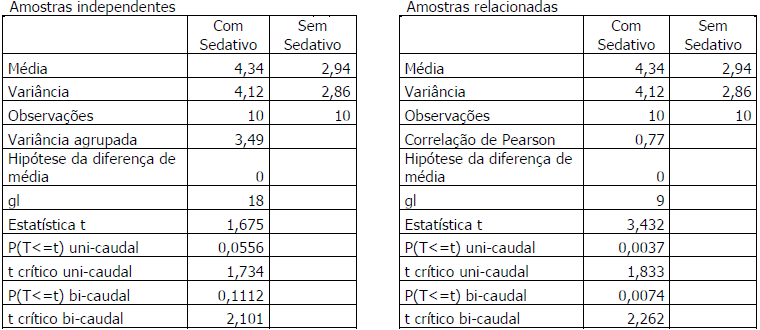
Dez pacientes que sofrem de insônia receberam, individualmente, uma dose noturna de um sedativo durante um período de tempo, enquanto que em outro período não receberam o sedativo. A análise dos dados mostrou os resultados abaixo.
Enunciado 641242-1

Assinale a alternativa que contém o valor correto da estatística t calculada para testar a eficiência do sedativo e a decisão, ao nível de 5%, sobre a significância estatística da diferença.


Provas

Questão presente nas seguintes provas
640274 Ano: 2014
Disciplina: Estatística
Banca: UFRGS
Orgão: TJ-RS

Considere as afirmações abaixo em relação a conceitos de probabilidade.

I - Quando o espaço amostral de uma variável aleatória X constituir um conjunto não enumerável finito ou infinito, esta variável será denominada variável aleatória discreta.

II - Em uma distribuição de probabilidade contínua, a área total entre a curva que representa a distribuição e o eixo horizontal é igual a 1.

III - Nenhum dos dois parâmetros da distribuição normal pode ser negativo.

Quais estão corretas?


Provas

Questão presente nas seguintes provas
640105 Ano: 2014
Disciplina: Inglês (Língua Inglesa)
Banca: UFRGS
Orgão: TJ-RS
Electronic Waste
Electronic waste (or E-waste.) isn’t just waste – it contains some very toxic substances, such as mercury, lead, cadmium, arsenic, beryllium and brominated flame retardants. When the latter are burned at low temperatures, they create additional toxins, such as halogenated dioxins and furans –some of the most toxic substances known to humankind.
The toxic materials in electronics can cause cancer, reproductive disorders, endocrine disruption, and many other health problems if this waste stream is not properly managed. Many of the toxic constituents are elements, which means they never disappear, even though they may change form.
Other toxic chemicals in electronics do not break down over time, instead accumulating in the food chain and biosphere. Not only do these toxins presente risks to communities and the global ecosystem, but also to electronics recycling workers around the world.
Unfortunately, only a small percentage of e-waste is recycled. Even when we take it to a recycling center, if available, there is no guarantee that it is actually recycled – not in the way most of us think of that term. A small percentage of e- waste is estimated to be sent to recyclers. In the U.S., this is as little as 11-14%. The remainder is most often dumped or burned, either in formal landfills and incinerators, or informally dumped or burned. These inappropriate disposal methods for electronic waste fail to reclaim valuable materials or manage the toxic materialssafely. In effect, our soil, water, and air are easily contaminated.
An estimated 70-80% of the e-waste that is given to recyclers is exported to countries with developing economies, in effect externalizing the real costs of managing hazardous waste and products. Once there, primitive technologies such as open air burning and riverside acid baths are used to extract a few materials. The rest of the toxic materials are usually dumped.
Unlike other countries in the world, the U.S. sends a significant portion of its hazardous e-waste to U.S. prisons to be processed in less-regulated environments without the worker protections and rights afforded in the private sector. , such operations amount to government subsidies, undermining the development of responsible privatesector recycling infrastructure and distorting the economics of recycling.
(http://www.e-stewards.org/the-e-waste-crisis/)
Entre as afirmativas abaixo, marque aquela que está de acordo com o primeiro parágrafo do texto.
 

Provas

Questão presente nas seguintes provas
638129 Ano: 2014
Disciplina: Estatística
Banca: UFRGS
Orgão: TJ-RS

INSTRUÇÃO: Para responder a questão, considere o enunciado a seguir:

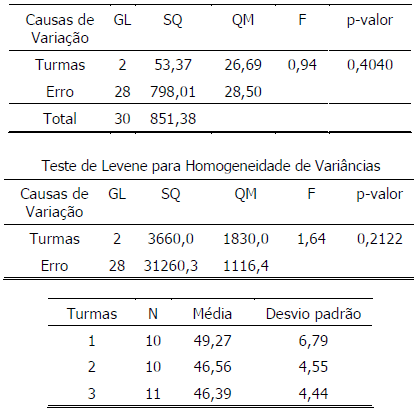
Fez-se um estudo com um grupo de 31 alunos do curso de Educação Física de uma universidade, registrando-se entre outras variáveis, a idade em anos, o peso em quilogramas, o tempo gasto por cada aluno, em minutos, para correr dois quilômetros e meio, o batimento cardíaco de cada aluno (Bat_Card.) enquanto corre e a taxa de absorção de oxigênio, em milímetros, por quilograma de peso corporal por minuto. Os alunos faziam parte de três turmas de semestres diferentes do curso.

Para verificar se existiam diferenças entre as três turmas de alunos quanto à taxa média, foi realizada a análise de variância (ANOVA.). Observe os resultados obtidos:
Enunciado 638129-1

Observe as afirmações abaixo, considerando o nível de significância igual a 0,05.

I - Os resultados do teste de Levene informam que as variâncias dentro de cada turma não são diferentes (p=0,2122), indicando que a suposição de homogeneidade de variâncias ou de variâncias constantes está satisfeita e, consequentemente, os resultados do teste F da ANOVA, para o teste de médias, têm validade.

II - Com base no resultado do teste F da ANOVA para o teste de médias, conclui-se, que as taxas médias das diferentes turmas não diferem significativamente (p=0,4040).

III - A partir do resultado do teste F da ANOVA, para o teste de médias, pode-se concluir que, pelo menos, duas taxas médias diferem entre si.

Quais estão corretas?


Provas

Questão presente nas seguintes provas
Assinale a alternativa, cujo órgão NÃO integra o Tribunal de Justiça do Estado do Rio Grande do Sul, conforme disposto no respectivo Regimento Interno.
 

Provas

Questão presente nas seguintes provas
628973 Ano: 2014
Disciplina: Inglês (Língua Inglesa)
Banca: UFRGS
Orgão: TJ-RS
Electronic Waste
Electronic waste (or E-waste.) isn’t just waste – it contains some very toxic substances, such as mercury, lead, cadmium, arsenic, beryllium and brominated flame retardants. When the latter are burned at low temperatures, they create additional toxins, such as halogenated dioxins and furans –some of the most toxic substances known to humankind.
The toxic materials in electronics can cause cancer, reproductive disorders, endocrine disruption, and many other health problems if this waste stream is not properly managed. Many of the toxic constituents are elements, which means they never disappear, even though they may change form.
Other toxic chemicals in electronics do not break down over time, instead accumulating in the food chain and biosphere. Not only do these toxins presente risks to communities and the global ecosystem, but also to electronics recycling workers around the world.
Unfortunately, only a small percentage of e-waste is recycled. Even when we take it to a recycling center, if available, there is no guarantee that it is actually recycled – not in the way most of us think of that term. A small percentage of e- waste is estimated to be sent to recyclers. In the U.S., this is as little as 11-14%. The remainder is most often dumped or burned, either in formal landfills and incinerators, or informally dumped or burned. These inappropriate disposal methods for electronic waste fail to reclaim valuable materials or manage the toxic materialssafely. In effect, our soil, water, and air are easily contaminated.
An estimated 70-80% of the e-waste that is given to recyclers is exported to countries with developing economies, in effect externalizing the real costs of managing hazardous waste and products. Once there, primitive technologies such as open air burning and riverside acid baths are used to extract a few materials. The rest of the toxic materials are usually dumped.
Unlike other countries in the world, the U.S. sends a significant portion of its hazardous e-waste to U.S. prisons to be processed in less-regulated environments without the worker protections and rights afforded in the private sector. , such operations amount to government subsidies, undermining the development of responsible privatesector recycling infrastructure and distorting the economics of recycling.
(http://www.e-stewards.org/the-e-waste-crisis/)
Complete, de acordo com o texto. Materiais eletrônicos tóxicos podem causar danos à saúde se:
 

Provas

Questão presente nas seguintes provas
628565 Ano: 2014
Disciplina: Inglês (Língua Inglesa)
Banca: UFRGS
Orgão: TJ-RS
Electronic Waste
Electronic waste (or E-waste.) isn’t just waste – it contains some very toxic substances, such as mercury, lead, cadmium, arsenic, beryllium and brominated flame retardants. When the latter are burned at low temperatures, they create additional toxins, such as halogenated dioxins and furans –some of the most toxic substances known to humankind.
The toxic materials in electronics can cause cancer, reproductive disorders, endocrine disruption, and many other health problems if this waste stream is not properly managed. Many of the toxic constituents are elements, which means they never disappear, even though they may change form.
Other toxic chemicals in electronics do not break down over time, instead accumulating in the food chain and biosphere. Not only do these toxins presente risks to communities and the global ecosystem, but also to electronics recycling workers around the world.
Unfortunately, only a small percentage of e-waste is recycled. Even when we take it to a recycling center, if available, there is no guarantee that it is actually recycled – not in the way most of us think of that term. A small percentage of e- waste is estimated to be sent to recyclers. In the U.S., this is as little as 11-14%. The remainder is most often dumped or burned, either in formal landfills and incinerators, or informally dumped or burned. These inappropriate disposal methods for electronic waste fail to reclaim valuable materials or manage the toxic materialssafely. In effect, our soil, water, and air are easily contaminated.
An estimated 70-80% of the e-waste that is given to recyclers is exported to countries with developing economies, in effect externalizing the real costs of managing hazardous waste and products. Once there, primitive technologies such as open air burning and riverside acid baths are used to extract a few materials. The rest of the toxic materials are usually dumped.
Unlike other countries in the world, the U.S. sends a significant portion of its hazardous e-waste to U.S. prisons to be processed in less-regulated environments without the worker protections and rights afforded in the private sector. , such operations amount to government subsidies, undermining the development of responsible privatesector recycling infrastructure and distorting the economics of recycling.
(http://www.e-stewards.org/the-e-waste-crisis/)
Qual o significado da palavra afforded?
 

Provas

Questão presente nas seguintes provas
627561 Ano: 2014
Disciplina: Matemática
Banca: UFRGS
Orgão: TJ-RS

Sejam A e B dois eventos associados a um mesmo espaço amostral. Suponha que PB) = 0,5 e P(A !$ \cup !$B) = 0,9. Considere duas situações distintas: (i) A e B são mutuamente exclusivos e (ii) A e B são independentes. Qual o valor de PA) nas duas situações, respectivamente?


Provas

Questão presente nas seguintes provas
Considere o texto abaixo, digitado no MS-Word.
Enunciado 621521-1
Assinale a alternativa que apresenta a descrição correta dos recursos de formatação de texto 1, 2 e 3, respectivamente, utilizados no texto acima.
 

Provas

Questão presente nas seguintes provas