Foram encontradas 449 questões.
1512601
Ano: 2016
Disciplina: Inglês (Língua Inglesa)
Banca: INAZ do Pará
Orgão: Pref. Itaúna-MG
Disciplina: Inglês (Língua Inglesa)
Banca: INAZ do Pará
Orgão: Pref. Itaúna-MG
Provas:
Still I Rise
You may write me down in history with your bitter twisted lies
You may trod me in the very dirt But still, like dust, I'll rise.
Does my sassiness upset you? Why are you beset with gloom?
Cause I walk like I've got oil wells pumping in my living room.
Just like moons and like suns, with certainty of tides,
Just like hopes springing high, still I'll rise.
Did you want to see me broken? Bowed head and lowered eyes?
Shoulders falling down like teardrops, weakened by my soulful cries.
Does my haughtiness offend you? Don't you take it awful hard,
Cause I laugh like I've got gold mines diggin' in my own back yard.
You may shoot me with your words, you may cut me with your eyes,
You may kill me with your hatefulness, but still, like air, I'll rise.
Does my sexiness upset you? Does it come as a surprise,
That I dance like I've got diamonds at the meeting of my thighs?
Out of the huts of history's shame I rise.
Up from a past that's rooted in pain I rise
I'm a black ocean, leaping and wide, welling and swelling I bear in the tide.
Leaving behind nights of terror and fear I rise.
Into a daybreak that's wondrously clear I rise
Bringing the gifts that my ancestors gave, I am the dream and the hope of the slave.
I rise
I rise
I rise...
Maya Angelou
(Fonte: .http://www.aaregistry.org/poetry/view/still-i-rise-maya-angelou Acesso em: 04/07/2016)
Nos versos, “Does my sexiness upset you? Does it come as a surprise,/That I dance like I've got diamonds at the meeting of my thighs?” da terceira estrofe, é correto afirmar que:
Provas
Questão presente nas seguintes provas

1512396
Ano: 2016
Disciplina: Desenho Técnico e Industrial
Banca: INAZ do Pará
Orgão: Pref. Itaúna-MG
Disciplina: Desenho Técnico e Industrial
Banca: INAZ do Pará
Orgão: Pref. Itaúna-MG
Provas:
Com base na NBR 8403, quais são as linhas para arestas e de contornos invisíveis?
Provas
Questão presente nas seguintes provas
Quanto vale o ângulo !$ \alpha !$ da figura abaixo?
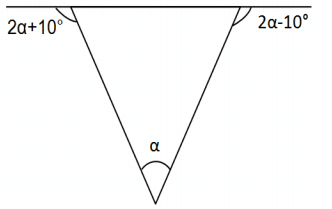
Provas
Questão presente nas seguintes provas
Estando o condutor no fluxo de um cruzamento sem sinalização, a preferência de passagem deverá ser:
Provas
Questão presente nas seguintes provas
A intervenção decidida dos missionários, defendendo a liberdade dos gentios, criou as condições para a importação de escravos da África, como confirmavam as várias cartas régias, determinando a remessa de negros para São Luís e Belém. Sobre as formas de organização do trabalho indígena e africano na Amazônia colonial, marque a alternativa incorreta:
Provas
Questão presente nas seguintes provas
A ministra do Meio Ambiente, Izabella Teixeira, disse nesta quinta-feira (19/11/2015) que o rompimento da barragem de rejeitos de mineração da Samarco, em Mariana (MG), há duas semanas, é a maior tragédia ambiental da história do Brasil.
http://ultimosegundo.ig.com.br/brasil/2015-11-19/tragedia-em-mariana-e-a-maior-catastrofeambiental-do-brasil-diz-ministra.html.
Sobre o assunto e suas implicações, é correto afirmar que:
Provas
Questão presente nas seguintes provas
1511888
Ano: 2016
Disciplina: Inglês (Língua Inglesa)
Banca: INAZ do Pará
Orgão: Pref. Itaúna-MG
Disciplina: Inglês (Língua Inglesa)
Banca: INAZ do Pará
Orgão: Pref. Itaúna-MG
Provas:
Is English a form of linguistic imperialism?
By Anne Burns
Anne Burns of Aston University, Birmingham, and University of New South Wales, Sydney prepares to moderate a discussion on this topic at this year’s International Association of Teachers of English as a Foreign Language (IATEFL) annual conference.
In 1992, a book appeared in the field of applied linguistics that presented English language teachers with a highly challenging, even shocking, proposition. The author, Robert Phillipson, argued that the global teaching of English was an act of linguistic imperialism. One of the major arguments in his Linguistic Imperialism was that the spread of English, much of which had occurred through its prominence in global language education, has served to undermine the rights of other languages and to marginalise the opportunities that should exist for widespread multilingual education. Since the 18th century, Phillipson argues, the spread of English has accompanied the political and economic intentions of English-speaking nations to conquer other countries. He claims this endangers their cultural ideals, their ways of life and their indigenous languages. Collectively, English language teaching and its major agencies, such as the British Council, have been implicated in perpetuating myths about the significance and necessity of learning English and in ensuring that English has outstripped the teaching of other languages worldwide. Phillipson calls for radical change in language policy to redress the balance and to promote the multilingualism that reflects the more natural state of language use around the world. Phillipson’s arguments have also provoked a number of criticisms, among which are making teachers feel unnecessarily guilty about teaching English, and adopting a patronising attitude towards developing countries by assuming they are incapable of making their own decisions about language choice. It has also been pointed out that a language cannot, in itself, be imperialistic. Two decades on from when Phillipson’s book was published, we have another opportunity to debate his provocative questions about linguistic imperialism during this week’s IATEFL conference in Liverpool. The discussion is sure to provoke, challenge and stimulate, but what kinds of questions are likely to emerge? There are some that are still at the very centre of the debate: Are English language teachers promoters of linguistic imperialism? Or do they give learners access to a very important linguistic tool that helps individuals and economies to develop and compete globally? These questions continue to merit very serious consideration. Moreover, as globalisation spreads and investment in English language learning increases, other questions continue to arise. Does the global spread of the English language threaten local languages, cultures and identities? Do these need to be safeguarded? What are the forces behind the spread of English? Is the dominance of English online a threat?
(Fonte: < https://www.britishcouncil.org/voices-magazine/english-form-linguistic-imperialism>. Acesso em: 01/07/2016)
No trecho “Two decades on from when Phillipson’s book was published, we have another opportunity to debate his provocative questions about linguistic imperialism during this week’s IATEFL conference in Liverpool.” podemos afirmar:
Provas
Questão presente nas seguintes provas
Assinale abaixo o que não encontramos nas células vegetais:
Provas
Questão presente nas seguintes provas
Para pintar uma parede quadrada um pintor gasta 4 latas de tinta. O número de latas necessário para pintar outra parede também, quadrada, com o dobro da largura da primeira, é:
Provas
Questão presente nas seguintes provas
1511774
Ano: 2016
Disciplina: Inglês (Língua Inglesa)
Banca: INAZ do Pará
Orgão: Pref. Itaúna-MG
Disciplina: Inglês (Língua Inglesa)
Banca: INAZ do Pará
Orgão: Pref. Itaúna-MG
Provas:
Is English a form of linguistic imperialism?
By Anne Burns
Anne Burns of Aston University, Birmingham, and University of New South Wales, Sydney prepares to moderate a discussion on this topic at this year’s International Association of Teachers of English as a Foreign Language (IATEFL) annual conference.
In 1992, a book appeared in the field of applied linguistics that presented English language teachers with a highly challenging, even shocking, proposition. The author, Robert Phillipson, argued that the global teaching of English was an act of linguistic imperialism. One of the major arguments in his Linguistic Imperialism was that the spread of English, much of which had occurred through its prominence in global language education, has served to undermine the rights of other languages and to marginalise the opportunities that should exist for widespread multilingual education. Since the 18th century, Phillipson argues, the spread of English has accompanied the political and economic intentions of English-speaking nations to conquer other countries. He claims this endangers their cultural ideals, their ways of life and their indigenous languages. Collectively, English language teaching and its major agencies, such as the British Council, have been implicated in perpetuating myths about the significance and necessity of learning English and in ensuring that English has outstripped the teaching of other languages worldwide. Phillipson calls for radical change in language policy to redress the balance and to promote the multilingualism that reflects the more natural state of language use around the world. Phillipson’s arguments have also provoked a number of criticisms, among which are making teachers feel unnecessarily guilty about teaching English, and adopting a patronising attitude towards developing countries by assuming they are incapable of making their own decisions about language choice. It has also been pointed out that a language cannot, in itself, be imperialistic. Two decades on from when Phillipson’s book was published, we have another opportunity to debate his provocative questions about linguistic imperialism during this week’s IATEFL conference in Liverpool. The discussion is sure to provoke, challenge and stimulate, but what kinds of questions are likely to emerge? There are some that are still at the very centre of the debate: Are English language teachers promoters of linguistic imperialism? Or do they give learners access to a very important linguistic tool that helps individuals and economies to develop and compete globally? These questions continue to merit very serious consideration. Moreover, as globalisation spreads and investment in English language learning increases, other questions continue to arise. Does the global spread of the English language threaten local languages, cultures and identities? Do these need to be safeguarded? What are the forces behind the spread of English? Is the dominance of English online a threat?
(Fonte: < https://www.britishcouncil.org/voices-magazine/english-form-linguistic-imperialism>. Acesso em: 01/07/2016)
No segundo parágrafo, o autor afirma que:
Provas
Questão presente nas seguintes provas
Cadernos
Caderno Container