Foram encontradas 438 questões.
Com base no texto abaixo, responda às questões de números 40 e 41.
Como o escritor Victor Hugo salvou a Catedral de Notre Dame
A catedral de Notre-Dame passa por um dos piores momentos de sua história. O incêndio destruiu grande parte do telhado, além de ter resultado no desmoronamento da “flecha”, a torre mais alta da igreja. Com a tragédia fresca na memória, é difícil acreditar que ela já passou por momentos tão graves quanto o atual – e foi até ameaçada de demolição durante a Revolução Francesa.
Em 1829, Victor Hugo começa a escrever “Notre-Dame de Paris”, um dos maiores clássicos da literatura francesa. Apesar de Victor Hugo ter deixado mais que claro que o protagonismo é da catedral, o título em inglês e as versões cinematográficas do livro criaram, no imaginário popular, a ideia de que o corcunda foi o personagem principal da história. O livro denunciou a negligência e degradação do local histórico e despertou o olhar do público à beleza da construção. Apesar de ter sido escrita no século XIX, a história se passa em 1482. Ele retrata a sociedade parisiense que vive ao redor de Notre-Dame. A popularização do livro combinada às descrições sobre a imponente catedral fez com que os franceses fizessem pressão pedindo a reforma da igreja que passou por 20 anos de obras, de 1844 a 1864. (Adaptado de Superinteressante, 2019)
A comoção provocada durante o século XIX, pelo livro de Victor Hugo, é explicada em função do processo social de:
Provas

“Cada cidade-Estado antiga possuía sua própria forma de governo. Mas em todas elas a política era exercida através de conselhos e assembleias. Os conselhos eram formados por um grupo específico de cidadãos que geriam os assuntos cotidianos da cidade e apresentavam propostas à assembleia. Podiam ser compostos por cidadãos mais velhos, como em Esparta e Roma, ou dos cidadãos mais ricos, como nas cidades de Massília ou Rodes, ou podiam ser eleitos anualmente, como em Atenas.”
(GUARINELLO, 2006, p. 26).
Duas limitações à participação política analisada pelo autor, comum às poleis mencionadas, eram:
Provas
Analise o texto a seguir:
O movimento orbital da Terra ao redor do Sol era apreendido de forma indireta e empírica como a sucessão periódica dos três grandes momentos do calendário: as estações (ter) Akhet (período da inundação), Peret (época das sementeiras) e Chemu (época das colheitas). Três estações de quatro meses cada, num total de 12 meses de 30 dias cada. Dentro do ano de 360 dias, cada período de 120 dias representava uma etapa de um percurso sequencial, eternamente renovado; sempre igual (porque era um tempo eternamente recomeçado), mas nunca o mesmo em cada ocorrência (porque o meio natural era perpetuamente imprevisível). O volume da inundação, as pragas que se abatiam sobre as culturas, o tamanho das searas, a quantidade de cereal ceifado eram variáveis imprevisíveis de uma mesma equação natural anual. (Adaptado de “Concepção e percepção de tempo e temporalidade no Egito Antigo”, de José das Candeias Sales, 2006) |
A concepção de tempo que organizava o calendário no Egito Antigo apresentada no texto é predominantemente:
Provas
Considere o texto a seguir
A teoria de que o povoamento das Américas teria se dado por duas levas migratórias distintas acaba de ser desmontada. Um estudo feito a partir de DNA fóssil, com amostras dos mais antigos esqueletos encontrados no continente, confirmou a existência de um único grupo populacional ancestral de todas as etnias da América. Com isso, os traços do rosto de Luzia – como foi batizado o crânio da jovem paleoamericana descoberto na década de 1970 – foi redesenhado. A primeira reconstrução facial de Luzia, uma mulher que viveu em Lagoa Santa (MG) há 12.500 anos, foi feita na década de 1990. (Adaptado de Agência Brasil, 2018)
Novo Rosto de Luzia: 1992 x 2018 |
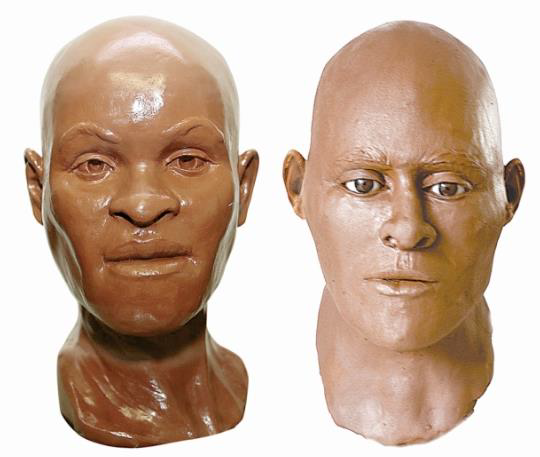
A mudança na imagem atribuída à Luzia está diretamente relacionada ao advento de uma nova teoria que explica a chegada do homem ao continente americano. Tal chegada teria ocorrido por deslocamento de povos de origem:
Provas
Disciplina: Inglês (Língua Inglesa)
Banca: CEPUERJ
Orgão: Pref. Queimados-RJ
Based on the BNCC, answer questions 56 to 60.
Accorging to the list entitled “Competências específicas de língua inglesa para o Ensino Fundamental”, the learner should:
Provas
Disciplina: Inglês (Língua Inglesa)
Banca: CEPUERJ
Orgão: Pref. Queimados-RJ
Based on the BNCC, answer questions 56 to 60.
The axes which organize the component English Language include:
Provas
Disciplina: Inglês (Língua Inglesa)
Banca: CEPUERJ
Orgão: Pref. Queimados-RJ
Based on the BNCC, answer questions 56 to 60.
The BNCC states that one of the roles of the EFL teacher in the “Ensino Fundamental” is to:
Provas
Disciplina: Inglês (Língua Inglesa)
Banca: CEPUERJ
Orgão: Pref. Queimados-RJ
Based on the BNCC, answer questions 56 to 60.
The document prioritizes the political and social function of the English language, thus it advocates its status of:
Provas
Disciplina: Inglês (Língua Inglesa)
Banca: CEPUERJ
Orgão: Pref. Queimados-RJ
Based on the BNCC, answer questions 56 to 60.
The teaching of the English language is a way to offer students:
Provas
Disciplina: Inglês (Língua Inglesa)
Banca: CEPUERJ
Orgão: Pref. Queimados-RJ
The importance of school education in child development
Text II:
It is widely accepted that the learning process is instrumental in shaping one’s personality and the way
he/she deals with situations of life. The shift of thoughts from bookish knowledge to knowledge of life, in
schools, has brought forth a sea of change. People have warmed up to the idea of education being the key
schools, has brought forth a sea of change. People have warmed up to the idea of education being the key
to a well-rounded development instead of just a means to acquire degrees and monetary success in life.
5.Education must facilitate the cultivation of a healthy thought process and groom our cognitive abilities. In the
present competitive world, education is a basic necessity for human beings after food, clothes and shelter.
School is the foremost fountain of knowledge children are exposed to. It gives a chance for them to
acquire knowledge on various fields of education such as people, literature, history, mathematics, politics,
and other numerous subjects. This contributes to cultivation in the thought process. When one is exposed
10.to the influences coming from various cultural sources, his/her own world and existence becomes vast.
School is the first avenue of socialising for a child. Up till then, parents and immediate family members are
the only people the child has human interactions with. (…). With schools, children are exposed not only to
new ideas but also to same aged compatriots. This instills sociable practices such as empathy, friendship,
participation and assistance, which turn out to be important in their adulthood.
15.A child, after conception, goes through physical development. While home provides a restricted outlet, in
school, a child can channelise his energy into more sociable avenues. Studies have pointed out that while
in familiar environment, the child is equipped to deal with sudden bursts of energy and learns to be at
his/her best behaviour only when exposed to same-aged individuals. Plus, familiarity leads to taking
advantage of situations. While in school, the playing field is levelled. Also, the presence of activities such
20.as sports and craft help children direct their boundless energy into something productive.
Earlier, schools were considered as places to learn events in history chapter, solve tough mathematical
problems or recite poems and sonnets. In the current educational scenario, a child learns to go beyond
the traditional way of rote learning. They are taught to develop a mind of their own and, through the
flexible curriculum, curiosity is promoted. The child is freed from the shackles of mental blocks and lets
25.his/her imagination run its course. Importance of imagination is stressed upon extensively. (…)
Life is also about learning, apart from living. While we can learn to a certain extent from our parents, they
tend to be unilateral. At school, children are exposed to various sources from whom they can imbibe
immense knowledge, instrumental for their development. Hence school is necessary for children to
inculcate the “workings of life”.
30.Education forms the foundation of any society. It is responsible for the economic, social, and political
growth and development of society in general. The thread of the growth of society depends upon the
quality of education that is being imparted. So schools play an important role in moulding a nation’s future
by facilitating the development of its future citizens.
Adapted from “The importance of school education in child development”, by Deepika Sharma
Source: https://www.educationworld.in/the-importance-of-school-education-in-child-development/
Based on the text II, answer questions 46 to 55. |
“the child is equipped to deal with sudden bursts of energy…” (l. 17). The fragment underlined is an example of:
Provas
Caderno Container