Foram encontradas 125 questões.
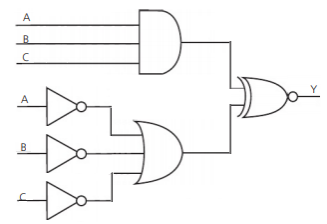
Assinale a alternativa que apresenta corretamente o resultado de Y.
Provas

Disciplina: Direito Constitucional
Banca: Col. Pedro II
Orgão: Col. Pedro II
Provas
Disciplina: Direito Administrativo
Banca: Col. Pedro II
Orgão: Col. Pedro II
Provas
Disciplina: Direito Educacional e Tecnológico
Banca: Col. Pedro II
Orgão: Col. Pedro II
Provas
Disciplina: Inglês (Língua Inglesa)
Banca: Col. Pedro II
Orgão: Col. Pedro II
TEXT 3
“Despite the contemporary calling of the speech/textual genre conceptions to deal with privations in the educational system (ROJO, 2008), the treatment given to genre, especially in theories operating with the notion of textual genre, has mainly focused on genre’s stable characteristics and on the development of competencies/capacities that lead to the comprehension and production of the oral and written genres circulating in the social world.
One of the implications of this kind of treatment for the literacy practices at school has considerably often been the genre displacement from micro and macrolinguistic contexts that interact in meaning construction to abstractly focus on the stable characteristics defining news, comics, recipes, editorial, blogs etc. Another, and maybe more serious, unfolding is that since it doesn’t look at how genres mingle and hybridize with other genres and semiosis in processes of constant (re)designing meanings, such a treatment can end up contributing to the mere (re)production of genres legitimized by school, leaving little or no space at all for the innovations and destabilization that mingling and transgression processes print to texts in contemporaneity and, as a consequence, for a critical position in relation to meanings constructed in the margins of what school validates as acceptable literacy practices.”
OLIVEIRA, M. B. F.; SZUNDI, P. T. C. Multiliteracies Practices at School: for a responsive education to contemporaneity.
Bakhtiniana, São Paulo, v. 9, n. 2, Jul./Dec. 2014, p. 206,207.
Provas
Disciplina: Inglês (Língua Inglesa)
Banca: Col. Pedro II
Orgão: Col. Pedro II
- Aspectos linguísticos | Linguistic aspects
- Gramática - Língua InglesaPalavras conectivas | Connective words
TEXT 7
“This, then, is the site of resistance, change, adaptation and reformulation. It is akin to what Canagarajah (1999) in his discussion of resistance to the global spread of English describes as a ‘resistance perspective’, highlighting the ways in which postcolonial subjects ‘may find ways to negotiate, alter and oppose political structures, and reconstruct their languages, cultures and identities to their advantage. The intention is not to reject English, but to reconstitute it in more inclusive, ethical and democratic terms.”
PENNYCOOK, A. Global Englishes and Transcultural Flows. New York: Routledge, 2007, p. 29.
The sentence that best preserves the meaning of the following excerpt “The intention is not to reject English, but to reconstitute it.” is:
Provas
Disciplina: Inglês (Língua Inglesa)
Banca: Col. Pedro II
Orgão: Col. Pedro II
TEXT 5
“In other words, there are those among us who argue that the future of English is dependent on the likelihood or otherwise of the U.S. continuing to play its hegemonic role in world affairs. Since that possibility seems uncertain to many, especially in view of the much-talked-of ascendancy of emergent economies, many are of the opinion that English will soon lose much of its current glitter and cease to be what it is today, namely a world language. And there are those amongst us who further speculate that, in fifty or a hundred years’ time, we will all have acquired fluency in, say, Mandarin, or, if we haven’t, will be longing to learn it. […] Consider the following argument: a language such as English can only be claimed to have attained an international status to the very extent it has ceased to be national, i.e., the exclusive property of this or that nation in particular (Widdowson). In other words, the U.K. or the U.S.A. or whosoever cannot have it both ways. If they do concede that English is today a world language, then it only behooves them to also recognize that it is not their exclusive property, as painful as this might indeed turn out to be. In other words, it is part of the price they have to pay for seeing their language elevated to the status of a world language. Now, the key word here is “elevated”. It is precisely in the process of getting elevated to a world status that English or what I insist on referring to as the “World English” goes through a process of metamorphosis.”
RAJAGOPALAN, K. The identity of "World English”. New Challenges in Language and Literature. Belo Horizonte: FALE/UFMG, 2009, p. 99-100.
Provas
Disciplina: Inglês (Língua Inglesa)
Banca: Col. Pedro II
Orgão: Col. Pedro II
TEXT 1
School for sexism
By Deborah Cameron (Oxford University)
This week, it was announced that schools in England are being issued with new guidelines on combatting sexism and gender stereotyping. This initiative follows research conducted for the Institute of Physics (IoP), which found that most schools took sexism less seriously than other kinds of prejudice and discrimination. […]
The IoP’s main concern—one it shares with the government, which co-funded the research—is that girls are being deterred from studying science subjects by the sexist attitudes they encounter in school. Language is only one of the issues the report urges schools to tackle. […] But language was the main theme picked up in media reporting on the new guidelines, with many news outlets dramatically proclaiming that children ‘as young as five’ were going to be ‘banned’ from using certain words.
[…] I think we can guess why these newspapers were so keen on the language angle. They’ve known since the heyday of ‘political correctness gone mad’ that nothing stirs up the wrath of Middle England like a story about someone trying to ban words. Never mind that no sane parent permits total free expression for the under-fives […].
This reporting only underlined the point that sexism isn’t taken as seriously as other forms of prejudice. […] Rather than being outraged by the idea of telling primary school children to watch their words, shouldn’t we be asking why ‘children as young as five’ are using sexist language in the first place?
We may not want to think that this is happening among children still at primary school, but unfortunately the evidence says it is. […] Girl Guiding UK publishes an annual survey of girls’ attitudes: the 2015 survey, conducted with a sample of nearly 1600 girls and young women aged between 7 and 21, found that in the week before they were questioned, over 80% of respondents had experienced or witnessed some form of sexism, much of which was perpetrated by boys of their own age, and some of which undoubtedly occurred in school. 39% of respondents had been subjected to demeaning comments on their appearance, and 58% had heard comments or jokes belittling women and girls. […]
By the time they go to secondary school, girls are conscious of this everyday sexism as a factor which restricts their freedom, affecting where they feel they can go, what they feel able to wear and how much they are willing to talk in front of boys. In the Girl Guiding UK survey, a quarter of respondents aged 11-16 reported that they avoided speaking in lessons because of their fear of attracting sexist comments.
So, the Institute of Physics isn’t just being perverse when it identifies sexist ‘banter’ as a problem that affects girls’ education. It’s to the organization’s credit that it’s saying this shouldn’t be tolerated—and it’s also to its credit that it’s offering practical advice. Its recommendations are sensible, and its report contains many good ideas for teachers to consider. […]
When the Sunday Times talks about ‘boys and girls cheerfully baiting each other in the playground’, the implication is that we’re dealing with something reciprocal, a ‘battle of the sexes’ in which the two sides are evenly matched. But they’re not evenly matched. What can a girl say to a boy that will make him feel like a commodity, a piece of meat? What popular catchphrase can she fling at him that has the same dismissive force as ‘make me a sandwich’? […]
The IoP report does not seem to grasp that there is more to sexism than gender stereotyping. It falls back on the liberal argument that stereotyping harms both sexes equally: it’s as bad for the boy who wants to be a ballet dancer as it is for the girl who dreams of becoming an astrophysicist. But sexism doesn’t harm boys and girls equally, just as racism doesn’t harm white people and people of colour equally. It is the ideology of a system based on structural sexual inequality: male dominance and female subordination. You can’t address the problem of gender stereotyping effectively if you don’t acknowledge the larger power structure it is part of.
Disponível em: https://debuk.wordpress.com. Acesso em: 20 out. 2019.
Provas
Disciplina: Inglês (Língua Inglesa)
Banca: Col. Pedro II
Orgão: Col. Pedro II
TEXT 1
School for sexism
By Deborah Cameron (Oxford University)
This week, it was announced that schools in England are being issued with new guidelines on combatting sexism and gender stereotyping. This initiative follows research conducted for the Institute of Physics (IoP), which found that most schools took sexism less seriously than other kinds of prejudice and discrimination. […]
The IoP’s main concern—one it shares with the government, which co-funded the research—is that girls are being deterred from studying science subjects by the sexist attitudes they encounter in school. Language is only one of the issues the report urges schools to tackle. […] But language was the main theme picked up in media reporting on the new guidelines, with many news outlets dramatically proclaiming that children ‘as young as five’ were going to be ‘banned’ from using certain words.
[…] I think we can guess why these newspapers were so keen on the language angle. They’ve known since the heyday of ‘political correctness gone mad’ that nothing stirs up the wrath of Middle England like a story about someone trying to ban words. Never mind that no sane parent permits total free expression for the under-fives […].
This reporting only underlined the point that sexism isn’t taken as seriously as other forms of prejudice. […] Rather than being outraged by the idea of telling primary school children to watch their words, shouldn’t we be asking why ‘children as young as five’ are using sexist language in the first place?
We may not want to think that this is happening among children still at primary school, but unfortunately the evidence says it is. […] Girl Guiding UK publishes an annual survey of girls’ attitudes: the 2015 survey, conducted with a sample of nearly 1600 girls and young women aged between 7 and 21, found that in the week before they were questioned, over 80% of respondents had experienced or witnessed some form of sexism, much of which was perpetrated by boys of their own age, and some of which undoubtedly occurred in school. 39% of respondents had been subjected to demeaning comments on their appearance, and 58% had heard comments or jokes belittling women and girls. […]
By the time they go to secondary school, girls are conscious of this everyday sexism as a factor which restricts their freedom, affecting where they feel they can go, what they feel able to wear and how much they are willing to talk in front of boys. In the Girl Guiding UK survey, a quarter of respondents aged 11-16 reported that they avoided speaking in lessons because of their fear of attracting sexist comments.
So, the Institute of Physics isn’t just being perverse when it identifies sexist ‘banter’ as a problem that affects girls’ education. It’s to the organization’s credit that it’s saying this shouldn’t be tolerated—and it’s also to its credit that it’s offering practical advice. Its recommendations are sensible, and its report contains many good ideas for teachers to consider. […]
When the Sunday Times talks about ‘boys and girls cheerfully baiting each other in the playground’, the implication is that we’re dealing with something reciprocal, a ‘battle of the sexes’ in which the two sides are evenly matched. But they’re not evenly matched. What can a girl say to a boy that will make him feel like a commodity, a piece of meat? What popular catchphrase can she fling at him that has the same dismissive force as ‘make me a sandwich’? […]
The IoP report does not seem to grasp that there is more to sexism than gender stereotyping. It falls back on the liberal argument that stereotyping harms both sexes equally: it’s as bad for the boy who wants to be a ballet dancer as it is for the girl who dreams of becoming an astrophysicist. But sexism doesn’t harm boys and girls equally, just as racism doesn’t harm white people and people of colour equally. It is the ideology of a system based on structural sexual inequality: male dominance and female subordination. You can’t address the problem of gender stereotyping effectively if you don’t acknowledge the larger power structure it is part of.
Disponível em: https://debuk.wordpress.com. Acesso em: 20 out. 2019.
Assuming a sociointeractional viewpoint, Giesel (in FERREIRA, 2012) argues that all forms of discourse can be understood as a social product, since they are present in the experiences of students.
Regarding the position presented above, choose the quote below from Cameron’s text which might support the idea that language teachers should approach aspects of sexist language and gender stereotyping in their lessons.
Provas
Disciplina: Inglês (Língua Inglesa)
Banca: Col. Pedro II
Orgão: Col. Pedro II
- Gramática - Língua InglesaAdjetivos | Adjectives
- Gramática - Língua InglesaSubstantivos e compostos | Nouns and compounds
TEXT 8
“As far as practical conditions and educational relevance are concerned, virtually no major change has occurred in order to justify reframing our teaching. However, in what concerns social relevance, it is undeniable that the growth of the Internet has provided a new context for the use of the English language outside schools. For that reason, it is my belief that skills other than reading may now be taught in our classes without representing a return to a rationale that is alien to our schools. The teaching of writing in the context of Internet genres and practices is definitely necessary, if we want our students to have their own voice, becoming able to project their own local identities in global contexts.”
ALMEIDA, R. L. T. The teaching of English as a foreign language in the context of Brazilian regular schools: a retrospective and prospective view of policies and practices. Revista Brasileira de Linguística Aplicada, Belo Horizonte, v. 12, n. 2, 2012, p. 347.
The same word may belong to different word classes. In text 8, for example, the word "alien" is an adjective, but it could also be a noun in another context.
Select the group of words below in which there is ONE element that belongs to only one word class.
Provas
Caderno Container