Foram encontradas 90 questões.
Um bom café deve ser preparado a uma temperatura pouco acima de 80ºC. Para evitar queimaduras na boca, deve ser consumido a uma temperatura mais baixa. Uma xícara contém 60 mL de café a uma temperatura de 80ºC. Qual a quantidade de leite gelado (a uma temperatura de 5ºC) deve ser misturada ao café para que a temperatura final do café com leite seja de 65ºC?
Provas


Considerando os elementos visuais e verbais da figura, é possível interpretar a fala da mulher como
Provas
Lying, thinking
Last night
How to find my soul a home
Where water is not thirsty
And bread loaf is not stone
I came up with one thing
And I don't believe I'm wrong
That nobody,
But nobody
Can make it out here alone
Alone - Maya Angelou
Os versos do poema
Provas
If you take a look at my smartphone, you’ll know that I like to order out. But am I helping the small local businesses? You would think that if you own a restaurant you’d be thrilled to have an outsourced service that would take care of your delivery operations while leveraging their marketing might to expand your businesses’ brand. However, restaurant owners have complained of lack of quality control once their food goes out the door. They don’t like that the delivery people are the face of their product when it gets into the customer’s hand. Some of the delivery services have been accused of listing restaurants on their apps without the owners’ permission, and oftentimes publish menu items and prices that are incorrect or out of date.
But there is another reason why restaurant owners aren’t fond of delivery services. It’s the costs, which, for some, are becoming unsustainable. Even with the increased revenues from the delivery services, the fees wind up killing a restaurant’s margins to the extent that it’s at best marginally profitable. Therefore, some restaurants are pushing harder to drive orders from their own websites and offering special deals for customers that use their in-house delivery people.
The simple fact is that these delivery apps are here to stay. They are enormously popular and have significantly grown. I believe that restaurant owners that resist these apps are hurting their brands by missing out on potential customers. The good news is that the delivery platforms are not as evil as some would portray them. They have some skin in the game. They are competing against other services. They want their listed restaurants to profit. Maybe instead of fighting, the nation’s restaurant industry needs to proactively embrace the delivery service industry and figure out ways to profitably work together.
The Guardian. 02 December, 2020. Adaptado.
Em “I believe that restaurant owners that resist these apps are hurting their brands by missing out on potential customers” (3º parágrafo), a expressão sublinhada pode ser substituída, sem prejuízo de sentido, por:
Provas
If you take a look at my smartphone, you’ll know that I like to order out. But am I helping the small local businesses? You would think that if you own a restaurant you’d be thrilled to have an outsourced service that would take care of your delivery operations while leveraging their marketing might to expand your businesses’ brand. However, restaurant owners have complained of lack of quality control once their food goes out the door. They don’t like that the delivery people are the face of their product when it gets into the customer’s hand. Some of the delivery services have been accused of listing restaurants on their apps without the owners’ permission, and oftentimes publish menu items and prices that are incorrect or out of date.
But there is another reason why restaurant owners aren’t fond of delivery services. It’s the costs, which, for some, are becoming unsustainable. Even with the increased revenues from the delivery services, the fees wind up killing a restaurant’s margins to the extent that it’s at best marginally profitable. Therefore, some restaurants are pushing harder to drive orders from their own websites and offering special deals for customers that use their in-house delivery people.
The simple fact is that these delivery apps are here to stay. They are enormously popular and have significantly grown. I believe that restaurant owners that resist these apps are hurting their brands by missing out on potential customers. The good news is that the delivery platforms are not as evil as some would portray them. They have some skin in the game. They are competing against other services. They want their listed restaurants to profit. Maybe instead of fighting, the nation’s restaurant industry needs to proactively embrace the delivery service industry and figure out ways to profitably work together.
The Guardian. 02 December, 2020. Adaptado.
Segundo o texto, uma das soluções encontradas pelos donos de restaurante para amenizar os problemas com os serviços de entrega é
Provas
If you take a look at my smartphone, you’ll know that I like to order out. But am I helping the small local businesses? You would think that if you own a restaurant you’d be thrilled to have an outsourced service that would take care of your delivery operations while leveraging their marketing might to expand your businesses’ brand. However, restaurant owners have complained of lack of quality control once their food goes out the door. They don’t like that the delivery people are the face of their product when it gets into the customer’s hand. Some of the delivery services have been accused of listing restaurants on their apps without the owners’ permission, and oftentimes publish menu items and prices that are incorrect or out of date.
But there is another reason why restaurant owners aren’t fond of delivery services. It’s the costs, which, for some, are becoming unsustainable. Even with the increased revenues from the delivery services, the fees wind up killing a restaurant’s margins to the extent that it’s at best marginally profitable. Therefore, some restaurants are pushing harder to drive orders from their own websites and offering special deals for customers that use their in-house delivery people.
The simple fact is that these delivery apps are here to stay. They are enormously popular and have significantly grown. I believe that restaurant owners that resist these apps are hurting their brands by missing out on potential customers. The good news is that the delivery platforms are not as evil as some would portray them. They have some skin in the game. They are competing against other services. They want their listed restaurants to profit. Maybe instead of fighting, the nation’s restaurant industry needs to proactively embrace the delivery service industry and figure out ways to profitably work together.
The Guardian. 02 December, 2020. Adaptado.
De acordo com o texto, para os proprietários de restaurante, a principal vantagem dos aplicativos de entrega de comida é que eles
Provas
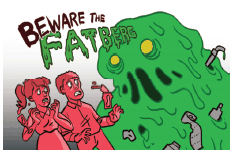
Fatbergs are a growing scourge infesting cities around the world— some are more than 800 feet long and weigh more than four humpback whales. These gross globs, which can cause sewer systems to block up and even overflow, have been plaguing the U.S., Great Britain and Australia for the past decade, forcing governments and utilities companies to send workers down into the sewers armed with water hoses, vacuums and scrapers with the unenviable task of prying them loose.
"It is hard not to think of [fatbergs] as a tangible symbol of the way we live now, the ultimate product of our disposable, out of sight, out of mind culture," wrote journalist Tim Adams in The Guardian.
At their core, fatbergs are the accumulation of oil and grease that's been poured down the drain, congealing around flushed nonbiological waste like tampons, condoms and baby wipes. When fat sticks to the side of sewage pipes, the wipes and other detritus get stuck, accumulating layer upon layer of gunk in a sort of slimy snowball effect.
Fatbergs also collect other kinds of debris—London fatbergs have been cracked open to reveal pens, false teeth and even watches.
Restaurants are a big contributor to fatbergs: Thames Water, the London utilities company, found nine out of 10 fast-food eateries lacked adequate grease traps to stop fat from entering the sewers. Homeowners also contribute to the problem by pouring grease and fat down the sink.
Even though its component materials are soft, fatbergs themselves can be tough as rocks. Researchers have found a host of dangerous bacteria in fatbergs, including listeria and e.coli.
Fatbergs are notorious for their fetid smell, which can make even the hardiest sewer workers gag, and chipping away at one can release noxious gases.
The key to fatberg prevention is remembering the four Ps: Pee, poo, puke and (toilet) paper are the only things that should be flushed.
Newsweek, 14 March, 2019. Adaptado.
Considerado o contexto, os quatro elementos associados à prevenção dos fatbergs têm em comum o fato de
Provas
Fatbergs are a growing scourge infesting cities around the world— some are more than 800 feet long and weigh more than four humpback whales. These gross globs, which can cause sewer systems to block up and even overflow, have been plaguing the U.S., Great Britain and Australia for the past decade, forcing governments and utilities companies to send workers down into the sewers armed with water hoses, vacuums and scrapers with the unenviable task of prying them loose.
"It is hard not to think of [fatbergs] as a tangible symbol of the way we live now, the ultimate product of our disposable, out of sight, out of mind culture," wrote journalist Tim Adams in The Guardian.
At their core, fatbergs are the accumulation of oil and grease that's been poured down the drain, congealing around flushed nonbiological waste like tampons, condoms and baby wipes. When fat sticks to the side of sewage pipes, the wipes and other detritus get stuck, accumulating layer upon layer of gunk in a sort of slimy snowball effect.
Fatbergs also collect other kinds of debris—London fatbergs have been cracked open to reveal pens, false teeth and even watches.
Restaurants are a big contributor to fatbergs: Thames Water, the London utilities company, found nine out of 10 fast-food eateries lacked adequate grease traps to stop fat from entering the sewers. Homeowners also contribute to the problem by pouring grease and fat down the sink.
Even though its component materials are soft, fatbergs themselves can be tough as rocks. Researchers have found a host of dangerous bacteria in fatbergs, including listeria and e.coli.
Fatbergs are notorious for their fetid smell, which can make even the hardiest sewer workers gag, and chipping away at one can release noxious gases.
The key to fatberg prevention is remembering the four Ps: Pee, poo, puke and (toilet) paper are the only things that should be flushed.
Newsweek, 14 March, 2019. Adaptado.
De acordo com o texto, o processo de bloqueio do fluxo de esgoto, provocado pelos fatbergs, ocorre
Provas
Fatbergs are a growing scourge infesting cities around the world— some are more than 800 feet long and weigh more than four humpback whales. These gross globs, which can cause sewer systems to block up and even overflow, have been plaguing the U.S., Great Britain and Australia for the past decade, forcing governments and utilities companies to send workers down into the sewers armed with water hoses, vacuums and scrapers with the unenviable task of prying them loose.
"It is hard not to think of [fatbergs] as a tangible symbol of the way we live now, the ultimate product of our disposable, out of sight, out of mind culture," wrote journalist Tim Adams in The Guardian.
At their core, fatbergs are the accumulation of oil and grease that's been poured down the drain, congealing around flushed nonbiological waste like tampons, condoms and baby wipes. When fat sticks to the side of sewage pipes, the wipes and other detritus get stuck, accumulating layer upon layer of gunk in a sort of slimy snowball effect.
Fatbergs also collect other kinds of debris—London fatbergs have been cracked open to reveal pens, false teeth and even watches.
Restaurants are a big contributor to fatbergs: Thames Water, the London utilities company, found nine out of 10 fast-food eateries lacked adequate grease traps to stop fat from entering the sewers. Homeowners also contribute to the problem by pouring grease and fat down the sink.
Even though its component materials are soft, fatbergs themselves can be tough as rocks. Researchers have found a host of dangerous bacteria in fatbergs, including listeria and e.coli.
Fatbergs are notorious for their fetid smell, which can make even the hardiest sewer workers gag, and chipping away at one can release noxious gases.
The key to fatberg prevention is remembering the four Ps: Pee, poo, puke and (toilet) paper are the only things that should be flushed.
Newsweek, 14 March, 2019. Adaptado.
O texto informa que, na opinião do jornalista Tim Adams, os fatbergs
Provas
A quantidade de bactérias em um líquido é diretamente proporcional à medida da turbidez desse líquido. O gráfico mostra, em escala logarítmica, o crescimento da turbidez !$ x !$ de um líquido ao longo do tempo !$ t !$ (medido em minutos), isto é, mostra !$ log_{10}x !$ em função de !$ t !$. Os dados foram coletados de 30 em 30 minutos, e uma curva de interpolação foi obtida para inferir valores intermediários.

Com base no gráfico, em quantas vezes a população de bactérias aumentou, do instante !$ t_0 !$ para o instante !$ t_1 !$?
Provas
Caderno Container