Foram encontradas 20 questões.
2124917
Ano: 2021
Disciplina: Inglês (Língua Inglesa)
Banca: AMAUC
Orgão: Pref. Alto Bela Vista-SC
Disciplina: Inglês (Língua Inglesa)
Banca: AMAUC
Orgão: Pref. Alto Bela Vista-SC
Provas:
Look at the box below.

https://www.bbc.com/news/world-africa-55751714
Only one answer is NOT CORRECT about the box above:
https://www.bbc.com/news/world-africa-55751714
Only one answer is NOT CORRECT about the box above:
Provas
Questão presente nas seguintes provas

Observe:
I – Com um território de apenas 95,4 mil km², Santa Catarina é o menor Estado do Sul do Brasil. O Estado é dividido em oito principais regiões: Litoral, Nordeste, Planalto Norte, Vale do Itajaí, Planalto Serrano, Sul, Meio-Oeste e Oeste. II - Entre as maiores cidades, destacam-se Joinville, Blumenau, Itajaí, Balneário Camboriú, Chapecó, Criciúma, Lages e Jaraguá do Sul. III - O Estado tem 295 municípios e a Capital é Florianópolis. IV - A maioria da população catarinense reside em áreas urbanas. V – A composição étnica estadual se apresenta da seguinte forma: Brancos, Pardos, Negros e Indígenas. VI - Os municípios catarinenses que apresentam maior concentração populacional são: Joinville, Blumenau, São José, Criciúma, Chapecó, Itajaí e Lages.
(Fonte: https://www.sc.gov.br/conhecasc/geografia e https://www.ibge.gov.br/cidades-e-estados/sc.html. Acesso em 14 fev. 2021)
Com relação as afirmativas acima apresentadas assinale a alternativa correta
I – Com um território de apenas 95,4 mil km², Santa Catarina é o menor Estado do Sul do Brasil. O Estado é dividido em oito principais regiões: Litoral, Nordeste, Planalto Norte, Vale do Itajaí, Planalto Serrano, Sul, Meio-Oeste e Oeste. II - Entre as maiores cidades, destacam-se Joinville, Blumenau, Itajaí, Balneário Camboriú, Chapecó, Criciúma, Lages e Jaraguá do Sul. III - O Estado tem 295 municípios e a Capital é Florianópolis. IV - A maioria da população catarinense reside em áreas urbanas. V – A composição étnica estadual se apresenta da seguinte forma: Brancos, Pardos, Negros e Indígenas. VI - Os municípios catarinenses que apresentam maior concentração populacional são: Joinville, Blumenau, São José, Criciúma, Chapecó, Itajaí e Lages.
(Fonte: https://www.sc.gov.br/conhecasc/geografia e https://www.ibge.gov.br/cidades-e-estados/sc.html. Acesso em 14 fev. 2021)
Com relação as afirmativas acima apresentadas assinale a alternativa correta
Provas
Questão presente nas seguintes provas
2107290
Ano: 2021
Disciplina: Inglês (Língua Inglesa)
Banca: AMAUC
Orgão: Pref. Alto Bela Vista-SC
Disciplina: Inglês (Língua Inglesa)
Banca: AMAUC
Orgão: Pref. Alto Bela Vista-SC
Provas:
Read the text below and answer the question.
Employees on its Employee Experience
Big Blue is actively involving its employees in retooling its processes.
By: Andrew R. McIlvaine | March 1, 2018 • 4 min read
Topics: Uncategorized
Earlier this year I posted about how more employers are planning to use HR tech tools to boost their
employee experience. Now, in the March/April issue of Harvard Business Review, IBM CHRO
Diane Gherson explains in a Q&A how Big Blue is “co-creating the employee experience” with its
employees, with the understanding that positive rates of employee engagement translate directly to
the company’s bottom line.
“We’ve found that employee engagement explains two-thirds of our client experience scores,” she
said. “And if we’re able to increase client satisfaction by five points on an account, we see an extra
20 percent in revenue, on average.”
Gherson and her team have done a lot of work in collaborating with employees to redesign and
enhance HR processes, particularly learning and development and performance management. With
the former, Gherson said IBM has taken a “Netflix” approach to learning and development, bringing
in employees to help create an individually personalized learning platform with different channels,
tailored by role, with “intelligent recommendations that are continually updated.”
Employees are guided in their course selections by a live-chat advisor as well as ratings by coworkers
who’ve taken the courses, said Gherson. HR also measures the offerings’ effectiveness via Net
Promoter Scores, which she said are more accurate than a previously used five-point satisfaction
scale.
As for improving the performance management process, Gherson said IBM disregarded what she
said would be a typical approach – conduct some benchmarking, convene a group of experts, come
up with a design and pilot it – in favor of working with employees “in a sort of extended hackathon.”
“We used design thinking and came up with something you might describe as a ‘concept car’—
something for people to test drive and kick the tires on, instead of just dealing with concepts,” she
said.
Gherson said she initially encountered some skepticism from employees after inviting them to
participate in the process.
“Some people said ‘This is such a sham—you already know what you want to do,'” she said. “But
then we explained that we really wanted to hear from them, and we got them into various discussion
forums.”
Ultimately, about 100,000 IBMers participated in the redesign process, Gherson said. Employees
even selected a name for the redesigned PM process: Checkpoint. Even now, the company continues
to solicit input from employees on how the process can be improved, she said.
The employee response has been overwhelmingly positive, said Gherson. “Their overall message has
been ‘This is what we wanted.’ It was cited as the top reason engagement improved.”
“People are getting much more feedback out of this system, in much richer ways,” she said. “And
more important, they are not feeling like spectators in our transformation; they are active
participants.”
Andrew R. McIlvaine is former senior editor with Human Resource Executive®.
https://hrexecutive.com/ibm-works-employees-employee-experience/
Provas
Questão presente nas seguintes provas
2107289
Ano: 2021
Disciplina: Inglês (Língua Inglesa)
Banca: AMAUC
Orgão: Pref. Alto Bela Vista-SC
Disciplina: Inglês (Língua Inglesa)
Banca: AMAUC
Orgão: Pref. Alto Bela Vista-SC
Provas:
- Gramática - Língua InglesaVerbos | VerbsPresente simples | Simple present
- Gramática - Língua InglesaVerbos | VerbsPassado simples | Simple past
- Gramática - Língua InglesaVerbos | VerbsPassado perfeito | Past perfect
Read the text below and answer the question.
Employees on its Employee Experience
Big Blue is actively involving its employees in retooling its processes.
By: Andrew R. McIlvaine | March 1, 2018 • 4 min read
Topics: Uncategorized
Earlier this year I posted about how more employers are planning to use HR tech tools to boost their
employee experience. Now, in the March/April issue of Harvard Business Review, IBM CHRO
Diane Gherson explains in a Q&A how Big Blue is “co-creating the employee experience” with its
employees, with the understanding that positive rates of employee engagement translate directly to
the company’s bottom line.
“We’ve found that employee engagement explains two-thirds of our client experience scores,” she
said. “And if we’re able to increase client satisfaction by five points on an account, we see an extra
20 percent in revenue, on average.”
Gherson and her team have done a lot of work in collaborating with employees to redesign and
enhance HR processes, particularly learning and development and performance management. With
the former, Gherson said IBM has taken a “Netflix” approach to learning and development, bringing
in employees to help create an individually personalized learning platform with different channels,
tailored by role, with “intelligent recommendations that are continually updated.”
Employees are guided in their course selections by a live-chat advisor as well as ratings by coworkers
who’ve taken the courses, said Gherson. HR also measures the offerings’ effectiveness via Net
Promoter Scores, which she said are more accurate than a previously used five-point satisfaction
scale.
As for improving the performance management process, Gherson said IBM disregarded what she
said would be a typical approach – conduct some benchmarking, convene a group of experts, come
up with a design and pilot it – in favor of working with employees “in a sort of extended hackathon.”
“We used design thinking and came up with something you might describe as a ‘concept car’—
something for people to test drive and kick the tires on, instead of just dealing with concepts,” she
said.
Gherson said she initially encountered some skepticism from employees after inviting them to
participate in the process.
“Some people said ‘This is such a sham—you already know what you want to do,'” she said. “But
then we explained that we really wanted to hear from them, and we got them into various discussion
forums.”
Ultimately, about 100,000 IBMers participated in the redesign process, Gherson said. Employees
even selected a name for the redesigned PM process: Checkpoint. Even now, the company continues
to solicit input from employees on how the process can be improved, she said.
The employee response has been overwhelmingly positive, said Gherson. “Their overall message has
been ‘This is what we wanted.’ It was cited as the top reason engagement improved.”
“People are getting much more feedback out of this system, in much richer ways,” she said. “And
more important, they are not feeling like spectators in our transformation; they are active
participants.”
Andrew R. McIlvaine is former senior editor with Human Resource Executive®.
https://hrexecutive.com/ibm-works-employees-employee-experience/
According to the sentence above is correct in relation to the verbs, EXCEPT:
Provas
Questão presente nas seguintes provas
2107288
Ano: 2021
Disciplina: Inglês (Língua Inglesa)
Banca: AMAUC
Orgão: Pref. Alto Bela Vista-SC
Disciplina: Inglês (Língua Inglesa)
Banca: AMAUC
Orgão: Pref. Alto Bela Vista-SC
Provas:
- Pronome subjetivo | Subjective pronoun
- Pronome objetivo | Objective pronoun
- Gramática - Língua InglesaPronomes | PronounsPronome possessivo adjetivo | Possessive adjective
You met these people at a party:
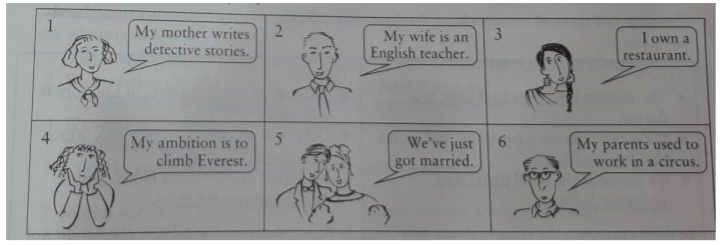 Fonte: Murphy Raymond: English Grammar in Use (1997).
Later you tell a friend about the people you met. Complete the sentences using WHO or WHOSE. 1 - I met somebody... 2 - I met Jacob... 3 - I met Mary... 4 - I met Carol... 5 - I met Jhon and Ann.. 6 - I met Enzo...
Fonte: Murphy Raymond: English Grammar in Use (1997). Later you tell a friend about the people you met. Complete the sentences using WHO or WHOSE. 1 - I met somebody... 2 - I met Jacob... 3 - I met Mary... 4 - I met Carol... 5 - I met Jhon and Ann.. 6 - I met Enzo...
Provas
Questão presente nas seguintes provas
Observe:

Na charge abaixo temos a seguinte declaração: “Claro chefe!! Fiz uma retirada sustentável!”. Temos na palavra em destaque um exemplo de verbo flexionado no pretérito. Qual das alternativas abaixo não apresenta verbo flexionado no mesmo tempo verbal (pretérito) do excerto analisado:
Na charge abaixo temos a seguinte declaração: “Claro chefe!! Fiz uma retirada sustentável!”. Temos na palavra em destaque um exemplo de verbo flexionado no pretérito. Qual das alternativas abaixo não apresenta verbo flexionado no mesmo tempo verbal (pretérito) do excerto analisado:
Provas
Questão presente nas seguintes provas
- SintaxeRegência
- MorfologiaConjunçõesRelações de Causa e Consequência
- MorfologiaPreposições
- MorfologiaPronomesPronomes Demonstrativos
- MorfologiaPronomesPronomes PessoaisPronomes Pessoais Retos
- Interpretação de TextosCoesão e Coerência
Leia o excerto e assinale a sentença que expressa uma informação incorreta em relação ao
emprego das palavras destacadas:
“Não é possível ser paciente com todo mundo, você não é santo. Não é possível ouvir com carinho todas as pessoas, você tem momentos difíceis. Logo, recomendo o seguinte: eleja as pessoas com quem você vai ser totalmente paciente. E no topo desta lista estão pais, mães, avós e irmãos. Com os outros, tenha paciência seletiva. Pai e mãe são as pessoas que você não pode atacar moralmente, você tem que aceitar. Te deram a vida, te criaram, ninguém vai amar você mais do que eles e o mais incrível: eles te amam apesar de te conhecerem, isso é extraordinário.” Por Leandro Karnal
(Fonte: https://gauchazh.clicrbs.com.br . Acesso em 16 fev. 2021)
“Não é possível ser paciente com todo mundo, você não é santo. Não é possível ouvir com carinho todas as pessoas, você tem momentos difíceis. Logo, recomendo o seguinte: eleja as pessoas com quem você vai ser totalmente paciente. E no topo desta lista estão pais, mães, avós e irmãos. Com os outros, tenha paciência seletiva. Pai e mãe são as pessoas que você não pode atacar moralmente, você tem que aceitar. Te deram a vida, te criaram, ninguém vai amar você mais do que eles e o mais incrível: eles te amam apesar de te conhecerem, isso é extraordinário.” Por Leandro Karnal
(Fonte: https://gauchazh.clicrbs.com.br . Acesso em 16 fev. 2021)
Provas
Questão presente nas seguintes provas
- Ensino das DisciplinasLíngua Estrangeira
- LegislaçãoPCN: Parâmetros Curriculares Nacionais
- Temas Educacionais Pedagógicos
De acordo com os PCNs da Língua estrangeira, no item: Relação entre a língua estrangeira e
maternal na aprendizagem, é correto afirmar, com EXCEÇÃO de:
Provas
Questão presente nas seguintes provas
- Ensino das DisciplinasLíngua Estrangeira
- LegislaçãoPCN: Parâmetros Curriculares Nacionais
- Temas Educacionais Pedagógicos
Em relação à Variação Linguística em língua estrangeira. Quais itens abaixo estão corretos de
acordo com os PCNs?
I - A questão da variação linguística em Língua Estrangeira pode ajudar não só a compreensão do fenômeno linguístico da variação na própria língua materna, como também do fato de que a língua estrangeira existe só na variedade padrão. II - Não é suficiente mostrar a relação entre grupos sociais diferentes (regionais, de classe social, profissionais, de gênero etc.) e suas realizações linguísticas; é necessário também indicar que as variações linguísticas marcam as pessoas de modo a posicioná-las no discurso, o que pode muitas vezes excluí-las de certos bens materiais e culturais. III - É útil apresentar para o aluno, por exemplo, como a variedade do inglês falado pelos negros americanos não é discriminada na sociedade e, portanto, como, estes equivocadamente, são posicionados no discurso de forma igual. IV - Não se deve esquecer ainda que as marcas de variedades são frequentemente fruto de processos de exclusão. A consciência desses processos na escola pode colaborar na compreensão de que diferença linguística não pode ser equacionada com inferioridade, como também, consequentemente, na criação de uma sociedade mais justa, já que a linguagem é central na determinação das relações humanas e da identidade social das pessoas.
I - A questão da variação linguística em Língua Estrangeira pode ajudar não só a compreensão do fenômeno linguístico da variação na própria língua materna, como também do fato de que a língua estrangeira existe só na variedade padrão. II - Não é suficiente mostrar a relação entre grupos sociais diferentes (regionais, de classe social, profissionais, de gênero etc.) e suas realizações linguísticas; é necessário também indicar que as variações linguísticas marcam as pessoas de modo a posicioná-las no discurso, o que pode muitas vezes excluí-las de certos bens materiais e culturais. III - É útil apresentar para o aluno, por exemplo, como a variedade do inglês falado pelos negros americanos não é discriminada na sociedade e, portanto, como, estes equivocadamente, são posicionados no discurso de forma igual. IV - Não se deve esquecer ainda que as marcas de variedades são frequentemente fruto de processos de exclusão. A consciência desses processos na escola pode colaborar na compreensão de que diferença linguística não pode ser equacionada com inferioridade, como também, consequentemente, na criação de uma sociedade mais justa, já que a linguagem é central na determinação das relações humanas e da identidade social das pessoas.
Provas
Questão presente nas seguintes provas
De acordo com a BNCC, no item Linguagens, há orientações bem específicas a serem seguidas.
I - Formação voltada a possibilitar uma participação mais plena dos jovens nas diferentes práticas socioculturais que envolvem o uso das linguagens. No Ensino Médio, os jovens intensificam o conhecimento sobre seus sentimentos, interesses, capacidades intelectuais e expressivas; ampliam e aprofundam vínculos sociais e afetivos; e refletem sobre a vida e o trabalho que gostariam de ter. II - Os jovens, gradativamente, ampliam também suas possibilidades de participação na vida pública e na produção cultural. Eles fazem isso por meio da autoria de diversas produções que constituem as culturas juvenis manifestadas em músicas, danças, manifestações da cultura corporal, vídeos, marcas corporais, moda, rádios comunitárias, redes de mídia da internet, gírias e demais produções e práticas socioculturais que combinam linguagens e diferentes modos de estar juntos. III - No Ensino Fundamental, nos diferentes componentes da área, a BNCC procurou garantir aos estudantes a ampliação das práticas de linguagem e dos repertórios, a diversificação dos campos nos quais atuam, a análise das manifestações artísticas, corporais e linguísticas e de como essas manifestações constituem a vida social em diferentes culturas, das locais às nacionais e internacionais. IV - No Ensino Médio, a área tem a responsabilidade de propiciar oportunidades para a consolidação e a ampliação das habilidades de uso e de reflexão sobre as linguagens – artísticas, corporais e verbais (oral ou visual-motora, como Libras, e escrita) –, que são objeto de seus diferentes componentes (Arte, Educação Física, Língua Inglesa e Língua Portuguesa).
Das afirmações acima, quais são consideradas em consonância com a BNCC no item Linguagens:
I - Formação voltada a possibilitar uma participação mais plena dos jovens nas diferentes práticas socioculturais que envolvem o uso das linguagens. No Ensino Médio, os jovens intensificam o conhecimento sobre seus sentimentos, interesses, capacidades intelectuais e expressivas; ampliam e aprofundam vínculos sociais e afetivos; e refletem sobre a vida e o trabalho que gostariam de ter. II - Os jovens, gradativamente, ampliam também suas possibilidades de participação na vida pública e na produção cultural. Eles fazem isso por meio da autoria de diversas produções que constituem as culturas juvenis manifestadas em músicas, danças, manifestações da cultura corporal, vídeos, marcas corporais, moda, rádios comunitárias, redes de mídia da internet, gírias e demais produções e práticas socioculturais que combinam linguagens e diferentes modos de estar juntos. III - No Ensino Fundamental, nos diferentes componentes da área, a BNCC procurou garantir aos estudantes a ampliação das práticas de linguagem e dos repertórios, a diversificação dos campos nos quais atuam, a análise das manifestações artísticas, corporais e linguísticas e de como essas manifestações constituem a vida social em diferentes culturas, das locais às nacionais e internacionais. IV - No Ensino Médio, a área tem a responsabilidade de propiciar oportunidades para a consolidação e a ampliação das habilidades de uso e de reflexão sobre as linguagens – artísticas, corporais e verbais (oral ou visual-motora, como Libras, e escrita) –, que são objeto de seus diferentes componentes (Arte, Educação Física, Língua Inglesa e Língua Portuguesa).
Das afirmações acima, quais são consideradas em consonância com a BNCC no item Linguagens:
Provas
Questão presente nas seguintes provas
Cadernos
Caderno Container