Foram encontradas 60 questões.
Durante o teste de uma prensa industrial, a altura h(t), em
metros, atingida por um componente projetado verticalmente
é descrita por uma função do 2º grau. Observou-se que:
• O componente parte do solo no instante t = 0; • Retorna ao solo no instante t = 6; • A altura máxima atingida é 9 metros.
Sabendo que a função pode ser escrita na forma fatorada h(t) = a⋅t(t − 6), a expressão correta da função
• O componente parte do solo no instante t = 0; • Retorna ao solo no instante t = 6; • A altura máxima atingida é 9 metros.
Sabendo que a função pode ser escrita na forma fatorada h(t) = a⋅t(t − 6), a expressão correta da função
Provas
Questão presente nas seguintes provas

Em um biotério, a área ocupada por uma colônia de bactérias
numa placa de Petri cresce segundo a função exponencial:
A(t) = 5 ⋅ 2t onde:
• A(t) = representa a área ocupada (em cm²), • t = representa o tempo em horas.
Considerando que a placa comporta no máximo 160 cm², o tempo mínimo necessário para que a colônia atinja exatamente essa área é:
• A(t) = representa a área ocupada (em cm²), • t = representa o tempo em horas.
Considerando que a placa comporta no máximo 160 cm², o tempo mínimo necessário para que a colônia atinja exatamente essa área é:
Provas
Questão presente nas seguintes provas
Em um biotério, será construída uma nova área retangular
para acomodação de roedores. Por normas técnicas de bem-estar animal, o recinto deve possuir área de 48 m². Sabe-se
que o comprimento excede a largura em 2 metros. Para
atender às normas de circulação dos técnicos, será instalada
uma proteção ao redor de todo o recinto. Considerando essas
informações, assinale a alternativa que apresenta
corretamente:
• a largura do recinto; • o perímetro da área construída.
• a largura do recinto; • o perímetro da área construída.
Provas
Questão presente nas seguintes provas
Em uma oficina de manutenção de máquinas industriais, uma
empresa realiza um investimento para a aquisição e
modernização de equipamentos mecânicos. O valor investido
foi de R$ 20.000,00, aplicado a uma taxa de 5% ao mês, sob
o regime de juros compostos, durante 3 meses. Ao final desse
período, o montante acumulado desse investimento será de,
aproximadamente,
Provas
Questão presente nas seguintes provas
Em um laboratório de testes industriais, um equipamento
passa por ciclos sucessivos de operação. Observa-se que, a
cada ciclo, o número de componentes ativos em
funcionamento é o dobro do número verificado no ciclo
anterior. No primeiro ciclo, o equipamento opera com 3 componentes ativos. Mantido esse comportamento, o
número de componentes ativos no 6º ciclo será:
Provas
Questão presente nas seguintes provas
Building Trustworthy AI in Government: Enablers, Guardrails,
and Engagement
Governments are starting to use AI in areas like public
services, tax work, and disaster response. When it works well,
AI can help people get answers faster, spot problems earlier,
and support better decisions. As a result, AI can improve
productivity, responsiveness, and accountability in
government.
However, many public AI projects stay in small pilots. This
happens because governments often lack skills, good data,
modern digital systems, and clear ways to measure impact.
These gaps can also increase risk aversion, so teams avoid
innovation even when the potential benefits are high.
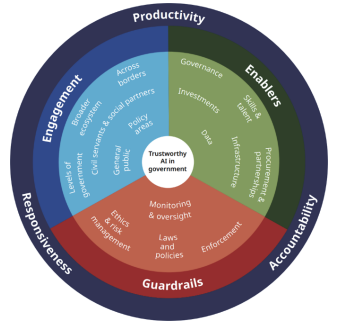
The OECD proposes a simple way to understand
“trustworthy AI in government”: a framework with three
connected pillars. In the figure, the goal is in the centre. Around
it, the three pillars explain what governments must build and
do, so they can reach the public value goals shown on the
outer ring (productivity, responsiveness and accountability).
Enablers are the foundations. They include strong
governance, quality data, and digital infrastructure, as well as
skills and talent in the civil service. They also require
purposeful investment, smart public procurement, and
partnerships with non-government actors, so that AI systems
can be built and used reliably.
Guardrails are the safety systems that guide AI use. They
include ethics and risk management, transparency duties, and
monitoring and oversight bodies that can check results over
time. They can also be non-binding guidance or binding laws
and policies, along with enforcement measures. Tools like
impact assessment and auditing help keep these guardrails
practical. Still, guardrails should be proportionate: not every
rule fits every use case, or progress may stop.
Engagement means involving the people who are affected.
This includes working across levels of government, across
policy areas, and with the broader ecosystem (civil society,
businesses and researchers). It also includes citizens and civil
servants, and sometimes collaboration across borders.
Engagement pushes governments to design user-centred
systems, listen to concerns, and make necessary adjustments.
The main message is that trust is “unlocked” by the right
mix. If enablers are weak, AI cannot scale. If guardrails are
missing, harms grow. If engagement is shallow, solutions may
look efficient but feel unfair, and trust can fall.
(Adapted from oecd.org on February 22, 2026)
Provas
Questão presente nas seguintes provas
Building Trustworthy AI in Government: Enablers, Guardrails,
and Engagement
Governments are starting to use AI in areas like public
services, tax work, and disaster response. When it works well,
AI can help people get answers faster, spot problems earlier,
and support better decisions. As a result, AI can improve
productivity, responsiveness, and accountability in
government.
However, many public AI projects stay in small pilots. This
happens because governments often lack skills, good data,
modern digital systems, and clear ways to measure impact.
These gaps can also increase risk aversion, so teams avoid
innovation even when the potential benefits are high.
The OECD proposes a simple way to understand
“trustworthy AI in government”: a framework with three
connected pillars. In the figure, the goal is in the centre. Around
it, the three pillars explain what governments must build and
do, so they can reach the public value goals shown on the
outer ring (productivity, responsiveness and accountability).
Enablers are the foundations. They include strong
governance, quality data, and digital infrastructure, as well as
skills and talent in the civil service. They also require
purposeful investment, smart public procurement, and
partnerships with non-government actors, so that AI systems
can be built and used reliably.
Guardrails are the safety systems that guide AI use. They
include ethics and risk management, transparency duties, and
monitoring and oversight bodies that can check results over
time. They can also be non-binding guidance or binding laws
and policies, along with enforcement measures. Tools like
impact assessment and auditing help keep these guardrails
practical. Still, guardrails should be proportionate: not every
rule fits every use case, or progress may stop.
Engagement means involving the people who are affected.
This includes working across levels of government, across
policy areas, and with the broader ecosystem (civil society,
businesses and researchers). It also includes citizens and civil
servants, and sometimes collaboration across borders.
Engagement pushes governments to design user-centred
systems, listen to concerns, and make necessary adjustments.
The main message is that trust is “unlocked” by the right
mix. If enablers are weak, AI cannot scale. If guardrails are
missing, harms grow. If engagement is shallow, solutions may
look efficient but feel unfair, and trust can fall.
(Adapted from oecd.org on February 22, 2026)
A expressão “risk aversion” pode ser corretamente compreendida como:¬
Provas
Questão presente nas seguintes provas
Building Trustworthy AI in Government: Enablers, Guardrails,
and Engagement
Governments are starting to use AI in areas like public
services, tax work, and disaster response. When it works well,
AI can help people get answers faster, spot problems earlier,
and support better decisions. As a result, AI can improve
productivity, responsiveness, and accountability in
government.
However, many public AI projects stay in small pilots. This
happens because governments often lack skills, good data,
modern digital systems, and clear ways to measure impact.
These gaps can also increase risk aversion, so teams avoid
innovation even when the potential benefits are high.
The OECD proposes a simple way to understand
“trustworthy AI in government”: a framework with three
connected pillars. In the figure, the goal is in the centre. Around
it, the three pillars explain what governments must build and
do, so they can reach the public value goals shown on the
outer ring (productivity, responsiveness and accountability).
Enablers are the foundations. They include strong
governance, quality data, and digital infrastructure, as well as
skills and talent in the civil service. They also require
purposeful investment, smart public procurement, and
partnerships with non-government actors, so that AI systems
can be built and used reliably.
Guardrails are the safety systems that guide AI use. They
include ethics and risk management, transparency duties, and
monitoring and oversight bodies that can check results over
time. They can also be non-binding guidance or binding laws
and policies, along with enforcement measures. Tools like
impact assessment and auditing help keep these guardrails
practical. Still, guardrails should be proportionate: not every
rule fits every use case, or progress may stop.
Engagement means involving the people who are affected.
This includes working across levels of government, across
policy areas, and with the broader ecosystem (civil society,
businesses and researchers). It also includes citizens and civil
servants, and sometimes collaboration across borders.
Engagement pushes governments to design user-centred
systems, listen to concerns, and make necessary adjustments.
The main message is that trust is “unlocked” by the right
mix. If enablers are weak, AI cannot scale. If guardrails are
missing, harms grow. If engagement is shallow, solutions may
look efficient but feel unfair, and trust can fall.
(Adapted from oecd.org on February 22, 2026)
Provas
Questão presente nas seguintes provas
Building Trustworthy AI in Government: Enablers, Guardrails,
and Engagement
Governments are starting to use AI in areas like public
services, tax work, and disaster response. When it works well,
AI can help people get answers faster, spot problems earlier,
and support better decisions. As a result, AI can improve
productivity, responsiveness, and accountability in
government.
However, many public AI projects stay in small pilots. This
happens because governments often lack skills, good data,
modern digital systems, and clear ways to measure impact.
These gaps can also increase risk aversion, so teams avoid
innovation even when the potential benefits are high.
The OECD proposes a simple way to understand
“trustworthy AI in government”: a framework with three
connected pillars. In the figure, the goal is in the centre. Around
it, the three pillars explain what governments must build and
do, so they can reach the public value goals shown on the
outer ring (productivity, responsiveness and accountability).
Enablers are the foundations. They include strong
governance, quality data, and digital infrastructure, as well as
skills and talent in the civil service. They also require
purposeful investment, smart public procurement, and
partnerships with non-government actors, so that AI systems
can be built and used reliably.
Guardrails are the safety systems that guide AI use. They
include ethics and risk management, transparency duties, and
monitoring and oversight bodies that can check results over
time. They can also be non-binding guidance or binding laws
and policies, along with enforcement measures. Tools like
impact assessment and auditing help keep these guardrails
practical. Still, guardrails should be proportionate: not every
rule fits every use case, or progress may stop.
Engagement means involving the people who are affected.
This includes working across levels of government, across
policy areas, and with the broader ecosystem (civil society,
businesses and researchers). It also includes citizens and civil
servants, and sometimes collaboration across borders.
Engagement pushes governments to design user-centred
systems, listen to concerns, and make necessary adjustments.
The main message is that trust is “unlocked” by the right
mix. If enablers are weak, AI cannot scale. If guardrails are
missing, harms grow. If engagement is shallow, solutions may
look efficient but feel unfair, and trust can fall.
(Adapted from oecd.org on February 22, 2026)
Provas
Questão presente nas seguintes provas
Building Trustworthy AI in Government: Enablers, Guardrails,
and Engagement
Governments are starting to use AI in areas like public
services, tax work, and disaster response. When it works well,
AI can help people get answers faster, spot problems earlier,
and support better decisions. As a result, AI can improve
productivity, responsiveness, and accountability in
government.
However, many public AI projects stay in small pilots. This
happens because governments often lack skills, good data,
modern digital systems, and clear ways to measure impact.
These gaps can also increase risk aversion, so teams avoid
innovation even when the potential benefits are high.
The OECD proposes a simple way to understand
“trustworthy AI in government”: a framework with three
connected pillars. In the figure, the goal is in the centre. Around
it, the three pillars explain what governments must build and
do, so they can reach the public value goals shown on the
outer ring (productivity, responsiveness and accountability).
Enablers are the foundations. They include strong
governance, quality data, and digital infrastructure, as well as
skills and talent in the civil service. They also require
purposeful investment, smart public procurement, and
partnerships with non-government actors, so that AI systems
can be built and used reliably.
Guardrails are the safety systems that guide AI use. They
include ethics and risk management, transparency duties, and
monitoring and oversight bodies that can check results over
time. They can also be non-binding guidance or binding laws
and policies, along with enforcement measures. Tools like
impact assessment and auditing help keep these guardrails
practical. Still, guardrails should be proportionate: not every
rule fits every use case, or progress may stop.
Engagement means involving the people who are affected.
This includes working across levels of government, across
policy areas, and with the broader ecosystem (civil society,
businesses and researchers). It also includes citizens and civil
servants, and sometimes collaboration across borders.
Engagement pushes governments to design user-centred
systems, listen to concerns, and make necessary adjustments.
The main message is that trust is “unlocked” by the right
mix. If enablers are weak, AI cannot scale. If guardrails are
missing, harms grow. If engagement is shallow, solutions may
look efficient but feel unfair, and trust can fall.
(Adapted from oecd.org on February 22, 2026)
Provas
Questão presente nas seguintes provas
Cadernos
Caderno Container