Foram encontradas 25 questões.
Disciplina: Inglês (Língua Inglesa)
Banca: PROMUN
Orgão: Pref. Redenção-CE
Text 2
In a learner-centered classroom, learning experiences are related to learners’ own out-of-class experiences.
The American psychologist David Pearson said that learning is a process of building bridges between what we already know and what we need to learn. This is the basis of the experiential approach to education. We begin with the learners’ own experiences, with what they already know, and we find ways to ‘hook’ new learning onto this pre-existing knowledge.
In a learner-centered classroom, learners take responsibility for their own learning. We tend to think that this is fine for adults, but is not feasible for children. This is not true. The educator Gene Bedley once said that whenever we do something for children that they could do for themselves we are taking away from them an opportunity to learn self-responsibility and independence.
In my own work, I have found that children as young as eleven can begin to take control of their own learning. In a learner-centered classroom, learners are engaged in their own learning. If they are not engaged, it is unlikely that they will learn. If you spend time in pre-school classrooms (and I strongly recommend that you do, regardless of the age level you teach or plan to teach) it will be easy to see when a child is disengageD) He or she will simply get up and wander away.
In a learner-centered classroom, learners are involved in making decisions about what to learn, how to learn, and how to be assesseD) Teaching and learning are in harmony, and the educational enterprise is a collaborative process between the teacher and the learner. Learners are active participants in their own learning, rather than passive objects to be manipulateD) In a learner-centered classroom, there are two sets of goals: language goals and learning goals.
In a language classroom, of course, we have language goals. Why have learning goals? The answer is that most learners do not come into the classroom with skills and knowledge to make informed decisions about what to learn, how to learn, and how to be assesseD) They need to learn these skills, and to be sensitized to their own preferred ways of learning.
In a learner-centered classroom, the strategies underlying the pedagogical tasks in which learners are engaged will be made transparent. All tasks are underpinned by one or more strategies. Learners are more likely to incorporate these into their language learning if they know what they are and how they can be used.
Source: NUNAN, DaviD) Teaching English to Speakers of Other Languages: An introduction. [s.l.]: Routledge, 2015. (Adapted)
What could replace hook (2nd paragraph) without changing the meaning?
Provas

Disciplina: Inglês (Língua Inglesa)
Banca: PROMUN
Orgão: Pref. Redenção-CE
Text 2
In a learner-centered classroom, learning experiences are related to learners’ own out-of-class experiences.
The American psychologist David Pearson said that learning is a process of building bridges between what we already know and what we need to learn. This is the basis of the experiential approach to education. We begin with the learners’ own experiences, with what they already know, and we find ways to ‘hook’ new learning onto this pre-existing knowledge.
In a learner-centered classroom, learners take responsibility for their own learning. We tend to think that this is fine for adults, but is not feasible for children. This is not true. The educator Gene Bedley once said that whenever we do something for children that they could do for themselves we are taking away from them an opportunity to learn self-responsibility and independence.
In my own work, I have found that children as young as eleven can begin to take control of their own learning. In a learner-centered classroom, learners are engaged in their own learning. If they are not engaged, it is unlikely that they will learn. If you spend time in pre-school classrooms (and I strongly recommend that you do, regardless of the age level you teach or plan to teach) it will be easy to see when a child is disengageD) He or she will simply get up and wander away.
In a learner-centered classroom, learners are involved in making decisions about what to learn, how to learn, and how to be assesseD) Teaching and learning are in harmony, and the educational enterprise is a collaborative process between the teacher and the learner. Learners are active participants in their own learning, rather than passive objects to be manipulateD) In a learner-centered classroom, there are two sets of goals: language goals and learning goals.
In a language classroom, of course, we have language goals. Why have learning goals? The answer is that most learners do not come into the classroom with skills and knowledge to make informed decisions about what to learn, how to learn, and how to be assesseD) They need to learn these skills, and to be sensitized to their own preferred ways of learning.
In a learner-centered classroom, the strategies underlying the pedagogical tasks in which learners are engaged will be made transparent. All tasks are underpinned by one or more strategies. Learners are more likely to incorporate these into their language learning if they know what they are and how they can be used.
Source: NUNAN, DaviD) Teaching English to Speakers of Other Languages: An introduction. [s.l.]: Routledge, 2015. (Adapted)
How can one rewrite this sentence “All tasks are underpinned by one or more strategies” in the active voice without changing its meaning?
Provas
Leia o texto:
Educação! Educação!
Sonho com Dona Teteca, minha implacável professora de Português. Ela aparece, brandindo um exemplar do JB com a segunda parte do artigo Educação!
Educação! Passa-me um sabão danado(II). (...)
– Seu analfabeto! Não foi isso que te ensinei!(III) Não podes errar a concordância! Assustado, leio um texto meu que o JB publicou no domingo passado: “
Um dos romances que mais marcou minha adolescência(I)...”
Sinto um frio na espinha e balbucio:
– Desculpe, Dona Teteca... Eu me distraí. (...)
Conformado, pego uma resma de papel e começo a escrever, pensando: “Poxa, logo num texto sobre educação!”.
Acordo, sobressaltado e ofegante. Perdão, leitores.
Fonte: UTZERI, Fritz. Jornal do Brasil. Rio de Janeiro, 27 jul. 2003.
Analise as afirmativas sobre a Gramática textual:
I. “Um dos romances que mais marcou minha adolescência.(IV)”. Esta é a frase pela qual a professora chamou o narrador de analfabeto, pois o mesmo teria cometido um erro de concordância;
II. “Passa-me um sabão danado.” No lugar de ênclise, nesta frase, seria correto usar a próclise;
III. “Não foi isso que te ensinei!” A regência do verbo ensinar está correta, pois segundo a Gramática Normativa, no sentido de "dar instrução a, transmitir conhecimento a" ele é um verbo transitivo direto e indireto;
IV. “Um dos romances que mais marcou minha adolescência...” O termo destacado é um pronome relativo.
São corretas somente as afirmativas:
Provas
De acordo com o artigo 133, da Lei Orgânica do município de Redenção, são livros obrigatórios no município, exceto:
Provas
Disciplina: Inglês (Língua Inglesa)
Banca: PROMUN
Orgão: Pref. Redenção-CE
Text 1
The concept of ‘World English’ and its implications for ELT.
It has become more or less a cliché these days to refer to English as a world language. At the 1984 conference to celebrate the 50th anniversary of the British Council there was a debate between Sir Randolph Quirk and Professor Braj Kachru on the (literally) million dollar question of ‘who owns English’, and hence whose English must be adopted as the model for teaching the language worldwide. Since then, much has been written on the role of English as a language of international communication, and the desirability or otherwise of adopting one of the Inner Circle varieties of English (to all intents and purposes, either British or American) as the canonical model for teaching it as a second or foreign language. The position vigorously defended by Quirk in that debate — succinctly captured in the phrase ‘a single monochrome standard’ — no longer appeals to the majority of those who are involved in the English Language Teaching (ELT) enterprise in one way or another. Instead, Kachru’s equally spirited insistence that “the native speakers [of English] seem to have lost the exclusive prerogative to control its standardization”, and his plea for a paradigm shift in linguistic and pedagogical research so as to bring it more in tune with the changing landscape, have continued to strike a favorable chord with most ELT professionals. And the idea that English belongs to everyone who speaks it has been steadily gaining ground.
Though still resisted in some quarters, the very idea of World English (henceforward, WE) makes the whole question of the ‘ownership’ of English problematic, not to say completely anachronistic. Widdowson expressed the idea in a very telling manner when he wrote ‘It is a matter of considerable pride and satisfaction for native speakers of English that their language is an international means of communication. But the point is that it is only international to the extent that it is not their language.’
Source: RAJAGOPALAN, Kanavillil. The
concept of ‘World English’ and its implications for ELT. ELT Journal Volume. [s.l.] v 58, n 2, pp 111-117, Abril 2004. (Adapted)
Regarding the sentence “It has become more or less a cliché these days to refer to English as a world language”, what does the underlined verbal phrase convey?
Provas
Disciplina: Inglês (Língua Inglesa)
Banca: PROMUN
Orgão: Pref. Redenção-CE
Text 3

Source: https://www.google.com
What is possible to infer by reading Text 3?
Provas
Lei a as frases de Machado de Assis e marque a opção em que há um período composto por subordinação:
Provas
O texto servirá de base para a questão:
O tempo: Feroz amigo
É uma das esquisitices do nosso tempo que na época em que mais tempo vivemos haja tanta dificuldade em relação ao que se convencionou chamar velhice. Palavras significam emoções e conceitos, portanto também preconceitos. Por isso, quero falar de minha implicância com a implicância que temos com os vocábulos – e a realidade – velho, velhice.
E, como gosto de historinhas, algumas, como estas, reais, lembro um episódio com Tônia Carrero, ainda uma linda mulher aos oitenta anos. E certa vez alguém lhe perguntou: “Tônia, chegando aos oitenta, como você lida com a velhice?”. Todos gelaram, mas ela, em pé no meio da sala, possivelmente com um cálice de champanhe na mão, respondeu sem hesitar: “Ora, eu acho ótimo. Porque a alternativa seria a morte”.
E todos acharam maravilhosa aquela presença de espírito, e aquele pensamento. Naturalmente, nem ela, nem ninguém gostaria de envelhecer com as doenças, perdas e fragilidades que tantas vezes nos acompanham quando o número de anos cresce assustadoramente. Mas que, pelo menos, não sejamos velhos chatos e sombrios, eternamente reclamando de tudo e de todos.
Quando não pudermos mais realizar negócios, viajar a países distantes ou dar caminhadas, poderemos ainda exercer afetos, agregar pessoas, ler bons livros, observar a humanidade que nos cerca, eventualmente lhe dar abrigo e colo. Para isso, não é necessário ser jovem, belo, com carnes firmes e pele de seda… ou ágil, mas ainda lúcido.
Viver deveria ser poder celebrar sempre mais um dia: o nosso, e dos que amamos. E, em momentos de dor indizível, redobrar sem espalhafato, com delicadeza, o amor de que somos capazes.
Fonte: https://www.50emais.com.br/lya-luft-o-tempo-feroz-amigo/
É correto afirmar sobre o texto:
Provas
Disciplina: Inglês (Língua Inglesa)
Banca: PROMUN
Orgão: Pref. Redenção-CE
Text 4
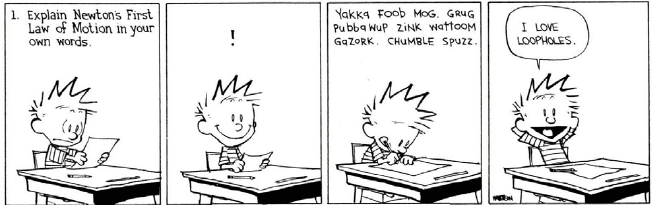
Source https://www.google.com
What is possible to infer by reading Text 4?
Provas
Disciplina: Inglês (Língua Inglesa)
Banca: PROMUN
Orgão: Pref. Redenção-CE
Text 3
Source: https://www.google.com
What is the main purpose of Text 3?
Provas
Caderno Container