Foram encontradas 100 questões.
TEXT I
Breaking the habit: From oiloholics to e-totallers
What changes in driving habits and improved batteries might do to oil demand
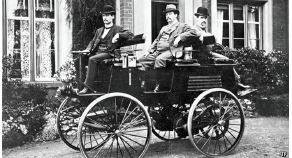
It has been a bad couple of years for those hoping for the death of driving. In America, where cars are an important part of the national psyche, a decade ago people had suddenly started to drive less, which had not happened since the oil shocks of the 1970s. Academics started to talk excitedly about “peak driving”, offering explanations such as urbanisation, ageing baby-boomers, car-shy millennials, ride-sharing apps such as Uber and even the distraction of Facebook.
Yet the causes may have been more prosaic: a combination of higher petrol prices and lower incomes in the wake of the 2008-09 financial crisis. Since the drop in oil prices in 2014, and a recovery in employment, the number of vehicle-miles travelled has rebounded, and sales of trucks and SUVs, which are less fuel-efficient than cars, have hit record highs.
This sensitivity to prices and incomes is important for global oil demand. More than half the world’s oil is used for transport, and of that, 46% goes into passenger cars. But the response to lower prices has been partially offset by dramatic improvements in fuel efficiency in America and elsewhere, thanks to standards like America’s Corporate Average Fuel Economy (CAFE.), the EU’s rules on CO2 emissions and those in place in China since 2012.
The IEA says that such measures cut oil consumption in 2015 by a whopping 2.3m b/d. This is particularly impressive because interest in fuel efficiency usually wanes when prices are low. If best practice were applied to all the world’s vehicles, the savings would be 4.3m b/d, roughly equivalent to the crude output of Canada. This helps explain why some forecasters think demand for petrol may peak within the next 10-15 years even if the world’s vehicle fleet keeps growing.
Occo Roelofsen of McKinsey, a consultancy, goes further. Hereckons that thanks to the decline in the use of oil in light vehicles, total consumption of liquid fuels will begin to fall within a decade, and that in the next few decades driving will be shaken up by electric vehicles (EVs), self-driving cars and car-sharing. […]
(Dated Nov 24th, 2016. From https://www.economist.com/news/
specialreport/ 21710635-what-changes-driving-habits-and-improved-batteries-might-dooil- demand-coming. Accessed July 18th, 2017)
The use of “yet” in the opening of the second paragraph indicates that the author will provide a(n):
Provas

TEXT I
Breaking the habit: From oiloholics to e-totallers
What changes in driving habits and improved batteries might do to oil demand
It has been a bad couple of years for those hoping for the death of driving. In America, where cars are an important part of the national psyche, a decade ago people had suddenly started to drive less, which had not happened since the oil shocks of the 1970s. Academics started to talk excitedly about “peak driving”, offering explanations such as urbanisation, ageing baby-boomers, car-shy millennials, ride-sharing apps such as Uber and even the distraction of Facebook.
Yet the causes may have been more prosaic: a combination of higher petrol prices and lower incomes in the wake of the 2008-09 financial crisis. Since the drop in oil prices in 2014, and a recovery in employment, the number of vehicle-miles travelled has rebounded, and sales of trucks and SUVs, which are less fuel-efficient than cars, have hit record highs.
This sensitivity to prices and incomes is important for global oil demand. More than half the world’s oil is used for transport, and of that, 46% goes into passenger cars. But the response to lower prices has been partially offset by dramatic improvements in fuel efficiency in America and elsewhere, thanks to standards like America’s Corporate Average Fuel Economy (CAFE.), the EU’s rules on CO2 emissions and those in place in China since 2012.
The IEA says that such measures cut oil consumption in 2015 by a whopping 2.3m b/d. This is particularly impressive because interest in fuel efficiency usually wanes when prices are low. If best practice were applied to all the world’s vehicles, the savings would be 4.3m b/d, roughly equivalent to the crude output of Canada. This helps explain why some forecasters think demand for petrol may peak within the next 10-15 years even if the world’s vehicle fleet keeps growing.
Occo Roelofsen of McKinsey, a consultancy, goes further. Hereckons that thanks to the decline in the use of oil in light vehicles, total consumption of liquid fuels will begin to fall within a decade, and that in the next few decades driving will be shaken up by electric vehicles (EVs), self-driving cars and car-sharing. […]
(Dated Nov 24th, 2016. From https://www.economist.com/news/
specialreport/ 21710635-what-changes-driving-habits-and-improved-batteries-might-dooil- demand-coming. Accessed July 18th, 2017)
In the first paragraph, one of the reasons provided for the fact that driving was reduced in America a decade ago is:
Provas
TEXT I
Breaking the habit: From oiloholics to e-totallers
What changes in driving habits and improved batteries might do to oil demand
It has been a bad couple of years for those hoping for the death of driving. In America, where cars are an important part of the national psyche, a decade ago people had suddenly started to drive less, which had not happened since the oil shocks of the 1970s. Academics started to talk excitedly about “peak driving”, offering explanations such as urbanisation, ageing baby-boomers, car-shy millennials, ride-sharing apps such as Uber and even the distraction of Facebook.
Yet the causes may have been more prosaic: a combination of higher petrol prices and lower incomes in the wake of the 2008-09 financial crisis. Since the drop in oil prices in 2014, and a recovery in employment, the number of vehicle-miles travelled has rebounded, and sales of trucks and SUVs, which are less fuel-efficient than cars, have hit record highs.
This sensitivity to prices and incomes is important for global oil demand. More than half the world’s oil is used for transport, and of that, 46% goes into passenger cars. But the response to lower prices has been partially offset by dramatic improvements in fuel efficiency in America and elsewhere, thanks to standards like America’s Corporate Average Fuel Economy (CAFE.), the EU’s rules on CO2 emissions and those in place in China since 2012.
The IEA says that such measures cut oil consumption in 2015 by a whopping 2.3m b/d. This is particularly impressive because interest in fuel efficiency usually wanes when prices are low. If best practice were applied to all the world’s vehicles, the savings would be 4.3m b/d, roughly equivalent to the crude output of Canada. This helps explain why some forecasters think demand for petrol may peak within the next 10-15 years even if the world’s vehicle fleet keeps growing.
Occo Roelofsen of McKinsey, a consultancy, goes further. Hereckons that thanks to the decline in the use of oil in light vehicles, total consumption of liquid fuels will begin to fall within a decade, and that in the next few decades driving will be shaken up by electric vehicles (EVs), self-driving cars and car-sharing. […]
(Dated Nov 24th, 2016. From https://www.economist.com/news/
specialreport/ 21710635-what-changes-driving-habits-and-improved-batteries-might-dooil- demand-coming. Accessed July 18th, 2017)
The title of Text I implies a(n):
Provas
No caso de queda de geração de uma UEP em operação, a produção é interrompida e as válvulas de emergência são posicionadas automaticamente no modo failsafe. Nesse caso, são corretas as afirmativas abaixo, EXCETO:
Provas
O separador de teste de uma UEP tem como principal finalidade:
Provas
Considere um poço produtor, com vazão líquida de 800 m3 /dia, RGO de 150 m3 /m3 e BSW de 10%, que produz para um manifold submarino onde estão interligados outros 5 poços produtores. Esse manifold possui uma linha dedicada ao teste individual de produção dos poços até a UEP. Durante a realização do periódico teste de produção do referido poço, o seguinte ajuste adicional é necessário para a real comparação de resultados com a situação de produção rotineira desse mesmo poço
Provas
Considerando o sistema VASPS (vertical annular separation and pumping system), é correto afirmar que, EXCETO:
Provas
- Gramática - Língua InglesaVerbos | VerbsVerbos modais | Modal verbs
- Gramática - Língua InglesaVerbos | VerbsVerbos frasais | Phrasal verbs
TEXT I
Breaking the habit: From oiloholics to e-totallers
What changes in driving habits and improved batteries might do to oil demand
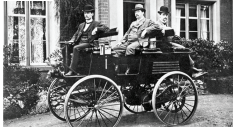
It has been a bad couple of years for those hoping for the death of driving. In America, where cars are an important part of the national psyche, a decade ago people had suddenly started to drive less, which had not happened since the oil shocks of the 1970s. Academics started to talk excitedly about “peak driving”, offering explanations such as urbanisation, ageing baby-boomers, car-shy millennials, ride-sharing apps such as Uber and even the distraction of Facebook.
Yet the causes may have been more prosaic: a combination of higher petrol prices and lower incomes in the wake of the 2008-09 financial crisis. Since the drop in oil prices in 2014, and a recovery in employment, the number of vehicle-miles travelled has rebounded, and sales of trucks and SUVs, which are less fuel-efficient than cars, have hit record highs.
This sensitivity to prices and incomes is important for global oil demand. More than half the world’s oil is used for transport, and of that, 46% goes into passenger cars. But the response to lower prices has been partially offset by dramatic improvements in fuel efficiency in America and elsewhere, thanks to standards like America’s Corporate Average Fuel Economy (CAFE), the EU’s rules on CO2 emissions and those in place in China since 2012.
The IEA says that such measures cut oil consumption in 2015 by a whopping 2.3m b/d. This is particularly impressive because interest in fuel efficiency usually wanes when prices are low. If best practice were applied to all the world’s vehicles, the savings would be 4.3m b/d, roughly equivalent to the crude output of Canada. This helps explain why some forecasters think demand for petrol may peak within the next 10-15 years even if the world’s vehicle fleet keeps growing.
Occo Roelofsen of McKinsey, a consultancy, goes further. He reckons that thanks to the decline in the use of oil in light vehicles, total consumption of liquid fuels will begin to fall within a decade, and that in the next few decades driving will be shaken up by electric vehicles (EVs), self-driving cars and car-sharing. […]
(Dated Nov 24th, 2016. From https://www.economist.com/news/specialreport/21710635-what-changes-driving-habits-and-improved-batteries-might-dooil-demand-coming. Accessed July 18th, 2017)
Read the sentences and mark them as TRUE (T) or FALSE (F):
( ) The verb phrase in “driving will be shaken up” is in the passive voice.
( ) There is a false cognate in the phrase “all the world’s vehicles”.
( ) “like” in “standards like America’s Corporate Average Fuel Economy” is a verb.
Provas
CAPEX – Capital Expenditure
DHSV – Down Hole Safety Valve
DL – Diverless
DP – Dynamic Positioning
ESD – Emergency ShutDown
FPSO – Floating Production Storage and Offloading
GLL – Guide Line Less
MCV – Módulo de Conexão Vertical
OPEX – Operational Expenditure
PLEM – Pipeline End Manifold
PLET – Pipeline End Termination
PLSV – Pipe Laying Support Vessel
RGO – Razão Gás Óleo
SCM – Subsea Control Module
TRT – Tree Running Tool
UEP – Unidade Estacionária de Produção
VASPS – Vertical Annular Separation and Pumping System
VPL – Valor Presente Líquido
Avalie se são verdadeiras (V) ou falsas (F) as afirmativas seguintes:
- É importante a regularidade da inspeção interna com pig instrumentado nos oleodutos que interligam as UEPs com a malha onshore.
- O uso do pig instrumentado deve ser acompanhado pelo respectivo AUV (Autonomous Underwater Vehicle).
- O pig espuma remove a espuma na interface óleo/água no interior dos oleodutos.
- O uso regular de pigs de limpeza promove a melhoria do escoamento e da integridade das linhas de produção.
Provas
CAPEX – Capital Expenditure
DHSV – Down Hole Safety Valve
DL – Diverless
DP – Dynamic Positioning
ESD – Emergency ShutDown
FPSO – Floating Production Storage and Offloading
GLL – Guide Line Less
MCV – Módulo de Conexão Vertical
OPEX – Operational Expenditure
PLEM – Pipeline End Manifold
PLET – Pipeline End Termination
PLSV – Pipe Laying Support Vessel
RGO – Razão Gás Óleo
SCM – Subsea Control Module
TRT – Tree Running Tool
UEP – Unidade Estacionária de Produção
VASPS – Vertical Annular Separation and Pumping System
VPL – Valor Presente Líquido
A respeito de um SCM (Subsea Control Module), analise as afirmativas abaixo:
I. Deve ser usado em águas rasas e poços próximos à Unidade de Produção.
II. Deve sempre permitir o reparo submarino com mergulhadores.
III. Permite uma resposta mais rápida na atuação das válvulas da ANM, comparado com o sistema de controle direto.
IV. Pode conjugar comandos elétricos e hidráulicos.
Assinale a alternativa correta.
Provas
Caderno Container