Foram encontradas 49 questões.
A elaboração onírica, por conta da atuação do processo primário,
Provas

Para a compreensão da dinâmica familiar, é importante considerar como cada um dos pais intemalizou os valores, estereótipos e conflitos característicos de suas famílias de origem, uma vez que os conflitos não resolvidos pelos pais com suas famílias originais podem se reeditar na sua relação com os filhos. Esse fenômeno é denominado
Provas
Dentre as contribuições significativas de Sigmund Freud, ao longo da história da psicanálise, pode-se destacar o conceito de
Provas
Pacientes oncológicos, em situações limites, podem expressar seu desejo de morrer, solicitando, inclusive, que os profissionais de saúde que o acompanham acelerem o processo. Nesses casos, o psicólogo pode orientar esses profissionais que a melhor conduta a ser adotada é a de
Provas
A fase de negação é frequentemente identificada como reação inicial em pacientes que recebem o diagnóstico de uma doença terminal. Essa fase
Provas
Na fase do luto denominada depressão, os pacientes em ambiente hospitalar podem demonstrar uma sensação de esvaziamento e de perda. Nesse momento, é importante que o psicólogo oriente os familiares dessa pessoa para que
Provas
Leia o texto para responder às questões de números 14 e 15.
The Five Phases of Clinical Research
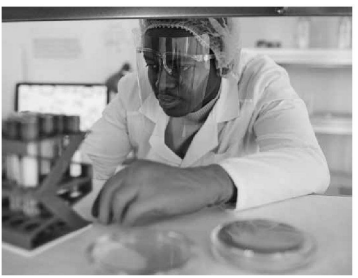
Photo by AnnasStills / iStock / Getty Images Plus
Many people who are affected by cancer seek to contribute to tomorrow's treatments by participating in clinical trials, studies in which one or more human subjects are assigned to a treatment to evaluate its effects. There are several distinct phases of clinical research, each designed to answer different questions. Typically, participants only take part in one phase of the study.
Phase 0. 10 to 15 participants
Purpose: To confirm a treatment behaves as desired in humans.
When preclinical research yields a promising drug, a phase O trial may be used to ascertain whether it behaves as expected when administered to a human. The focus is on how the drug is processed by the body and what effects it has on the body. Doses are very small and only a few are administered, so it is highly unlikely that the treatment will affect the participant's cancer.
Phase I. 15 to 30 participants
Purpose: To find a safe dose and establish the best way to administer the treatment.
A small number of patients are given a very low dose, and then increasing dosages are given to subsequent groups of patients until either the treatment works or side effects are deemed too severe to continue, During this phase, determining whether the drug is safe is prioritized over finding out whether it can treat cancer.
Phase II Up to 100 participants
Purpose: To find out whether the treatment works.
The dosage and method of administration established by a phase | trial are put to the test in phase Il. Typically, everyone receives the same dose in the same way, but participants may be put into different groups to test one dose or method against another. Doctors look for different results depending on the goals of the treatment. In many cases, the goal is that participants live longer after receiving the treatment compared to those who did not receive it. But metrics like the amount the cancer shrank or improvements to quality of life may be used as well.
Phase III 100 to several thousand participants
Purpose: To compare the treatment, or the new way of using an existing treatment, to the standard of care.
Before a new treatment can be approved for use in patients, it is compared against the current standard. Typically, participants will be randomized to either the new treatment or the standard treatment. Placebos are sometimes used, but never by themselves if there is a standard treatment available. If the new treatment is demonstrably more effective or safer than the standard of care, it can be submitted to the Food and Drug Administration (FDA) for approval.
Phase IV 100 to several thousand participants
Purpose: To monitor long-term safety and effectiveness.
After a drug has received FDA approval, it may go through additional testing to determine long-term benefits and side effects. To that end, these trials may span a much longer period of time than previous phases and enroll many more participants. This phase of testing is usually optional, although it may be mandated by regulatory authorities.
(mww.cancertodaymag.org/Pages/Spring2021/The-Five-Phases-ofClinical-Research.aspx?utm source=aacr-org&utm medium= practicalknowledge&utm content=webex&utm campaign= cancertoday. Adaptado)
De acordo com o texto, a Fase I de testes clínicos deve
Provas
Leia o texto para responder às questões de números 11 a 13.

Screening for colorectal cancer, the second leading cause of cancer death in the United States, by colonoscopy can both detect these cancers at an early stage, when successful treatment is more likely, and prevent them from developing in the first place. That's because precancerous polyps found by colonoscopy can be removed during the procedure, thus preventing them from going on to become cancers.
If everyone followed colorectal cancer screening guidelines, at least 60 percent of colorectal cancer deaths in the United States could be avoided. Unfortunately, just 38 percent of adults in the United States are getting screened as recommended.
Similarly, Pap test screening for cervical cancer, which was diagnosed in more than 13,170 U.S. women in 2019, can both detect cancer at an early stage, when treatment outcomes tend to be better, and detect precancerous abnormalities, which can then be treated to prevent them from developing into cancers.
(www. aacr.org/patients-caregivers/about-cancer/cancer-prevention. Adaptado)
In the excerpt from the second paragraph — just 38 percent of adults in the United States are getting screened as recommended -, the word in bold can be replaced, with no change in meaning, by
Provas
Leia o texto para responder às questões de números 11 a 13.
Screening for colorectal cancer, the second leading cause of cancer death in the United States, by colonoscopy can both detect these cancers at an early stage, when successful treatment is more likely, and prevent them from developing in the first place. That's because precancerous polyps found by colonoscopy can be removed during the procedure, thus preventing them from going on to become cancers.
If everyone followed colorectal cancer screening guidelines, at least 60 percent of colorectal cancer deaths in the United States could be avoided. Unfortunately, just 38 percent of adults in the United States are getting screened as recommended.
Similarly, Pap test screening for cervical cancer, which was diagnosed in more than 13,170 U.S. women in 2019, can both detect cancer at an early stage, when treatment outcomes tend to be better, and detect precancerous abnormalities, which can then be treated to prevent them from developing into cancers.
(www. aacr.org/patients-caregivers/about-cancer/cancer-prevention. Adaptado)
In the excerpt from the first paragraph — thus preventing them from going on to become cancers —, the word in bold indicates
Provas
Leia o texto para responder às questões de números 11 a 13.
Screening for colorectal cancer, the second leading cause of cancer death in the United States, by colonoscopy can both detect these cancers at an early stage, when successful treatment is more likely, and prevent them from developing in the first place. That's because precancerous polyps found by colonoscopy can be removed during the procedure, thus preventing them from going on to become cancers.
If everyone followed colorectal cancer screening guidelines, at least 60 percent of colorectal cancer deaths in the United States could be avoided. Unfortunately, just 38 percent of adults in the United States are getting screened as recommended.
Similarly, Pap test screening for cervical cancer, which was diagnosed in more than 13,170 U.S. women in 2019, can both detect cancer at an early stage, when treatment outcomes tend to be better, and detect precancerous abnormalities, which can then be treated to prevent them from developing into cancers.
(www. aacr.org/patients-caregivers/about-cancer/cancer-prevention. Adaptado)
The text is mainly about
Provas
Caderno Container