Foram encontradas 46.768 questões.
Read text VI to answer question.
Text VI
Throughout history, countless remarkable women have made invaluable contributions to the fields of Science, Technology, Engineering, and Mathematics (STEM). Their pioneering work has not only advanced human understanding in these disciplines, but also paved the way for future generations of female scientists and engineers, shattering stereotypes and challenging societal norms in the process.
Over the past decade, we've witnessed a significant increase in the number of women and girls from all backgrounds and races expressing interest in STEM fields. This diversity enriches the pool of minds focused on answering some of the most challenging questions of our time. The surge in female participation has led to an explosion of new perspectivas, ideas, and innovations, contributing significantly to scientific and technological advancement. There are now more women scientists, engineers, mathematicians, and technologists than ever before working tirelessly to solve complex problems, making our planet a better and more advanced place to live. This shift is not only encouraging but also criticai for the future of global innovation.
Despite prqgress in recent years, there is still a significant gender gap within STEM fields. According to the National Science Foundation, women in STEM make up only 28% of the wórkforce in science and engineering occupations. This undeHepresentation of women in STEM can be attributed to a number of factors, including unconscious bias and lack of access to opportunities. However, it is crucial that we work towards increasing female representation in these fields, not only for the sake of gender equality, but also to ensure diverse perspectives and approaches to problem-solving within the women in STEM community. By empowering and supporting women in STEM, we can drive innovation and advancements that benefit society as a whole.
Adapted from: https://abakcus.com/
ln the sentence "This shift is not only encouraging but also critical the future of global innovation" (second paragraph), the subject "This shift" refers to:
Provas

Read text V to answer question.
Text V
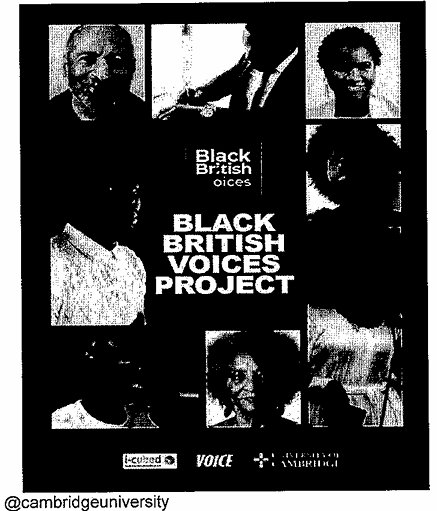
98% of Black Britons said they have compromised self-expression and identity to fit into the workplace, new findings show.
The Black Britons Voices project is a comprehensive survey of over 10,000 Black Britons - lhe largest research initiative ever to be conducted with Black British communities.
The project is a ground-breaking collaboration between @CamSociology, @TheVoiceNewspaper and I-Cubed consultants.
The research reveals a central split on the question of British pride in Black communities, and shows that racial prejudice and insensitivity in UK workplaces remain entrenched, with almost 9 in 10 respondents saying they have experienced racial discrimination at work.
#BlackBritishVoices #Sociology# #UniversityOfCambridge
#CambridgeUniversity
https://www.instagram.com/p/CxvaHkcMW36/?igshid=MTc4MmM
1Ym/2Ng%3D%3D
According to the text, it is possible to affirm that:
Provas
Read text V to answer question.
Text V
98% of Black Britons said they have compromised self-expression and identity to fit into the workplace, new findings show.
The Black Britons Voices project is a comprehensive survey of over 10,000 Black Britons - lhe largest research initiative ever to be conducted with Black British communities.
The project is a ground-breaking collaboration between @CamSociology, @TheVoiceNewspaper and I-Cubed consultants.
The research reveals a central split on the question of British pride in Black communities, and shows that racial prejudice and insensitivity in UK workplaces remain entrenched, with almost 9 in 10 respondents saying they have experienced racial discrimination at work.
#BlackBritishVoices #Sociology# #UniversityOfCambridge
#CambridgeUniversity
https://www.instagram.com/p/CxvaHkcMW36/?igshid=MTc4MmM
1Ym/2Ng%3D%3D
Mark the option in which lhe word, extracted from the text, is a noun formed by adding a prefix and a suffix.
Provas
Read text IV to answer question.
Text IV
When we started for our drive the sun was shining brightly on Munich, and the air was full of lhe joyousness of early summer.
Just as we were about to depart, Herr Delbruck (the maitred'hotel of the QuatreSaisons, where I was staying) came down bareheaded to the carriage and, after wishing me a pleasant drive, said to the coachman, still holding his hand on the handle of the carriage door, "Remember you are back by nightfall. The sky looks bright but there is a shiver in the north wind that says there may be a sudden storm. But I am sure you will not be late." Here he smiled and added, "for you know what night it is."
Johann answered with an emphatic, "Ja, mein Herr," and, touching his hat, drove off quickly. When we had cleared the town, I said, after signalling to him to stop: "Tell me, Johann, what is tonight?" He crossed himself, as he answered laconically: "Walpurgis nacht."
(...) "Well, Johann, I want to go down this road. I shall not ask you to come unless you like; but tell me why you do not like to go", 1 asked. For answer, he seemed to throw himself off the box, so quickly did he reach the ground. Then he stretched out his hands appealingly to me, and implored me not to go. There was just enough of English mixed with the German for me to understand the drift of his talk. He seemed always just about to tell me something the very idea of which evidently frightened him; but, each time, he pulled himself up, saying, as he crossed himself: "Walpurgis nacht!"
Excerpt from "Dracula's Guest", a short story by Bram Stoker
(1847-1912) first published in the collection "Dracula's Guest and
Other Weird Stories': two years after lhe author's death. lt is
believed to have been intended as the first chapter for Stoker's
1897 novel "Dracula", but was deleted prior to publication by the
original publishers who felt it was superfluous to the story.
All statements are correct about lhe text, EXCEPT for:
Provas
Read text IV to answer question.
Text IV
When we started for our drive the sun was shining brightly on Munich, and the air was full of lhe joyousness of early summer.
Just as we were about to depart, Herr Delbruck (the maitred'hotel of the QuatreSaisons, where I was staying) came down bareheaded to the carriage and, after wishing me a pleasant drive, said to the coachman, still holding his hand on the handle of the carriage door, "Remember you are back by nightfall. The sky looks bright but there is a shiver in the north wind that says there may be a sudden storm. But I am sure you will not be late." Here he smiled and added, "for you know what night it is."
Johann answered with an emphatic, "Ja, mein Herr," and, touching his hat, drove off quickly. When we had cleared the town, I said, after signalling to him to stop: "Tell me, Johann, what is tonight?" He crossed himself, as he answered laconically: "Walpurgis nacht."
(...) "Well, Johann, I want to go down this road. I shall not ask you to come unless you like; but tell me why you do not like to go", 1 asked. For answer, he seemed to throw himself off the box, so quickly did he reach the ground. Then he stretched out his hands appealingly to me, and implored me not to go. There was just enough of English mixed with the German for me to understand the drift of his talk. He seemed always just about to tell me something the very idea of which evidently frightened him; but, each time, he pulled himself up, saying, as he crossed himself: "Walpurgis nacht!"
Excerpt from "Dracula's Guest", a short story by Bram Stoker
(1847-1912) first published in the collection "Dracula's Guest and
Other Weird Stories': two years after lhe author's death. lt is
believed to have been intended as the first chapter for Stoker's
1897 novel "Dracula", but was deleted prior to publication by the
original publishers who felt it was superfluous to the story.
Say if the statements below are T (TRUE) or F (FALSE) about the story.
( ) The man driving the carriage couldn't speak English at all.
( ) lt was sunny that day, but the weather could suddenly change later.
( ) Herr Delbruck warned the coachman to return with the carriage before sunset.
( ) The narrator of the story seemed to be unaware of what could happen that night.
Now, mark the correct option, from top to bottom.
Provas
Read text III to answer question.
Text III
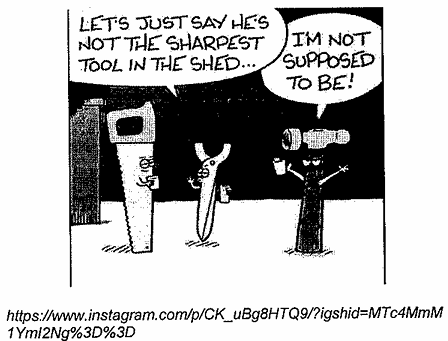
The adjective "sharp" in the cartoon is used in lhe superlative degree to compare a tool with all the others in the shed. Mark lhe option in which the adjective in the superlative form is grammatically correct.
Provas
Read text III to answer question.
Text III
The cartoon plays with lhe word "sharp" because it has different meanings. What is the literal meaning of "sharp" in the context of tools?
Provas
Read text III to answer question.
Text III
What lesson can be learned after reflecting upon this cartoon?
Provas
Read text II to answer question.
Text II
Disability is not an obstacle to success. These inspirational
leaders prove that.
World Economic Forum
Dec 2, 2016
Disability need not be an obstacle to success," Stephen Hawking wrote in lhe first ever world disability repor! back in 2011. As one of lhe most influential scientists oi modern times, the wheelchair-bound physicist is certainly proof of that. These four leaders show that disability is no barrier to achieving incredible things.
Frida Kahlo
Mexico's most famous artist was born with spina bifida, a condition that can cause defects in the spinal cord. At six, she contracted polio, which left one leg much thinner than the other.
ln spite of these challenges, she was an aclive child, but at 18 a bus accident left her with serious injuries. lt was while recovering from the accident that Frida discovered her love of painting. She would go on to be one of the most famous Surrealists in the world.
Helen Keller
Born in the US in 1880, an illness left Helen Keller both blind and deaf before her second birthday. While the services available to people with disabilities were less extensive than they are today, Keller's mother sought out experts and ensured her daughter received the best education.
ln 1904, Keller graduated from Radcliffe College, becoming the first deaf-blind person to earn a Bachelor of Arts. lt was at university that her career as a writer and social activist started. Today, lhe Helen Keller archives contain almost 500 speeches and essays on topics as varied as birth control and Fascism in Europe.
She would go on to achieve international acclaim, becoming America's first Goodwill Ambassador, and to this day she remains an inspiration to the deaf and blind.
Mark Pollock
"I went blind at 22. From an athlete, I became a young man with a white cane, unsure how to live my life," Mark Pollock, a Forum Young Global Leader explains. But very soon, he found a deeper purpose in life, and realized his disability didn't have to stop him from achieving great things.
"I began to race in deserts, mountains, across oceans, and on the 10th anniversary of going blind, I raced over 43 days to the South Pole."
But in 2010, an accident left him paralyzed, and once again his world changed overnight: "My new life was shattered." He had a choice: to let his disability define him for lhe rest of his life, or to continue fighting. There was only ever one way it was going to go."lf I just sat in a wheelchair, I would be giving up completely," he remembers. Today, he's working with other leaders from science, technology and communications to fund and fast-track a cure for paralysis.
Ralph Braun
Ralph Braun was still a young boy when he was diagnosed with muscular dystrophy, an incurable group of genetic diseases that leads to a loss of muscle mass.
A few years after his diagnosis, Ralph began to lose his ability to walk. While doctors warned him he would never be able to lead an independent life, the lively young boy was already proving people wrong, building the first battery-powered scooter. His passion would eventually lead him to establish wheelchair manufacturer BraunAbility.
He died in 2013, but as his company's website notes, his legacy lives on. "Necessity is the mother of invention, and Ralph's physical limitations only served to fuel his determination to live independently and prove to society that people with physical disabilities can participate fully and actively in life."
Adapted from https://medium.com/world-economic-
forum/disability-is-not-an-obstacle-to-success-these-inspirational-
leaders-prove-that-72176033669
Mark lhe grammatically correct question to the answer below.
"(He) realized his disability didn't have to stop him from achieving great things."
Provas
Read text II to answer question.
Text II
Disability is not an obstacle to success. These inspirational
leaders prove that.
World Economic Forum
Dec 2, 2016
Disability need not be an obstacle to success," Stephen Hawking wrote in lhe first ever world disability repor! back in 2011. As one of lhe most influential scientists oi modern times, the wheelchair-bound physicist is certainly proof of that. These four leaders show that disability is no barrier to achieving incredible things.
Frida Kahlo
Mexico's most famous artist was born with spina bifida, a condition that can cause defects in the spinal cord. At six, she contracted polio, which left one leg much thinner than the other.
ln spite of these challenges, she was an aclive child, but at 18 a bus accident left her with serious injuries. lt was while recovering from the accident that Frida discovered her love of painting. She would go on to be one of the most famous Surrealists in the world.
Helen Keller
Born in the US in 1880, an illness left Helen Keller both blind and deaf before her second birthday. While the services available to people with disabilities were less extensive than they are today, Keller's mother sought out experts and ensured her daughter received the best education.
ln 1904, Keller graduated from Radcliffe College, becoming the first deaf-blind person to earn a Bachelor of Arts. lt was at university that her career as a writer and social activist started. Today, lhe Helen Keller archives contain almost 500 speeches and essays on topics as varied as birth control and Fascism in Europe.
She would go on to achieve international acclaim, becoming America's first Goodwill Ambassador, and to this day she remains an inspiration to the deaf and blind.
Mark Pollock
"I went blind at 22. From an athlete, I became a young man with a white cane, unsure how to live my life," Mark Pollock, a Forum Young Global Leader explains. But very soon, he found a deeper purpose in life, and realized his disability didn't have to stop him from achieving great things.
"I began to race in deserts, mountains, across oceans, and on the 10th anniversary of going blind, I raced over 43 days to the South Pole."
But in 2010, an accident left him paralyzed, and once again his world changed overnight: "My new life was shattered." He had a choice: to let his disability define him for lhe rest of his life, or to continue fighting. There was only ever one way it was going to go."lf I just sat in a wheelchair, I would be giving up completely," he remembers. Today, he's working with other leaders from science, technology and communications to fund and fast-track a cure for paralysis.
Ralph Braun
Ralph Braun was still a young boy when he was diagnosed with muscular dystrophy, an incurable group of genetic diseases that leads to a loss of muscle mass.
A few years after his diagnosis, Ralph began to lose his ability to walk. While doctors warned him he would never be able to lead an independent life, the lively young boy was already proving people wrong, building the first battery-powered scooter. His passion would eventually lead him to establish wheelchair manufacturer BraunAbility.
He died in 2013, but as his company's website notes, his legacy lives on. "Necessity is the mother of invention, and Ralph's physical limitations only served to fuel his determination to live independently and prove to society that people with physical disabilities can participate fully and actively in life."
Adapted from https://medium.com/world-economic-
forum/disability-is-not-an-obstacle-to-success-these-inspirational-
leaders-prove-that-72176033669
AII these words taken from the extract about Ralph Braun are adverbs, EXCEPT for:
Provas
Caderno Container