Foram encontradas 46.768 questões.
3780256
Ano: 2024
Disciplina: Inglês (Língua Inglesa)
Banca: AMEOSC
Orgão: Pref. Guaraciaba-SC
Disciplina: Inglês (Língua Inglesa)
Banca: AMEOSC
Orgão: Pref. Guaraciaba-SC
Provas:
O texto seguinte servirá de base para responder à questão.
YOUNG MINDS Number of children facing mental
health crisis soars 53% in 4 years − 16 signs your
child is at risk
Some 32,521 under-18s were referred for emergency
care at mental health services in 2022 to 2023, up from
21,242 in 2019 to 2020.
Doctors at the Royal College of Psychiatrists said the
shocking numbers "cannot become the new norm".
The college said many of these under-18s have suffered
worsening mental health while on NHS waiting lists for
treatment.
Dr Elaine Lockhart, chair of the college's child and
adolescent faculty, said: "It's unacceptable that so many
children and young people are reaching crisis point
before they are able to access care.
"Severe mental illness is not just an adult problem. The
need for specialist mental health services for children and
young people is growing all the time.
"The evidence shows us that children who receive
support quickly are less likely to develop long-term
conditions, that negatively affect their education, social
development and health in later life.
"Government and integrated care boards must commit to
reducing the rate of mental illness among children by
setting an achievable target.
"This needs to be backed by an expansion of the mental
health workforce and additional funding for services.
"Investing in children's mental health will ultimately free
up NHS time and resources, while ensuring the country
has a healthy and productive population in the years to
come."
The college said around half of mental health conditions
arise before the age of 14 and three-quarters before the
age of 24.
Data shows under-18s who are waiting for follow-up after
a GP referral for mental health problems have already
waited on average five months and, in the worst case,
almost two years.
The Royal College of Psychiatrists said last year's
Government announcement of an extra £5million to
improve access to existing early support hubs was
welcome.
But it said it predicts an extra £125 to £205million is
needed to establish hubs in every local authority, with
running costs of at least £114m per year.
It comes as the Royal College of Paediatrics and Child
Health (RCPCH) published a statement outlining the
"changing role" for paediatricians in being involved in
identifying and helping children with poor mental health.
RCPCH officer for mental health Dr Karen Street said:
"The entire children's workforce has a role to play in
tackling the current crisis in children's mental health but
as paediatricians we are particularly well placed to make
a difference.
"Research shows paediatricians are the most trusted
profession for secondary school children, across all
ethnicities and backgrounds and that children see
doctors as a key group to support their mental health.
"We know that paediatric settings and emergency
departments are not ideal for children and young people
experiencing a crisis in their mental health, but they
cannot be left without support.
"If we are ever to get out of this dire situation then we
need meaningful support for health services and staff, as
well as child focused polices that can improve the
physical, emotional, social and educational wellbeing of
young people.
"The responsibility to tackle this growing mental health
emergency cannot be left to healthcare professionals
alone."
Liberal Democrat health and social care spokesperson
Daisy Cooper said: "This devastating explosion of mental
ill health among children should be a wake-up call for the
government.
"Conservative ministers have neglected children's mental
health during and after the pandemic, leaving mental
health services and families in crisis.
"We have seen a litany of broken promises from this
government including the failure to deliver maximum
waiting times for children, ending out of area placements
or reforming the Mental Health Act."
https://www.thesun.co.uk/health/25760424/children-mental-health-crisis
-soars/
Provas
Questão presente nas seguintes provas

3780255
Ano: 2024
Disciplina: Inglês (Língua Inglesa)
Banca: AMEOSC
Orgão: Pref. Guaraciaba-SC
Disciplina: Inglês (Língua Inglesa)
Banca: AMEOSC
Orgão: Pref. Guaraciaba-SC
Provas:
O texto seguinte servirá de base para responder à questão.
YOUNG MINDS Number of children facing mental
health crisis soars 53% in 4 years − 16 signs your
child is at risk
Some 32,521 under-18s were referred for emergency
care at mental health services in 2022 to 2023, up from
21,242 in 2019 to 2020.
Doctors at the Royal College of Psychiatrists said the
shocking numbers "cannot become the new norm".
The college said many of these under-18s have suffered
worsening mental health while on NHS waiting lists for
treatment.
Dr Elaine Lockhart, chair of the college's child and
adolescent faculty, said: "It's unacceptable that so many
children and young people are reaching crisis point
before they are able to access care.
"Severe mental illness is not just an adult problem. The
need for specialist mental health services for children and
young people is growing all the time.
"The evidence shows us that children who receive
support quickly are less likely to develop long-term
conditions, that negatively affect their education, social
development and health in later life.
"Government and integrated care boards must commit to
reducing the rate of mental illness among children by
setting an achievable target.
"This needs to be backed by an expansion of the mental
health workforce and additional funding for services.
"Investing in children's mental health will ultimately free
up NHS time and resources, while ensuring the country
has a healthy and productive population in the years to
come."
The college said around half of mental health conditions
arise before the age of 14 and three-quarters before the
age of 24.
Data shows under-18s who are waiting for follow-up after
a GP referral for mental health problems have already
waited on average five months and, in the worst case,
almost two years.
The Royal College of Psychiatrists said last year's
Government announcement of an extra £5million to
improve access to existing early support hubs was
welcome.
But it said it predicts an extra £125 to £205million is
needed to establish hubs in every local authority, with
running costs of at least £114m per year.
It comes as the Royal College of Paediatrics and Child
Health (RCPCH) published a statement outlining the
"changing role" for paediatricians in being involved in
identifying and helping children with poor mental health.
RCPCH officer for mental health Dr Karen Street said:
"The entire children's workforce has a role to play in
tackling the current crisis in children's mental health but
as paediatricians we are particularly well placed to make
a difference.
"Research shows paediatricians are the most trusted
profession for secondary school children, across all
ethnicities and backgrounds and that children see
doctors as a key group to support their mental health.
"We know that paediatric settings and emergency
departments are not ideal for children and young people
experiencing a crisis in their mental health, but they
cannot be left without support.
"If we are ever to get out of this dire situation then we
need meaningful support for health services and staff, as
well as child focused polices that can improve the
physical, emotional, social and educational wellbeing of
young people.
"The responsibility to tackle this growing mental health
emergency cannot be left to healthcare professionals
alone."
Liberal Democrat health and social care spokesperson
Daisy Cooper said: "This devastating explosion of mental
ill health among children should be a wake-up call for the
government.
"Conservative ministers have neglected children's mental
health during and after the pandemic, leaving mental
health services and families in crisis.
"We have seen a litany of broken promises from this
government including the failure to deliver maximum
waiting times for children, ending out of area placements
or reforming the Mental Health Act."
https://www.thesun.co.uk/health/25760424/children-mental-health-crisis
-soars/
Provas
Questão presente nas seguintes provas
3780254
Ano: 2024
Disciplina: Inglês (Língua Inglesa)
Banca: AMEOSC
Orgão: Pref. Guaraciaba-SC
Disciplina: Inglês (Língua Inglesa)
Banca: AMEOSC
Orgão: Pref. Guaraciaba-SC
Provas:
O texto seguinte servirá de base para responder à questão.
YOUNG MINDS Number of children facing mental
health crisis soars 53% in 4 years − 16 signs your
child is at risk
Some 32,521 under-18s were referred for emergency
care at mental health services in 2022 to 2023, up from
21,242 in 2019 to 2020.
Doctors at the Royal College of Psychiatrists said the
shocking numbers "cannot become the new norm".
The college said many of these under-18s have suffered
worsening mental health while on NHS waiting lists for
treatment.
Dr Elaine Lockhart, chair of the college's child and
adolescent faculty, said: "It's unacceptable that so many
children and young people are reaching crisis point
before they are able to access care.
"Severe mental illness is not just an adult problem. The
need for specialist mental health services for children and
young people is growing all the time.
"The evidence shows us that children who receive
support quickly are less likely to develop long-term
conditions, that negatively affect their education, social
development and health in later life.
"Government and integrated care boards must commit to
reducing the rate of mental illness among children by
setting an achievable target.
"This needs to be backed by an expansion of the mental
health workforce and additional funding for services.
"Investing in children's mental health will ultimately free
up NHS time and resources, while ensuring the country
has a healthy and productive population in the years to
come."
The college said around half of mental health conditions
arise before the age of 14 and three-quarters before the
age of 24.
Data shows under-18s who are waiting for follow-up after
a GP referral for mental health problems have already
waited on average five months and, in the worst case,
almost two years.
The Royal College of Psychiatrists said last year's
Government announcement of an extra £5million to
improve access to existing early support hubs was
welcome.
But it said it predicts an extra £125 to £205million is
needed to establish hubs in every local authority, with
running costs of at least £114m per year.
It comes as the Royal College of Paediatrics and Child
Health (RCPCH) published a statement outlining the
"changing role" for paediatricians in being involved in
identifying and helping children with poor mental health.
RCPCH officer for mental health Dr Karen Street said:
"The entire children's workforce has a role to play in
tackling the current crisis in children's mental health but
as paediatricians we are particularly well placed to make
a difference.
"Research shows paediatricians are the most trusted
profession for secondary school children, across all
ethnicities and backgrounds and that children see
doctors as a key group to support their mental health.
"We know that paediatric settings and emergency
departments are not ideal for children and young people
experiencing a crisis in their mental health, but they
cannot be left without support.
"If we are ever to get out of this dire situation then we
need meaningful support for health services and staff, as
well as child focused polices that can improve the
physical, emotional, social and educational wellbeing of
young people.
"The responsibility to tackle this growing mental health
emergency cannot be left to healthcare professionals
alone."
Liberal Democrat health and social care spokesperson
Daisy Cooper said: "This devastating explosion of mental
ill health among children should be a wake-up call for the
government.
"Conservative ministers have neglected children's mental
health during and after the pandemic, leaving mental
health services and families in crisis.
"We have seen a litany of broken promises from this
government including the failure to deliver maximum
waiting times for children, ending out of area placements
or reforming the Mental Health Act."
https://www.thesun.co.uk/health/25760424/children-mental-health-crisis
-soars/
Provas
Questão presente nas seguintes provas
3780253
Ano: 2024
Disciplina: Inglês (Língua Inglesa)
Banca: AMEOSC
Orgão: Pref. Guaraciaba-SC
Disciplina: Inglês (Língua Inglesa)
Banca: AMEOSC
Orgão: Pref. Guaraciaba-SC
Provas:
O texto seguinte servirá de base para responder à questão.
YOUNG MINDS Number of children facing mental
health crisis soars 53% in 4 years − 16 signs your
child is at risk
Some 32,521 under-18s were referred for emergency
care at mental health services in 2022 to 2023, up from
21,242 in 2019 to 2020.
Doctors at the Royal College of Psychiatrists said the
shocking numbers "cannot become the new norm".
The college said many of these under-18s have suffered
worsening mental health while on NHS waiting lists for
treatment.
Dr Elaine Lockhart, chair of the college's child and
adolescent faculty, said: "It's unacceptable that so many
children and young people are reaching crisis point
before they are able to access care.
"Severe mental illness is not just an adult problem. The
need for specialist mental health services for children and
young people is growing all the time.
"The evidence shows us that children who receive
support quickly are less likely to develop long-term
conditions, that negatively affect their education, social
development and health in later life.
"Government and integrated care boards must commit to
reducing the rate of mental illness among children by
setting an achievable target.
"This needs to be backed by an expansion of the mental
health workforce and additional funding for services.
"Investing in children's mental health will ultimately free
up NHS time and resources, while ensuring the country
has a healthy and productive population in the years to
come."
The college said around half of mental health conditions
arise before the age of 14 and three-quarters before the
age of 24.
Data shows under-18s who are waiting for follow-up after
a GP referral for mental health problems have already
waited on average five months and, in the worst case,
almost two years.
The Royal College of Psychiatrists said last year's
Government announcement of an extra £5million to
improve access to existing early support hubs was
welcome.
But it said it predicts an extra £125 to £205million is
needed to establish hubs in every local authority, with
running costs of at least £114m per year.
It comes as the Royal College of Paediatrics and Child
Health (RCPCH) published a statement outlining the
"changing role" for paediatricians in being involved in
identifying and helping children with poor mental health.
RCPCH officer for mental health Dr Karen Street said:
"The entire children's workforce has a role to play in
tackling the current crisis in children's mental health but
as paediatricians we are particularly well placed to make
a difference.
"Research shows paediatricians are the most trusted
profession for secondary school children, across all
ethnicities and backgrounds and that children see
doctors as a key group to support their mental health.
"We know that paediatric settings and emergency
departments are not ideal for children and young people
experiencing a crisis in their mental health, but they
cannot be left without support.
"If we are ever to get out of this dire situation then we
need meaningful support for health services and staff, as
well as child focused polices that can improve the
physical, emotional, social and educational wellbeing of
young people.
"The responsibility to tackle this growing mental health
emergency cannot be left to healthcare professionals
alone."
Liberal Democrat health and social care spokesperson
Daisy Cooper said: "This devastating explosion of mental
ill health among children should be a wake-up call for the
government.
"Conservative ministers have neglected children's mental
health during and after the pandemic, leaving mental
health services and families in crisis.
"We have seen a litany of broken promises from this
government including the failure to deliver maximum
waiting times for children, ending out of area placements
or reforming the Mental Health Act."
https://www.thesun.co.uk/health/25760424/children-mental-health-crisis
-soars/
Provas
Questão presente nas seguintes provas
Considerando o pensamento de SILVA na obra
Letramento crítico e o ensino de língua inglesa:
fomentando o senso crítico e a cidadania nas aulas
de leitura (2018), julgue as sentenças abaixo como
verdadeiras (V) ou falsas (F).
1.(__) O letramento crítico está focado no ensino formal de textos canônicos para que o estudante desenvolva o senso crítico com equidade.
2.(__) Silva argumenta que o ensino de inglês deve ir além das competências linguísticas, promovendo a construção de cidadãos críticos e reflexivos, capazes de atuar de forma consciente no mundo globalizado.
3.(__) A autora propõe que o ensino de leitura deve integrar a análise de discursos midiáticos, literários e cotidianos.
A sequência correta é:
1.(__) O letramento crítico está focado no ensino formal de textos canônicos para que o estudante desenvolva o senso crítico com equidade.
2.(__) Silva argumenta que o ensino de inglês deve ir além das competências linguísticas, promovendo a construção de cidadãos críticos e reflexivos, capazes de atuar de forma consciente no mundo globalizado.
3.(__) A autora propõe que o ensino de leitura deve integrar a análise de discursos midiáticos, literários e cotidianos.
A sequência correta é:
Provas
Questão presente nas seguintes provas
Considere o excerto abaixo:
De acordo com W. M. Tagata (2018), o conceito
de_______busca uma abordagem integrativa, onde o
inglês é ensinado em diálogo com culturas locais e
globais, promovendo diversidade e letramento
crítico.
Complete a lacuna acima e assinale a alternativa correta.
Complete a lacuna acima e assinale a alternativa correta.
Provas
Questão presente nas seguintes provas
A obra A oralidade no ensino de línguas estrangeiras
(2022) de PINHO destaca uma abordagem
pedagógica que valoriza a oralidade no ensino de
línguas estrangeiras por meio de tarefas que
simulam situações reais de uso da língua. Essa
abordagem visa desenvolver a competência
comunicativa dos aprendizes de forma prática e
contextualizada. Estamos falando da:
Provas
Questão presente nas seguintes provas
Sobre Base Nacional Comum Curricular (BNCC) de
Língua Inglesa, julgue as sentenças abaixo como
verdadeiras (V) ou falsas (F).
1.(__)O eixo Conhecimentos linguísticos consolida-se pelas práticas de uso, análise e reflexão sobre a língua, sempre de modo contextualizado, articulado e a serviço das práticas de oralidade, leitura e escrita.
2.(__)A proposição do eixo Dimensão intercultural nasce da compreensão de que as culturas, especialmente na sociedade contemporânea, estão em contínuo processo de interação e (re)construção.
3.(__)Do ponto de vista metodológico, a apresentação de situações de leitura organizadas em pré-leitura, leitura plena e pós-leitura deve ser vista como potencializadora dessas aprendizagens de modo contextualizado e significativo para os estudantes, na perspectiva de um dimensionamento das práticas e competências leitoras já existentes, especialmente em língua franca.
A sequência correta é:
1.(__)O eixo Conhecimentos linguísticos consolida-se pelas práticas de uso, análise e reflexão sobre a língua, sempre de modo contextualizado, articulado e a serviço das práticas de oralidade, leitura e escrita.
2.(__)A proposição do eixo Dimensão intercultural nasce da compreensão de que as culturas, especialmente na sociedade contemporânea, estão em contínuo processo de interação e (re)construção.
3.(__)Do ponto de vista metodológico, a apresentação de situações de leitura organizadas em pré-leitura, leitura plena e pós-leitura deve ser vista como potencializadora dessas aprendizagens de modo contextualizado e significativo para os estudantes, na perspectiva de um dimensionamento das práticas e competências leitoras já existentes, especialmente em língua franca.
A sequência correta é:
Provas
Questão presente nas seguintes provas
Com base no conceito de "desestrangeirização"
apresentado por Flavius Almeida dos Anjos em O
inglês como língua franca global da
contemporaneidade (2016), julgue as sentenças
abaixo como (V) para verdadeiras ou (F), para falsas.
1.(__) O conceito de "desestrangeirização" enfatiza o uso do inglês como ferramenta para conectar-se a contextos locais e globais, rompendo com a ideia de língua "estrangeira".
2.(__) O objetivo principal da "desestrangeirização" é reduzir o papel do inglês como língua de comunicação intercultural.
3.(__) A "desestrangeirização" é uma abordagem que propõe o ensino de inglês à comunicação funcional, para além dos contextos culturais e históricos.
A sequência correta é:
1.(__) O conceito de "desestrangeirização" enfatiza o uso do inglês como ferramenta para conectar-se a contextos locais e globais, rompendo com a ideia de língua "estrangeira".
2.(__) O objetivo principal da "desestrangeirização" é reduzir o papel do inglês como língua de comunicação intercultural.
3.(__) A "desestrangeirização" é uma abordagem que propõe o ensino de inglês à comunicação funcional, para além dos contextos culturais e históricos.
A sequência correta é:
Provas
Questão presente nas seguintes provas
3777359
Ano: 2024
Disciplina: Inglês (Língua Inglesa)
Banca: VUNESP
Orgão: Pref. Vista Alegre Alto-SP
Disciplina: Inglês (Língua Inglesa)
Banca: VUNESP
Orgão: Pref. Vista Alegre Alto-SP
Provas:
Leia a tira de Calvin e Hobbes.
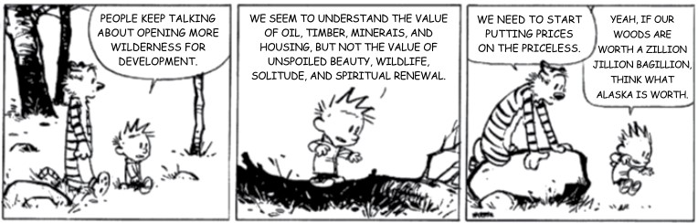
(https://medium.com/@calebwsl_/the-politics-of-calvin-and-hobbes-b032239025cc)
A fala do tigre no último quadrinho menciona “putting prices on the priceless”. Exemplo de algo “priceless” é encontrado na alternativa:
Provas
Questão presente nas seguintes provas
Cadernos
Caderno Container