Foram encontradas 48 questões.
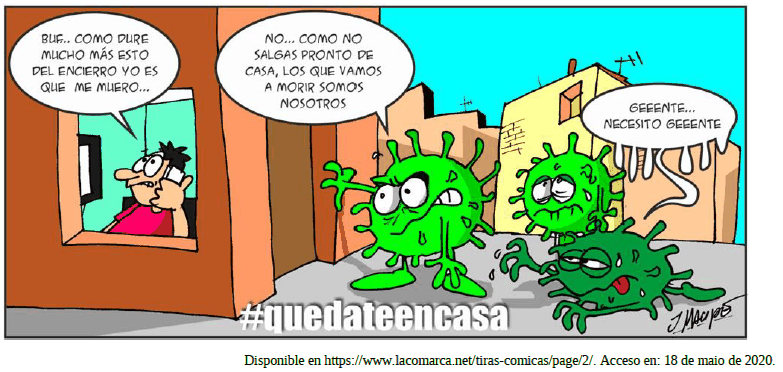
En la frase como no salgas pronto de casa, los que vamos a morir somos nosotros podemos sustituir la palabra destacada por:
Provas

Sobre el verbo en imperativo usado en la tira (#quedateencasa), es CORRECTO decir que:
Provas
Coronavirus: ¿cuál es la diferencia entre pandemia, epidemia y una infección endémica?
El brote de coronavirus acaba de ser declarado por la Organización Mundial de la Salud (OMS) como una pandemia global.
El brote ha dejado hasta el momento más de 100.000 infectados en todo el mundo y más de 4.000 muertes.
"Pandemia no es una palabra para usar a la ligera o descuidadamente. Es una palabra que, si se usa incorrectamente, puede causar un miedo irrazonable o una aceptación injustificada de que la lucha ha terminado, lo que lleva a sufrimiento y muerte innecesarios", dijo Tedros Adhanom, director de la OMS.
¿Epidemia, pandemia o endemia?
Rosalind Eggo, académica especialista en enfermedades infecciosas en la Escuela de Higiene y Medicina Tropical de Londres, le explicó a la BBC las diferencias entre epidemia, pandemia y endemia.
"La infección endémica está presente en una zona de manera permanente, en todo momento durante años y años", dice la experta.
Un ejemplo podría ser la varicela en muchos países, donde se registran casos todos los años. O la malaria, que en partes de África es una infección endémica.
Por otra parte, una epidemia es "un aumento de casos seguido de un punto máximo y, luego, una disminución".
Es lo que ocurre en los países donde se registran epidemias de gripe cada año: en otoño e invierno aumentan los casos, se llega a un máximo de infecciones y después disminuye.
Por último, la pandemia es una epidemia que ocurre "en todo el mundo más o menos al mismo tiempo".
Eggo recuerda la influenza que comenzó en México en 2009 y que después llegó a todo el mundo, fue una pandemia de gripe.
Disponible en: https://www.bbc.com/mundo/noticias-51235995 (adaptado) - Acceso en: 18 de maio de 2020.
Rosalind Eggo, académica especialista en enfermedades infecciosas en la Escuela de Higiene y Medicina Tropical de Londres, le explicó a la BBC las diferencias entre epidemia, pandemia y endemia.
En el trecho arriba, destacado del texto, la palabra DESTACADA se refiere a:
Provas
Coronavirus: ¿cuál es la diferencia entre pandemia, epidemia y una infección endémica?
El brote de coronavirus acaba de ser declarado por la Organización Mundial de la Salud (OMS) como una pandemia global.
El brote ha dejado hasta el momento más de 100.000 infectados en todo el mundo y más de 4.000 muertes.
"Pandemia no es una palabra para usar a la ligera o descuidadamente. Es una palabra que, si se usa incorrectamente, puede causar un miedo irrazonable o una aceptación injustificada de que la lucha ha terminado, lo que lleva a sufrimiento y muerte innecesarios", dijo Tedros Adhanom, director de la OMS.
¿Epidemia, pandemia o endemia?
Rosalind Eggo, académica especialista en enfermedades infecciosas en la Escuela de Higiene y Medicina Tropical de Londres, le explicó a la BBC las diferencias entre epidemia, pandemia y endemia.
"La infección endémica está presente en una zona de manera permanente, en todo momento durante años y años", dice la experta.
Un ejemplo podría ser la varicela en muchos países, donde se registran casos todos los años. O la malaria, que en partes de África es una infección endémica.
Por otra parte, una epidemia es "un aumento de casos seguido de un punto máximo y, luego, una disminución".
Es lo que ocurre en los países donde se registran epidemias de gripe cada año: en otoño e invierno aumentan los casos, se llega a un máximo de infecciones y después disminuye.
Por último, la pandemia es una epidemia que ocurre "en todo el mundo más o menos al mismo tiempo".
Eggo recuerda la influenza que comenzó en México en 2009 y que después llegó a todo el mundo, fue una pandemia de gripe.
Disponible en: https://www.bbc.com/mundo/noticias-51235995 (adaptado) - Acceso en: 18 de maio de 2020.
"Pandemia no es una palabra para usar a la ligera o descuidadamente…."
Son todos sinónimos de la expresión destacada arriba, MENOS:
Provas
Coronavirus: ¿cuál es la diferencia entre pandemia, epidemia y una infección endémica?
El brote de coronavirus acaba de ser declarado por la Organización Mundial de la Salud (OMS) como una pandemia global.
El brote ha dejado hasta el momento más de 100.000 infectados en todo el mundo y más de 4.000 muertes.
"Pandemia no es una palabra para usar a la ligera o descuidadamente. Es una palabra que, si se usa incorrectamente, puede causar un miedo irrazonable o una aceptación injustificada de que la lucha ha terminado, lo que lleva a sufrimiento y muerte innecesarios", dijo Tedros Adhanom, director de la OMS.
¿Epidemia, pandemia o endemia?
Rosalind Eggo, académica especialista en enfermedades infecciosas en la Escuela de Higiene y Medicina Tropical de Londres, le explicó a la BBC las diferencias entre epidemia, pandemia y endemia.
"La infección endémica está presente en una zona de manera permanente, en todo momento durante años y años", dice la experta.
Un ejemplo podría ser la varicela en muchos países, donde se registran casos todos los años. O la malaria, que en partes de África es una infección endémica.
Por otra parte, una epidemia es "un aumento de casos seguido de un punto máximo y, luego, una disminución".
Es lo que ocurre en los países donde se registran epidemias de gripe cada año: en otoño e invierno aumentan los casos, se llega a un máximo de infecciones y después disminuye.
Por último, la pandemia es una epidemia que ocurre "en todo el mundo más o menos al mismo tiempo".
Eggo recuerda la influenza que comenzó en México en 2009 y que después llegó a todo el mundo, fue una pandemia de gripe.
Disponible en: https://www.bbc.com/mundo/noticias-51235995 (adaptado) - Acceso en: 18 de maio de 2020.
De acuerdo con el texto, pandemia no es una palabra para usar a la ligera o descuidadamente, PORQUE:
Provas

Available in: http://www.martybucella.com/med21.html. Access in: 14 de october 2020.
The doctor’s statement gives us the understanding that a colonoscopy procedure is:
Provas

Available in: https://physiciansnews.com/2014/08/18/medical-cartoon-of-the-week/. Access in: 14 de october 2020.
According to the cartoon, the woman is going to:
Provas
NEWS
15 OCTOBER 2020
What it’s really like to do science amid COVID-19
From Germany to India, researchers are grappling with how to run labs and lessons under extraordinary restrictions.
[...]
Many universities have welcomed students and researchers back to campus — often for the first time since nations implemented stringent lockdowns in March. But the return to institutions comes with unprecedented safety and socialdistancing measures, which hinder teaching and laboratory work. And despite these, outbreaks on campuses are becoming a major concern in countries worldwide.
Although some institutions are offering in-person teaching, remote instruction has become the norm in many places. And for those who had already returned to the lab and adapted their work procedures because of the pandemic, the return of teaching brings an increased burden as they try to balance safety with the needs of students. Maintaining research necessities such as animal lineages can also be a struggle under the control measures. “Even in labs that are open, research is restricted,” says Jamal Nasir, a human geneticist at the University of Northampton, UK, who is returning to his lab after six months away.
Brazil: ‘The loss to research is irreparable’
Brazil has no national strategy to guide its 110 federal universities and institutes on how to resume activities as a new semester gets under way. In July, the Ministry of Education released recommendations that institutions are encouraged, but not obliged, to follow. As of 9 October, 3 had not yet resumed classes and the rest were delivering all teaching remotely.
In universities where campus access is restricted, and services such as animal-research facilities have been left without technicians, researchers have had to cancel or indefinitely postpone projects. “It is impossible to continue the work,” says João Santana da Silva, an immunologist at the University of São Paulo in Ribeirão Preto. “We are struggling to maintain animal lineages and [living] parasite strains and to minimize the damage. The loss in research and human resources is irreparable.”
The lack of a clear national policy means that, in practice, official recommendations are “not so strict”, says Ricardo Gazzinelli, an infectious-disease researcher at the Oswaldo Cruz Foundation in Belo Horizonte. He says that it was up to individual researchers and group leaders to implement the rules.
Gazzinelli, who coordinates a team of around 50 people working on a coronavirus vaccine and diagnostic tests for COVID-19, decided to ask everyone who entered his 2 labs, including cleaning staff, to take a coronavirus test every 15 days. He also established staggered work times to limit the number of people in the lab, and asked everyone to use masks and to maintain social distancing. The testing identified one infected person who was asked to stay at home.
Although some of his lab members are continuing to work, others have seen their research fall into limbo. A group of scientists who were planning to travel to the Amazon rainforest for a study on malaria transmission found their efforts disrupted by travel restrictions and concerns about putting communities and themselves at risk. “Field work was practically paralyzed,” says Gazzinelli.[...]
Available in:https://www.nature.com/articles/d41586-020-02815-2. Access in: 14 october 2020.
Brazilian universities and institutes mentioned in the text:
Provas
NEWS
15 OCTOBER 2020
What it’s really like to do science amid COVID-19
From Germany to India, researchers are grappling with how to run labs and lessons under extraordinary restrictions.
[...]
Many universities have welcomed students and researchers back to campus — often for the first time since nations implemented stringent lockdowns in March. But the return to institutions comes with unprecedented safety and socialdistancing measures, which hinder teaching and laboratory work. And despite these, outbreaks on campuses are becoming a major concern in countries worldwide.
Although some institutions are offering in-person teaching, remote instruction has become the norm in many places. And for those who had already returned to the lab and adapted their work procedures because of the pandemic, the return of teaching brings an increased burden as they try to balance safety with the needs of students. Maintaining research necessities such as animal lineages can also be a struggle under the control measures. “Even in labs that are open, research is restricted,” says Jamal Nasir, a human geneticist at the University of Northampton, UK, who is returning to his lab after six months away.
Brazil: ‘The loss to research is irreparable’
Brazil has no national strategy to guide its 110 federal universities and institutes on how to resume activities as a new semester gets under way. In July, the Ministry of Education released recommendations that institutions are encouraged, but not obliged, to follow. As of 9 October, 3 had not yet resumed classes and the rest were delivering all teaching remotely.
In universities where campus access is restricted, and services such as animal-research facilities have been left without technicians, researchers have had to cancel or indefinitely postpone projects. “It is impossible to continue the work,” says João Santana da Silva, an immunologist at the University of São Paulo in Ribeirão Preto. “We are struggling to maintain animal lineages and [living] parasite strains and to minimize the damage. The loss in research and human resources is irreparable.”
The lack of a clear national policy means that, in practice, official recommendations are “not so strict”, says Ricardo Gazzinelli, an infectious-disease researcher at the Oswaldo Cruz Foundation in Belo Horizonte. He says that it was up to individual researchers and group leaders to implement the rules.
Gazzinelli, who coordinates a team of around 50 people working on a coronavirus vaccine and diagnostic tests for COVID-19, decided to ask everyone who entered his 2 labs, including cleaning staff, to take a coronavirus test every 15 days. He also established staggered work times to limit the number of people in the lab, and asked everyone to use masks and to maintain social distancing. The testing identified one infected person who was asked to stay at home.
Although some of his lab members are continuing to work, others have seen their research fall into limbo. A group of scientists who were planning to travel to the Amazon rainforest for a study on malaria transmission found their efforts disrupted by travel restrictions and concerns about putting communities and themselves at risk. “Field work was practically paralyzed,” says Gazzinelli.[...]
Available in:https://www.nature.com/articles/d41586-020-02815-2. Access in: 14 october 2020.
From the text, it is CORRECT to say that:
Provas
NEWS
15 OCTOBER 2020
What it’s really like to do science amid COVID-19
From Germany to India, researchers are grappling with how to run labs and lessons under extraordinary restrictions.
[...]
Many universities have welcomed students and researchers back to campus — often for the first time since nations implemented stringent lockdowns in March. But the return to institutions comes with unprecedented safety and socialdistancing measures, which hinder teaching and laboratory work. And despite these, outbreaks on campuses are becoming a major concern in countries worldwide.
Although some institutions are offering in-person teaching, remote instruction has become the norm in many places. And for those who had already returned to the lab and adapted their work procedures because of the pandemic, the return of teaching brings an increased burden as they try to balance safety with the needs of students. Maintaining research necessities such as animal lineages can also be a struggle under the control measures. “Even in labs that are open, research is restricted,” says Jamal Nasir, a human geneticist at the University of Northampton, UK, who is returning to his lab after six months away.
Brazil: ‘The loss to research is irreparable’
Brazil has no national strategy to guide its 110 federal universities and institutes on how to resume activities as a new semester gets under way. In July, the Ministry of Education released recommendations that institutions are encouraged, but not obliged, to follow. As of 9 October, 3 had not yet resumed classes and the rest were delivering all teaching remotely.
In universities where campus access is restricted, and services such as animal-research facilities have been left without technicians, researchers have had to cancel or indefinitely postpone projects. “It is impossible to continue the work,” says João Santana da Silva, an immunologist at the University of São Paulo in Ribeirão Preto. “We are struggling to maintain animal lineages and [living] parasite strains and to minimize the damage. The loss in research and human resources is irreparable.”
The lack of a clear national policy means that, in practice, official recommendations are “not so strict”, says Ricardo Gazzinelli, an infectious-disease researcher at the Oswaldo Cruz Foundation in Belo Horizonte. He says that it was up to individual researchers and group leaders to implement the rules.
Gazzinelli, who coordinates a team of around 50 people working on a coronavirus vaccine and diagnostic tests for COVID-19, decided to ask everyone who entered his 2 labs, including cleaning staff, to take a coronavirus test every 15 days. He also established staggered work times to limit the number of people in the lab, and asked everyone to use masks and to maintain social distancing. The testing identified one infected person who was asked to stay at home.
Although some of his lab members are continuing to work, others have seen their research fall into limbo. A group of scientists who were planning to travel to the Amazon rainforest for a study on malaria transmission found their efforts disrupted by travel restrictions and concerns about putting communities and themselves at risk. “Field work was practically paralyzed,” says Gazzinelli.[...]
Available in:https://www.nature.com/articles/d41586-020-02815-2. Access in: 14 october 2020.
The main purpose of the text ABOVE is to:
Provas
Caderno Container