Foram encontradas 200 questões.
Internet: <www.isaca.org>.
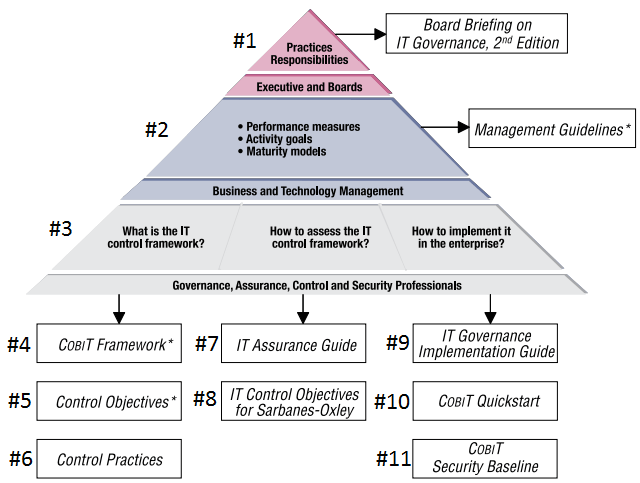
A figura acima apresenta um conjunto de elementos relacionados ao modelo COBIT 4.0, alguns dos quais estão numerados de #1 a #11. Considerando essa figura, julgue os itens seguintes com relação à governança de TI.
O conceito de governança de TI está mais associado à melhoria do relacionamento entre os elementos #5 e #6 que ao relacionamento entre os elementos #9 e #11.
Provas

Provas
Provas
Law of public biddings
According to the Brazilian Federal Constitution, article 37, item XXI: "With the exception of the cases specified in law,
public works, services, purchases and disposals shall be contracted by public bidding proceedings that ensure equal conditions to all bidders, with clauses that establish payment obligations, maintaining the effective conditions of the bid, as the law provides, which shall only allow the requirements of technical and economic qualifications indispensable to guarantee the fulfilling of the obligations." The regulatory law is Law Number 8666, 21st June, 1993.
The Law forbids preference to or differential treatment between Brazilian and foreign companies. However, when local
and foreign competitors offer equivalent conditions in terms of price, quality and delivery time, the law ensures preference for: goods produced or supplied by a Brazilian firm of national capital; locally produced; and produced or supplied by Brazilian firms. The comments below are a very superficial highlight of some important topics of the law.
- Article 1 mentions the entities subject to the law: all the three branches; all the three levels of government (Federal, State, and Municipal); all agencies and foundations; all public companies, including those with private participation (this means that big businesses like PETROBRAS, Banco do Brasil and others are subject to the law).
- Article 3 mentions that the nationality of the bidders will be considered only as a tie-breaking criterion: otherwise,
Brazilian and foreign companies compete equally. Also, article 3 states that all the bidding process is open to the public, except, of course, for the value of bidding while not disclosed.
- Article 4: all bids are in national currency, except in the cases prescribed in article 42 (international purchases).
- Article 24 states the situations where bidding is not mandatory. Some examples: purchases of small value (as defined by law); emergency situations which put people or premises in risk; when previous bidding processes had no bidders; to purchase or rent specific buildings; several others.
- Article 25 states situations when a bidding process is not feasible. Examples: there is only one possible contractor for a given product or service (electricity supply, for example); a professional is so outstandingly better than all the others that a bidding competition would be meaningless.
- Article 45 states that, besides the price bid, technical factors may also define the winner.
Internet: <www.V-brazil.com/business> (adapted).
In the text,
"besides" can be correctly replaced by in addition to.
Provas
Law of public biddings
According to the Brazilian Federal Constitution, article 37, item XXI: "With the exception of the cases specified in law, public works, services, purchases and disposals shall be contracted by public bidding proceedings that ensure equal conditions to all bidders, with clauses that establish payment obligations, maintaining the effective conditions of the bid, as the law provides, which shall only allow the requirements of technical and economic qualifications indispensable to guarantee the fulfilling of the obligations." The regulatory law is Law Number 8666, 21st June, 1993.
The Law forbids preference to or differential treatment between Brazilian and foreign companies. However, when localand foreign competitors offer equivalent conditions in terms of price, quality and delivery time, the law ensures preference for: goods produced or supplied by a Brazilian firm of national capital; locally produced; and produced or supplied by Brazilian firms. The comments below are a very superficial highlight of some important topics of the law.
- Article 1 mentions the entities subject to the law: all the three branches; all the three levels of government (Federal, State, and Municipal); all agencies and foundations; all public companies, including those with private participation (this means that big businesses like PETROBRAS, Banco do Brasil and others are subject to the law).
- Article 3 mentions that the nationality of the bidders will be considered only as a tie-breaking criterion: otherwise, Brazilian and foreign companies compete equally. Also, article 3 states that all the bidding process is open to the public, except, of course, for the value of bidding while not disclosed.
- Article 4: all bids are in national currency, except in the cases prescribed in article 42 (international purchases).
- Article 24 states the situations where bidding is not mandatory. Some examples: purchases of small value (as defined by law); emergency situations which put people or premises in risk; when previous bidding processes had no bidders; to purchase or rent specific buildings; several others.
- Article 25 states situations when a bidding process is not feasible. Examples: there is only one possible contractor for a given product or service (electricity supply, for example); a professional is so outstandingly better than all the others that a bidding competition would be meaningless.
- Article 45 states that, besides the price bid, technical factors may also define the winner.
Internet:<www.V-brazil.com/business>(adapted).
In the text,
"premises" means the building and land that a business or organization uses.
Provas
Law of public biddings
According to the Brazilian Federal Constitution, article 37, item XXI: "With the exception of the cases specified in law,
public works, services, purchases and disposals shall be contracted by public bidding proceedings that ensure equal conditions to all bidders, with clauses that establish payment obligations, maintaining the effective conditions of the bid, as the law provides, which shall only allow the requirements of technical and economic qualifications indispensable to guarantee the fulfilling of the obligations." The regulatory law is Law Number 8666, 21st June, 1993.
The Law forbids preference to or differential treatment between Brazilian and foreign companies. However, when local
and foreign competitors offer equivalent conditions in terms of price, quality and delivery time, the law ensures preference for: goods produced or supplied by a Brazilian firm of national capital; locally produced; and produced or supplied by Brazilian firms. The comments below are a very superficial highlight of some important topics of the law.
- Article 1 mentions the entities subject to the law: all the three branches; all the three levels of government (Federal, State, and Municipal); all agencies and foundations; all public companies, including those with private participation (this means that big businesses like PETROBRAS, Banco do Brasil and others are subject to the law).
- Article 3 mentions that the nationality of the bidders will be considered only as a tie-breaking criterion: otherwise,
Brazilian and foreign companies compete equally. Also, article 3 states that all the bidding process is open to the public, except, of course, for the value of bidding while not disclosed.
- Article 4: all bids are in national currency, except in the cases prescribed in article 42 (international purchases).
- Article 24 states the situations where bidding is not mandatory. Some examples: purchases of small value (as defined by law); emergency situations which put people or premises in risk; when previous bidding processes had no bidders; to purchase or rent specific buildings; several others.
- Article 25 states situations when a bidding process is not feasible. Examples: there is only one possible contractor for a given product or service (electricity supply, for example); a professional is so outstandingly better than all the others that a bidding competition would be meaningless.
- Article 45 states that, besides the price bid, technical factors may also define the winner.
Internet: <www.V-brazil.com/business> (adapted).
In the text,
"others" stands for other big businesses.
Provas
Law of public biddings
According to the Brazilian Federal Constitution, article 37, item XXI: "With the exception of the cases specified in law,
public works, services, purchases and disposals shall be contracted by public bidding proceedings that ensure equal conditions to all bidders, with clauses that establish payment obligations, maintaining the effective conditions of the bid, as the law provides, which shall only allow the requirements of technical and economic qualifications indispensable to guarantee the fulfilling of the obligations." The regulatory law is Law Number 8666, 21st June, 1993.
The Law forbids preference to or differential treatment between Brazilian and foreign companies. However, when local
and foreign competitors offer equivalent conditions in terms of price, quality and delivery time, the law ensures preference for: goods produced or supplied by a Brazilian firm of national capital; locally produced; and produced or supplied by Brazilian firms. The comments below are a very superficial highlight of some important topics of the law.
- Article 1 mentions the entities subject to the law: all the three branches; all the three levels of government (Federal, State, and Municipal); all agencies and foundations; all public companies, including those with private participation (this means that big businesses like PETROBRAS, Banco do Brasil and others are subject to the law).
- Article 3 mentions that the nationality of the bidders will be considered only as a tie-breaking criterion: otherwise,
Brazilian and foreign companies compete equally. Also, article 3 states that all the bidding process is open to the public, except, of course, for the value of bidding while not disclosed.
- Article 4: all bids are in national currency, except in the cases prescribed in article 42 (international purchases).
- Article 24 states the situations where bidding is not mandatory. Some examples: purchases of small value (as defined by law); emergency situations which put people or premises in risk; when previous bidding processes had no bidders; to purchase or rent specific buildings; several others.
- Article 25 states situations when a bidding process is not feasible. Examples: there is only one possible contractor for a given product or service (electricity supply, for example); a professional is so outstandingly better than all the others that a bidding competition would be meaningless.
- Article 45 states that, besides the price bid, technical factors may also define the winner.
Internet: <www.V-brazil.com/business> (adapted).
In the text,
"those" refers to "public companies".
Provas
Law of public biddings
According to the Brazilian Federal Constitution, article 37, item XXI: "With the exception of the cases specified in law,
public works, services, purchases and disposals shall be contracted by public bidding proceedings that ensure equal conditions to all bidders, with clauses that establish payment obligations, maintaining the effective conditions of the bid, as the law provides, which shall only allow the requirements of technical and economic qualifications indispensable to guarantee the fulfilling of the obligations." The regulatory law is Law Number 8666, 21st June, 1993.
The Law forbids preference to or differential treatment between Brazilian and foreign companies. However, when local
and foreign competitors offer equivalent conditions in terms of price, quality and delivery time, the law ensures preference for: goods produced or supplied by a Brazilian firm of national capital; locally produced; and produced or supplied by Brazilian firms. The comments below are a very superficial highlight of some important topics of the law.
- Article 1 mentions the entities subject to the law: all the three branches; all the three levels of government (Federal, State, and Municipal); all agencies and foundations; all public companies, including those with private participation (this means that big businesses like PETROBRAS, Banco do Brasil and others are subject to the law).
- Article 3 mentions that the nationality of the bidders will be considered only as a tie-breaking criterion: otherwise,
Brazilian and foreign companies compete equally. Also, article 3 states that all the bidding process is open to the public, except, of course, for the value of bidding while not disclosed.
- Article 4: all bids are in national currency, except in the cases prescribed in article 42 (international purchases).
- Article 24 states the situations where bidding is not mandatory. Some examples: purchases of small value (as defined by law); emergency situations which put people or premises in risk; when previous bidding processes had no bidders; to purchase or rent specific buildings; several others.
- Article 25 states situations when a bidding process is not feasible. Examples: there is only one possible contractor for a given product or service (electricity supply, for example); a professional is so outstandingly better than all the others that a bidding competition would be meaningless.
- Article 45 states that, besides the price bid, technical factors may also define the winner.
Internet: <www.V-brazil.com/business> (adapted).
In the text,
"shall" can be correctly replaced by might.
Provas
Law of public biddings
According to the Brazilian Federal Constitution, article 37, item XXI: "With the exception of the cases specified in law,
public works, services, purchases and disposals shall be contracted by public bidding proceedings that ensure equal conditions to all bidders, with clauses that establish payment obligations, maintaining the effective conditions of the bid, as the law provides, which shall only allow the requirements of technical and economic qualifications indispensable to guarantee the fulfilling of the obligations." The regulatory law is Law Number 8666, 21st June, 1993.
The Law forbids preference to or differential treatment between Brazilian and foreign companies. However, when local
and foreign competitors offer equivalent conditions in terms of price, quality and delivery time, the law ensures preference for: goods produced or supplied by a Brazilian firm of national capital; locally produced; and produced or supplied by Brazilian firms. The comments below are a very superficial highlight of some important topics of the law.
- Article 1 mentions the entities subject to the law: all the three branches; all the three levels of government (Federal, State, and Municipal); all agencies and foundations; all public companies, including those with private participation (this means that big businesses like PETROBRAS, Banco do Brasil and others are subject to the law).
- Article 3 mentions that the nationality of the bidders will be considered only as a tie-breaking criterion: otherwise,
Brazilian and foreign companies compete equally. Also, article 3 states that all the bidding process is open to the public, except, of course, for the value of bidding while not disclosed.
- Article 4: all bids are in national currency, except in the cases prescribed in article 42 (international purchases).
- Article 24 states the situations where bidding is not mandatory. Some examples: purchases of small value (as defined by law); emergency situations which put people or premises in risk; when previous bidding processes had no bidders; to purchase or rent specific buildings; several others.
- Article 25 states situations when a bidding process is not feasible. Examples: there is only one possible contractor for a given product or service (electricity supply, for example); a professional is so outstandingly better than all the others that a bidding competition would be meaningless.
- Article 45 states that, besides the price bid, technical factors may also define the winner.
Internet: <www.V-brazil.com/business> (adapted).
Based on the above text, judge the following items about biddings regulated by Law Number 8666, 21st June, 1993.
The Portuguese word for public biddings is alienações.
Provas
Law of public biddings
According to the Brazilian Federal Constitution, article 37, item XXI: "With the exception of the cases specified in law,
public works, services, purchases and disposals shall be contracted by public bidding proceedings that ensure equal conditions to all bidders, with clauses that establish payment obligations, maintaining the effective conditions of the bid, as the law provides, which shall only allow the requirements of technical and economic qualifications indispensable to guarantee the fulfilling of the obligations." The regulatory law is Law Number 8666, 21st June, 1993.
The Law forbids preference to or differential treatment between Brazilian and foreign companies. However, when local
and foreign competitors offer equivalent conditions in terms of price, quality and delivery time, the law ensures preference for: goods produced or supplied by a Brazilian firm of national capital; locally produced; and produced or supplied by Brazilian firms. The comments below are a very superficial highlight of some important topics of the law.
- Article 1 mentions the entities subject to the law: all the three branches; all the three levels of government (Federal, State, and Municipal); all agencies and foundations; all public companies, including those with private participation (this means that big businesses like PETROBRAS, Banco do Brasil and others are subject to the law).
- Article 3 mentions that the nationality of the bidders will be considered only as a tie-breaking criterion: otherwise,
Brazilian and foreign companies compete equally. Also, article 3 states that all the bidding process is open to the public, except, of course, for the value of bidding while not disclosed.
- Article 4: all bids are in national currency, except in the cases prescribed in article 42 (international purchases).
- Article 24 states the situations where bidding is not mandatory. Some examples: purchases of small value (as defined by law); emergency situations which put people or premises in risk; when previous bidding processes had no bidders; to purchase or rent specific buildings; several others.
- Article 25 states situations when a bidding process is not feasible. Examples: there is only one possible contractor for a given product or service (electricity supply, for example); a professional is so outstandingly better than all the others that a bidding competition would be meaningless.
- Article 45 states that, besides the price bid, technical factors may also define the winner.
Internet: <www.V-brazil.com/business> (adapted).
Based on the above text, judge the following items about biddings regulated by Law Number 8666, 21st June, 1993.
However low a price bid may be, it still may not be the winner if technical factors are not up to standards.
Provas
Caderno Container