Foram encontradas 30 questões.
Leia o texto para responder à questão.
Benefits of testing the four skills (reading, listening,
writing and speaking)
When we say that someone “speaks” a language
fluently, we usually mean that they have a high level in all
four skills – listening, speaking, reading and writing. But, as
any teacher knows, learners often have strengths or weaknesses in particular skills, and in some cases can
achieve high levels in, for example, reading and writing,
while not being able to speak or listen at a comparable
level.
For some purposes – highly specialised jobs, for
example – these uneven skills may not matter very much.
However, English is such an important skill in the global
world, and needed in so many different contexts, that
someone without a good ability in all four skills will greatly
reduce the opportunities open to them in education and
professional life.
If we want to assess someone’s speaking ability,
we must get them to speak. The same applies to all the
other skills. We can’t infer ability in one skill (e.g. speaking)
from performance in another (e.g. listening), or from using
tests of language knowledge, e.g. grammar, vocabulary, as
proxies for communicative language ability. Therefore if we
want to accurately assess communicative language ability,
we need to include tasks which elicit a wide range of skills
related to communicative language.
The Common European Framework of Reference
(2001) extends the definition of communicative language
ability into five skills, and divides speaking into two skills:
spoken production and spoken interaction. This is based on
the evidence that these two skills are different, since one
involves only monologue-type speech and the other
involves being both a speaker and a listener at the same
time. A test of communicative language, therefore, needs to
include both spoken production and spoken interaction.
Adaptado de: GALACZI, Evelina. 2018. Disponível
em: https://www.cambridgeenglish.org/blog/benefits-oftesting-the-four-skills/. Acesso em: 30 mar. 2021.
Provas
Questão presente nas seguintes provas

Leia o texto e responda à questão.
Bakhtinian Dialogic Concept in Language
Learning Process
The relationship between learning and teaching is
so much complex. Some studies carried out on language
teaching process confirm that learning a language is one of
the most serious concerns for human beings. Recently,
scholars have used Bakhtinian concepts in language studies because some of Bakhtin's concepts can act as
tools to help the teaching process, for instance Bakhtin's
concept of dialogue shows how in the process of teaching,
the teacher can have communication with his or her
students to transform meaning. Furthermore, Bakhtin's
concept of dialogue is used to analyze classroom
discourses, whereas, teachers control all the learning and
teaching activities in the classroom. A classroom with this
kind of positive environment will be based on the dialogic
model, in contrast to the traditional, predominantly
monologic and teacher-centered classrooms where
students mostly work individually with authoritative texts.
Adaptado de: SHIRKHANI, Fatemeh; NESARI, ,Ali
Jamali; FEILINEZHAD, Nabieh. Bakhtinian Dialogic Concept in
Language Learning Process. 2015. Procedia: Social and
Behavioral Sciences. p. 510 – 515.
Provas
Questão presente nas seguintes provas
- Vocabulário | Vocabulary
- Sinônimos | Synonyms
- Gramática - Língua InglesaAdvérbios e conjunções | Adverbs and conjunctions
Leia o texto e responda à questão.
What Is the Lexical Approach?
Linguist Michael Lewis literally wrote the book on
the topic. His 1993 work, titled “The Lexical Approach: The
State of ELT and a Way Forward,” put together the
conceptual foundations for effectively teaching a second
language.
The idea is that grammar comes only second to
Lexis, or words. But by “words,” we’re not talking about
vocabulary or individual words here. We’re more interested
in word “chunks,” or phrases—words that usually go
together and are commonly found next to each other in the
language.
There are plenty of them in English: words that
come as a set and signal the presence of the other, like
Starsky and Hutch, Donkey and Shrek, Batman and Robin.
Consider the following phrases:
• by the way
• abstract reasoning
• complete idiot
• best wishes
• make up your mind
• go to great lengths
These words often go together and native speakers
use them next to each other a lot.
The lexical approach posits that languages are
composed of these “chunks” and that the key to fluency in
any language is the nuanced use of these phrases—which
native speakers spew in daily conversations—without
regard for grammatical soundness or word meaning. (If you
think about it, native speakers don’t really consciously
observe grammar rules every time they speak. They simply
talk).
Adaptado de: FLUENTU. Disponível em:
https://www.fluentu.com/blog/educator/lexical-approach-tolanguage-teaching/. Acesso em: 10 jun. 2021.
Provas
Questão presente nas seguintes provas
Observe a etimologia da palavra “mother” para responder à questão.
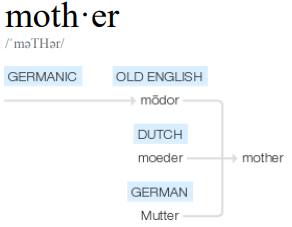
Old English mōdor, of Germanic origin; related to Dutch moeder and German Mutter, from an Indo-European root shared by Latin mater and Greek mētēr .
Definições adaptadas de Oxford Languages
Provas
Questão presente nas seguintes provas
Leia o texto para responder à questão.
Why the world is becoming more allergic to food
Inquiries into the deaths of British teenagers after
eating buttermilk, sesame and peanut have highlighted the
sometimes tragic consequences. Last year, a six-year-old
girl in Western Australia died as the result of a dairy allergy.
The rise in allergies in recent decades has been
particularly noticeable in the West. Food allergy now affects
about 7% of children in the UK and 9% of those in Australia,
for example. Across Europe, 2% of adults have food
allergies.
Life-threatening reactions can be prompted even by
traces of the trigger foods, meaning patients and families
live with fear and anxiety. The dietary restrictions which
follow can become a burden to social and family lives.
While we can't say for sure why allergy rates are
increasing, researchers around the world are working hard
to find ways to combat this phenomenon.
The increase in allergies is not simply the effect of
society becoming more aware of them and better at
diagnosing them.
It is thought that allergies and increased sensitivity
to foods are probably environmental, and related to
Western lifestyles.
We know there are lower rates of allergies in
developing countries. They are also more likely to occur in
urban rather than rural areas.
Factors may include pollution, dietary changes and
less exposure to microbes, which change how our immune
systems respond.
Migrants appear to show a higher prevalence of
asthma and food allergy in their adopted country compared
to their country of origin, further illustrating the importance
of environmental factors.
SANTOS, Alexandra. 2019. Disponível em:
https://www.bbc.com/news/health-46302780. Acesso em 14
jun. 2021.
Provas
Questão presente nas seguintes provas
Leia o texto para responder à questão.
Why the world is becoming more allergic to food
Inquiries into the deaths of British teenagers after
eating buttermilk, sesame and peanut have highlighted the
sometimes tragic consequences. Last year, a six-year-old
girl in Western Australia died as the result of a dairy allergy.
The rise in allergies in recent decades has been
particularly noticeable in the West. Food allergy now affects
about 7% of children in the UK and 9% of those in Australia,
for example. Across Europe, 2% of adults have food
allergies.
Life-threatening reactions can be prompted even by
traces of the trigger foods, meaning patients and families
live with fear and anxiety. The dietary restrictions which
follow can become a burden to social and family lives.
While we can't say for sure why allergy rates are
increasing, researchers around the world are working hard
to find ways to combat this phenomenon.
The increase in allergies is not simply the effect of
society becoming more aware of them and better at
diagnosing them.
It is thought that allergies and increased sensitivity
to foods are probably environmental, and related to
Western lifestyles.
We know there are lower rates of allergies in
developing countries. They are also more likely to occur in
urban rather than rural areas.
Factors may include pollution, dietary changes and
less exposure to microbes, which change how our immune
systems respond.
Migrants appear to show a higher prevalence of
asthma and food allergy in their adopted country compared
to their country of origin, further illustrating the importance
of environmental factors.
SANTOS, Alexandra. 2019. Disponível em:
https://www.bbc.com/news/health-46302780. Acesso em 14
jun. 2021.
Provas
Questão presente nas seguintes provas
João é professor, e utiliza alguns problemas no seu
cotidiano. Em certo dia, João colocou seu filho de
castigo, ficaria alguns dias sem o celular, e sabendo
que seu filho é muito curioso, falou a ele que o castigo
duraria uma certa quantidade de dias, que poderia ser
encontrada através da média aritmética entre as raízes
da equação 3x2 - 36x + 96 = 0. Quantos dias o filho de
João ficará sem o celular?
Provas
Questão presente nas seguintes provas
- MorfologiaArtigos
- MorfologiaConjunçõesRelações de Causa e Consequência
- MorfologiaInterjeições
- MorfologiaPreposições
Para responder à questão, leia atentamente o texto a seguir:
Apelo
Amanhã faz um mês que a Senhora está longe de
casa. Primeiros dias, para dizer a verdade, não senti falta,
bom chegar tarde, esquecido na conversa de esquina. Não
foi ausência por uma semana: o batom ainda no lenço, o
prato na mesa por engano, a imagem de relance no
espelho.
Com os dias, Senhora, o leite primeira vez coalhou.
A notícia de sua perda veio aos poucos: a pilha de jornais
ali no chão, ninguém os guardou debaixo da escada. Toda
a casa era um corredor deserto, e até o canário ficou
mudo. Para não dar parte de fraco, ah, Senhora, fui beber
com os amigos. Uma hora da noite eles se iam e eu ficava
só, sem o perdão de sua presença a todas as aflições do
dia, como a última luz na varanda.
E comecei a sentir falta das pequenas brigas por
causa do tempero na salada – o meu jeito de querer bem.
Acaso é saudade, Senhora? Às suas violetas, na janela,
não lhes poupei água e elas murcham. Não tenho botão na
camisa, calço a meia furada. Que fim levou o saca-rolhas?
Nenhum de nós sabe, sem a Senhora, conversar com os
outros: bocas raivosas mastigando. Venha para casa,
Senhora, por favor.
(Dalton Trevisan, em Apelo)
Para não dar parte de fraco, ah, Senhora, fui beber com os amigos. Uma hora da noite eles se iam e eu ficava só, sem o perdão de sua presença a todas as aflições do dia, como a última luz na varanda.
Provas
Questão presente nas seguintes provas
Para responder à questão, leia atentamente o texto a seguir:
Apelo
Amanhã faz um mês que a Senhora está longe de
casa. Primeiros dias, para dizer a verdade, não senti falta,
bom chegar tarde, esquecido na conversa de esquina. Não
foi ausência por uma semana: o batom ainda no lenço, o
prato na mesa por engano, a imagem de relance no
espelho.
Com os dias, Senhora, o leite primeira vez coalhou.
A notícia de sua perda veio aos poucos: a pilha de jornais
ali no chão, ninguém os guardou debaixo da escada. Toda
a casa era um corredor deserto, e até o canário ficou
mudo. Para não dar parte de fraco, ah, Senhora, fui beber
com os amigos. Uma hora da noite eles se iam e eu ficava
só, sem o perdão de sua presença a todas as aflições do
dia, como a última luz na varanda.
E comecei a sentir falta das pequenas brigas por
causa do tempero na salada – o meu jeito de querer bem.
Acaso é saudade, Senhora? Às suas violetas, na janela,
não lhes poupei água e elas murcham. Não tenho botão na
camisa, calço a meia furada. Que fim levou o saca-rolhas?
Nenhum de nós sabe, sem a Senhora, conversar com os
outros: bocas raivosas mastigando. Venha para casa,
Senhora, por favor.
(Dalton Trevisan, em Apelo)
A notícia de sua perda veio aos poucos: a pilha de jornais ali no chão, ninguém os guardou debaixo da escada.
Provas
Questão presente nas seguintes provas
Para responder à questão, leia atentamente o texto a seguir:
Apelo
Amanhã faz um mês que a Senhora está longe de
casa. Primeiros dias, para dizer a verdade, não senti falta,
bom chegar tarde, esquecido na conversa de esquina. Não
foi ausência por uma semana: o batom ainda no lenço, o
prato na mesa por engano, a imagem de relance no
espelho.
Com os dias, Senhora, o leite primeira vez coalhou.
A notícia de sua perda veio aos poucos: a pilha de jornais
ali no chão, ninguém os guardou debaixo da escada. Toda
a casa era um corredor deserto, e até o canário ficou
mudo. Para não dar parte de fraco, ah, Senhora, fui beber
com os amigos. Uma hora da noite eles se iam e eu ficava
só, sem o perdão de sua presença a todas as aflições do
dia, como a última luz na varanda.
E comecei a sentir falta das pequenas brigas por
causa do tempero na salada – o meu jeito de querer bem.
Acaso é saudade, Senhora? Às suas violetas, na janela,
não lhes poupei água e elas murcham. Não tenho botão na
camisa, calço a meia furada. Que fim levou o saca-rolhas?
Nenhum de nós sabe, sem a Senhora, conversar com os
outros: bocas raivosas mastigando. Venha para casa,
Senhora, por favor.
(Dalton Trevisan, em Apelo)
Às suas violetas, na janela, não lhes poupei água e elas murcham.
Provas
Questão presente nas seguintes provas
Cadernos
Caderno Container