Foram encontradas 337 questões.
Um sistema utiliza um contador que apresenta inicialmente o
número 1. A cada comando executado, o número exibido é
substituído por um dos seguintes valores:
• o número exibido acrescido de uma unidade;
• o dobro do número exibido.
O menor número de comandos necessários para que o contador passe a exibir o número 100 é
• o número exibido acrescido de uma unidade;
• o dobro do número exibido.
O menor número de comandos necessários para que o contador passe a exibir o número 100 é
Provas
Questão presente nas seguintes provas

Em relação às alterações processadas por determinada
organização, considere verdadeiras as seguintes afirmações:
• toda alteração classificada como emergencial foi implantada no mesmo dia em que foi autorizada;
• toda alteração implantada no mesmo dia em que foi autorizada foi submetida a uma revisão posterior.
Uma dessas alterações, denominada Alfa, não foi submetida a uma revisão posterior.
Com base exclusivamente nessas informações, conclui-se necessariamente que a alteração Alfa
Provas
Questão presente nas seguintes provas
Em determinado período de monitoramento, a equipe
responsável por um centro de processamento adotou a regra a
seguir.
“Se a taxa de ocupação dos servidores for superior a 80%, então as rotinas não prioritárias serão transferidas para o período noturno.”
Considerando a lógica proposicional, essa regra é logicamente equivalente a
“Se a taxa de ocupação dos servidores for superior a 80%, então as rotinas não prioritárias serão transferidas para o período noturno.”
Considerando a lógica proposicional, essa regra é logicamente equivalente a
Provas
Questão presente nas seguintes provas
READ TEXT III AND ANSWER NEXT QUESTION.
TEXT III
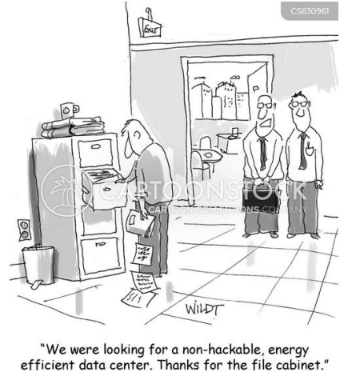
From: https://images.cartoonstock.com/lowres/computers-file_cabinet-filepaperwork-unhackable-security-CS630961_low.jpg
Provas
Questão presente nas seguintes provas
READ TEXT III AND ANSWER NEXT QUESTION.
TEXT III
From: https://images.cartoonstock.com/lowres/computers-file_cabinet-filepaperwork-unhackable-security-CS630961_low.jpg
Provas
Questão presente nas seguintes provas
READ TEXT III AND ANSWER NEXT QUESTION.
TEXT III
From: https://images.cartoonstock.com/lowres/computers-file_cabinet-filepaperwork-unhackable-security-CS630961_low.jpg
Provas
Questão presente nas seguintes provas
READ TEXT II AND ANSWER NEXT QUESTION.
TEXT II

From: https://www.rishabhsoft.com/wp-content/uploads/2024/01/Blog\Pros-andCons-of-Cloud-Computing_Image.jpg
The term “vendor lock-in” indicates the customer is in a situation that is
Provas
Questão presente nas seguintes provas
READ TEXT II AND ANSWER NEXT QUESTION.
TEXT II
From: https://www.rishabhsoft.com/wp-content/uploads/2024/01/Blog\Pros-andCons-of-Cloud-Computing_Image.jpg
As regards the pros and cons of cloud computing, analyse the assertions below:
I. It may adjust resources depending on the needs.
II. It can reduce spending according to usage.
III. It is immune to all types of cyberattacks.
Choose the correct answer.
Provas
Questão presente nas seguintes provas
READ TEXT I AND ANSWER NEXT QUESTION.
TEXT I
AI is getting better at writing. Humans must get better at editing.
Writing is hard. For Franz Kafka, putting words on the page was a
process of “unending torments”. George Orwell said it felt like “a
long bout of some painful illness”. Hunter S. Thompson, a
journalist, saw it as the opposite of sex: “only good when it’s over”.
Now AI has come to the rescue. Large language models (LLMs)
eagerly offer reams of text without any pain or torment. Bots can
spew out emails (excellently), longer prose (passably) and poetry
(poorly). To them, writer’s block is a 500-sheet pack of paper: any
user of an LLM can produce as many words in a day as Kafka did in
his life.
For human writers this is a blessing and a curse. If you claim to be
an author but use AI, you look like a fraud—bot-busting tools like
Pangram are good at spotting when someone has had an AI
helping hand. […]
If LLMs keep improving, in a few years they could be as good as
professional wordsmiths. In the meantime, though, their baggy
prose puts a premium on editing skills. After all, even the best
writers need a good editor to keep them sharp. Editing is
something The Economist deals with day in, day out, so here are
our tips for rewriting AI prose.
First, commission well. George R.R. Martin once said the job of
editors is to “clip the wings” of writers, and “tell them in which
direction to fly”. When it comes to LLMs, that means giving clear
instructions about exactly what you want, and asking them to
refine their output as many times as necessary. You’ll get less
pushback from machines than men. Mr Martin said editors were
“the writer’s natural enemy”; AI would probably say “great
observation!” and “love the enemy analogy!”
Second, pay attention to detail. AI writers will make mistakes and
offer phrases that sound good but mean nothing. They like to
lavish their prose with Latinate words, talking about the “bidirectional flow” and how to “expedite grid enhancements”;
remind them that Anglo-Saxon words are often punchier. They like
clichéd metaphors: there are lots of “Achilles’ heels”. And AI tends
to use the “rule of three” far more than humans. The Economist
also likes this rhetorical trick. But whereas we try to group three
sensible bits of advice, AI offers such redundant sentences as: “The
mystery has been solved—not partially, not ambiguously, but
definitively.” Such lines should be cut—definitively.
Finally, know your audience. The editor is an intermediary
between writer and reader. LLMs are sycophants and their
smarmy tone is often off-key. If you are writing an email to break
some bad news to your boss, tell your bot to skip the exclamation
marks. AI can be pretentious or pontificating (it was trained on
human writing, after all). Most people are short of time, but a
verbose AI pins you to the wall like a bore at a party.
“Write drunk, edit sober,” goes the old writers’ maxim. If that’s
right, when the AI-human team gets down to work, the AIs will
have all the fun.
Adapted from https://www.economist.com/leaders/2026/07/30/ai-is-gettingbetter-at-writing-humans-must-get-better-at-editing
Provas
Questão presente nas seguintes provas
Cadernos
Caderno Container