Foram encontradas 46.768 questões.
Disciplina: Inglês (Língua Inglesa)
Banca: Consulplan
Orgão: Pref. Além Paraíba-MG
Mark the item displaying suitable data, having verbal and nonverbal language as reference:
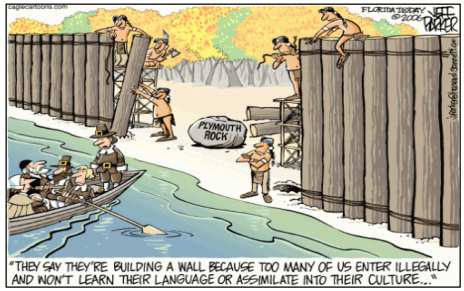
(Available in: https://lingualog.wordpress.com/2009/12/14/english-as-the-official-language. Acessed: July, 2024)
Provas

Disciplina: Inglês (Língua Inglesa)
Banca: Consulplan
Orgão: Pref. Além Paraíba-MG
Depending upon the purpose, different texts have specific styles and structure. The communicative purpose and genre conventions present in the text that follows make it a:

(Available in: https://www.theguardian.com/childrens-books-site. Acessed: July, 2024)
Provas
Disciplina: Inglês (Língua Inglesa)
Banca: Consulplan
Orgão: Pref. Além Paraíba-MG
After carrying out text reading, it is possible to infer the featured words highlight.
The announcement of pandemic-related lockdown measures in March 2020 in the UK led to a wide-ranging series of measures in education as a whole to deal with the sudden changes in the learning environment. These included top-down policy directives and centralised toolkits, but arguably in language education the most effective responses were often bottom-up community initiatives. Language education was well placed to deal with some of the challenges in responding to the rapid move to online teaching through historical work in areas such as computer-assisted language learning (CALL) (Levy) dating back to the 1960s and more recent variants such as mobile-assisted language learning (MALL). There has been undeniably community-driven work in the school sector in particular in recent years, with the use of the #MFLTwitterati hashtag in part driving debate around the use of technology in language education on Twitter long before COVID-19 struck, and the TiLT (Technology in Language Teaching) webinar series, which began soon afterwards in March 2020. During the COVID-19 crisis, in a drive to support language teachers in moving to online teaching, experts at the Open University developed a free toolkit that could be downloaded, used, adapted and modified by ML practitioners which indeed made a difference. Social media was often a useful platform to provide help with teaching online (Rosell-Aguilar). Other examples include interdisciplinary discussions, such as the AMLUK Symposium on Modern Languages, Area Studies and Linguistics in 2021, which provided examples of the relationship and possible interdisciplinary links between research and pedagogy in Modern Languages, Area Studies and Linguistics. This symposium assuredly opened up constructive discussions about which teaching methodologies and strategies could support the internationalisation and decolonisation of our discipline.
(Reflections on Post-Pandemic Pedagogical Trends in Language Education. In: Dec, 2023.)
Provas
Disciplina: Inglês (Língua Inglesa)
Banca: Consulplan
Orgão: Pref. Além Paraíba-MG
Read the text and point out the option that matches content.
A Way Back From Campus Chaos
Protesting the world’s wrongs has been a rite of passage for generations of American youth, buoyed by our strong laws protecting free speech and free assembly. Yet the students and other demonstrators disrupting college campuses this spring are being taught the wrong lesson – for as admirable as it can be to stand up for your beliefs, there are no guarantees that doing so will be without consequence. The highest calling of a university is to craft a culture of open inquiry, one where both free speech and academic freedom are held as ideals. Protest is part of that culture, and the issue on which so many of the current demonstrations are centered – U.S. involvement in the Israel-Hamas conflict – ought to be fiercely and regularly debated on college campuses.
The constitutional right to free speech is the protection against government interference restricting speech. In the real world, though, this can get messy, and nuance is required when free speech comes into tension with protecting academic freedom. The earliest universities to adopt the principle of academic freedom did so to thwart interference and influence from totalitarian states and religious zealotry. Student codes of conduct and other guidelines are meant to relieve some of the tension between free speech and academic freedom, as well as to ensure that schools are in compliance with government regulations and laws. During the current demonstrations, a lack of accountability has helped produce a crisis. It has left some Jewish students feeling systematically harassed. It has deprived many students of access to parts of campus life.
For years, right-wing Republicans, at the federal and state level, have found opportunities to crusade against academic freedom, with charges of antisemitism on campus serving as the latest vehicle. The House of Representatives used this moment of chaos as cover to begin a legislative effort to crack down on elite universities, and lawmakers in the House recently passed a proposal that would impose egregious government restrictions on free speech.
Schools ought to be teaching their students that there is as much courage in listening as there is in speaking up. It has not gone unnoticed – on campuses but also by members of Congress and by the public writ large – that many of those who are now demanding the right to protest have previously sought to curtail the speech of those whom they declared hateful. Establishing a culture of openness and free expression is crucial to the mission of educational institutions. That includes clear guardrails on conduct and enforcement of those guardrails, regardless of the speaker or the topic. Doing so would not only help restore order on college campuses today but would also strengthen the cultural bedrock of higher education for generations to come.
(Available in: https://www.nytimes.com. Acessed: July 2024.)
Provas
Disciplina: Inglês (Língua Inglesa)
Banca: Consulplan
Orgão: Pref. Além Paraíba-MG
Examine the image, and the meme it exhibits to indicate the fitting option.

(Available in: https://cheezburger.com/5815397632. Acessed: July 2024.)
Provas
Disciplina: Inglês (Língua Inglesa)
Banca: Consulplan
Orgão: Pref. Além Paraíba-MG
Provas
Disciplina: Inglês (Língua Inglesa)
Banca: Consulplan
Orgão: Pref. Além Paraíba-MG
Provas
Text for the questions from 17 to 20.
In today's rapidly evolving technological landscape, IT professionals are increasingly playing a pivotal role in enhancing the fields of physiotherapy and occupational therapy. By integrating advanced technology into therapeutic practices, IT experts are helping to create innovative solutions that improve patient outcomes and streamline clinical processes.
One significant contribution is the development of sophisticated software and applications that enable therapists to design personalized treatment plans. These digital tools allow for precise tracking of patient progress, making it easier to adjust therapies in real-time based on data analytics. For instance, motion-sensing technology and wearable devices can monitor a patient's physical movements during exercises, providing immediate feedback to both the therapist and the patient.
Additionally, virtual reality (VR) and augmented reality (AR) are revolutionizing rehabilitation methods. IT professionals are creating immersive VR environments where patients can perform therapeutic exercises in a controlled, engaging setting. This approach is particularly beneficial for those recovering from injuries or surgeries, as it can make repetitive exercises more enjoyable and less monotonous.
Telehealth platforms are another area where IT expertise is crucial. These platforms enable remote consultations and therapy sessions, ensuring that patients have access to care regardless of their location. IT professionals ensure that these systems are secure, user-friendly, and efficient, thereby expanding the reach of physiotherapists and occupational therapists.
Moreover, data security and patient confidentiality are paramount in healthcare. IT professionals implement robust cybersecurity measures to protect sensitive patient information. By doing so, they help maintain trust and compliance with regulatory standards, ensuring that therapeutic practices are both effective and safe.
In conclusion, the collaboration between IT professionals and therapists is fostering a new era of healthcare where technology and therapy converge. This synergy not only enhances the quality of care but also empowers patients on their journey to recovery, demonstrating the invaluable role of IT in advancing physiotherapy and occupational therapy.
In the sentence, “By integrating advanced technology into therapeutic practices, IT experts are helping to create innovative solutions that improve patient outcomes and streamline clinical processes”, the subject pronoun that could correctly replace “IT experts” is
Provas
Text for the questions from 17 to 20.
In today's rapidly evolving technological landscape, IT professionals are increasingly playing a pivotal role in enhancing the fields of physiotherapy and occupational therapy. By integrating advanced technology into therapeutic practices, IT experts are helping to create innovative solutions that improve patient outcomes and streamline clinical processes.
One significant contribution is the development of sophisticated software and applications that enable therapists to design personalized treatment plans. These digital tools allow for precise tracking of patient progress, making it easier to adjust therapies in real-time based on data analytics. For instance, motion-sensing technology and wearable devices can monitor a patient's physical movements during exercises, providing immediate feedback to both the therapist and the patient.
Additionally, virtual reality (VR) and augmented reality (AR) are revolutionizing rehabilitation methods. IT professionals are creating immersive VR environments where patients can perform therapeutic exercises in a controlled, engaging setting. This approach is particularly beneficial for those recovering from injuries or surgeries, as it can make repetitive exercises more enjoyable and less monotonous.
Telehealth platforms are another area where IT expertise is crucial. These platforms enable remote consultations and therapy sessions, ensuring that patients have access to care regardless of their location. IT professionals ensure that these systems are secure, user-friendly, and efficient, thereby expanding the reach of physiotherapists and occupational therapists.
Moreover, data security and patient confidentiality are paramount in healthcare. IT professionals implement robust cybersecurity measures to protect sensitive patient information. By doing so, they help maintain trust and compliance with regulatory standards, ensuring that therapeutic practices are both effective and safe.
In conclusion, the collaboration between IT professionals and therapists is fostering a new era of healthcare where technology and therapy converge. This synergy not only enhances the quality of care but also empowers patients on their journey to recovery, demonstrating the invaluable role of IT in advancing physiotherapy and occupational therapy.
In the sentence, “Motion-sensing technology and wearable devices can monitor a patient's physical movements during exercises, providing immediate feedback to both the therapist and the patient,” the word “immediate” is a/an
Provas
Text for the questions from 17 to 20.
In today's rapidly evolving technological landscape, IT professionals are increasingly playing a pivotal role in enhancing the fields of physiotherapy and occupational therapy. By integrating advanced technology into therapeutic practices, IT experts are helping to create innovative solutions that improve patient outcomes and streamline clinical processes.
One significant contribution is the development of sophisticated software and applications that enable therapists to design personalized treatment plans. These digital tools allow for precise tracking of patient progress, making it easier to adjust therapies in real-time based on data analytics. For instance, motion-sensing technology and wearable devices can monitor a patient's physical movements during exercises, providing immediate feedback to both the therapist and the patient.
Additionally, virtual reality (VR) and augmented reality (AR) are revolutionizing rehabilitation methods. IT professionals are creating immersive VR environments where patients can perform therapeutic exercises in a controlled, engaging setting. This approach is particularly beneficial for those recovering from injuries or surgeries, as it can make repetitive exercises more enjoyable and less monotonous.
Telehealth platforms are another area where IT expertise is crucial. These platforms enable remote consultations and therapy sessions, ensuring that patients have access to care regardless of their location. IT professionals ensure that these systems are secure, user-friendly, and efficient, thereby expanding the reach of physiotherapists and occupational therapists.
Moreover, data security and patient confidentiality are paramount in healthcare. IT professionals implement robust cybersecurity measures to protect sensitive patient information. By doing so, they help maintain trust and compliance with regulatory standards, ensuring that therapeutic practices are both effective and safe.
In conclusion, the collaboration between IT professionals and therapists is fostering a new era of healthcare where technology and therapy converge. This synergy not only enhances the quality of care but also empowers patients on their journey to recovery, demonstrating the invaluable role of IT in advancing physiotherapy and occupational therapy.
Considering the text, choose the correct alternative.
Provas
Caderno Container