Foram encontradas 40 questões.
3849125
Ano: 2025
Disciplina: Inglês (Língua Inglesa)
Banca: UEPB
Orgão: Pref. São Francisco-PB
Disciplina: Inglês (Língua Inglesa)
Banca: UEPB
Orgão: Pref. São Francisco-PB
Provas:
Read the text 2 and answer question
Text 2
The concept of World Englishes highlights the diversification of English into different and locally grounded varieties. Rather than
being seen as mere deviations from a single “standard,” forms such as Indian English or Nigerian English show how English adapts to
sociolinguistic contexts shaped by multilingualism and postcolonial histories. These localized varieties differ in vocabulary,
pronunciation, pragmatics, and even grammar, yet remain systematic and rule-governed. Recognizing this reality questions the idea of
a single, uniform English and reframes the language as having multiple centers of influence. For teaching, this means that instead of
promoting only one model, English education should engage critically with linguistic diversity and with the social and cultural values
attached to different varieties.
Source: Kachru, Braj B., Kachru, Yamuna, Nelson, Cecil L. The Handbook of World Englishes. Australia: Blackwell Publishin. 2006. (Adapted)
Provas
Questão presente nas seguintes provas

3849124
Ano: 2025
Disciplina: Inglês (Língua Inglesa)
Banca: UEPB
Orgão: Pref. São Francisco-PB
Disciplina: Inglês (Língua Inglesa)
Banca: UEPB
Orgão: Pref. São Francisco-PB
Provas:
Read the text 2 and answer question
Text 2
The concept of World Englishes highlights the diversification of English into different and locally grounded varieties. Rather than
being seen as mere deviations from a single “standard,” forms such as Indian English or Nigerian English show how English adapts to
sociolinguistic contexts shaped by multilingualism and postcolonial histories. These localized varieties differ in vocabulary,
pronunciation, pragmatics, and even grammar, yet remain systematic and rule-governed. Recognizing this reality questions the idea of
a single, uniform English and reframes the language as having multiple centers of influence. For teaching, this means that instead of
promoting only one model, English education should engage critically with linguistic diversity and with the social and cultural values
attached to different varieties.
Source: Kachru, Braj B., Kachru, Yamuna, Nelson, Cecil L. The Handbook of World Englishes. Australia: Blackwell Publishin. 2006. (Adapted)
Provas
Questão presente nas seguintes provas
3849123
Ano: 2025
Disciplina: Inglês (Língua Inglesa)
Banca: UEPB
Orgão: Pref. São Francisco-PB
Disciplina: Inglês (Língua Inglesa)
Banca: UEPB
Orgão: Pref. São Francisco-PB
Provas:
Read the text 1 to answer question.
Text 1
How Scammers Exploit Variations of Your Logins
The first you know about it is when a scammer accesses one of your accounts. You've been careful with your details, but you've made a
mistake: recycling part of your password. Reusing the same word, even if altered with numbers or symbols, gives criminals an open
door.
An ethical “white hat” hacker named Brandyn Murtagh says information obtained through data breaches on sites such as DropBox and
Tumblr and through cyber-attacks has been circulating on the internet for some time. Using this info, criminals try to log into other
websites using the exact hacked passwords—a practice called credential stuffing. But in some cases they do not just try the exact
passwords from the hacked data: as well as credential stuffing, the fraudsters also attempt to access accounts with derivations of the
hacked password. For example, if your password was “Guardian,” they might automatically try “Guardian1” or “Guardian!”.
According to Virgin Media O2, four out of five people use the same or similar passwords, making this a major vulnerability.
What the scam looks like. The criminals use scripts – automated sets of instructions for the computer – to go through variations of the
passwords in an attempt to access other accounts. This can happen on an industrial scale, says Murtagh. “It's very rare that you are
targeted as an individual – you are [usually] in a group of thousands of people that are getting targeted. These processes scale just like
they would in business,” he says. You might be alerted by messages saying that you have been trying to change your email address or
other details connected to an account.
To protect yourself, Murtagh recommends three key steps:
1. Change variations: Immediately change any passwords that use the same root word, starting with your most important
accounts: banking, email, work, and mobile.
2. Use password managers: These tools, often built into web browsers, can suggest and save complex, unique passwords.
3. Enable 2FA/MFA: Two- or multi-factor authentication adds a second login step, making it much harder for a scammer to get
in.
Source: https://www.theguardian.com/money/2025/sep/14/password1-scammers-logins-two-step-verification-hackers Accessed on: 09.17.2025 (Adapted)
Provas
Questão presente nas seguintes provas
3849122
Ano: 2025
Disciplina: Inglês (Língua Inglesa)
Banca: UEPB
Orgão: Pref. São Francisco-PB
Disciplina: Inglês (Língua Inglesa)
Banca: UEPB
Orgão: Pref. São Francisco-PB
Provas:
Read the text 1 to answer question.
Text 1
How Scammers Exploit Variations of Your Logins
The first you know about it is when a scammer accesses one of your accounts. You've been careful with your details, but you've made a
mistake: recycling part of your password. Reusing the same word, even if altered with numbers or symbols, gives criminals an open
door.
An ethical “white hat” hacker named Brandyn Murtagh says information obtained through data breaches on sites such as DropBox and
Tumblr and through cyber-attacks has been circulating on the internet for some time. Using this info, criminals try to log into other
websites using the exact hacked passwords—a practice called credential stuffing. But in some cases they do not just try the exact
passwords from the hacked data: as well as credential stuffing, the fraudsters also attempt to access accounts with derivations of the
hacked password. For example, if your password was “Guardian,” they might automatically try “Guardian1” or “Guardian!”.
According to Virgin Media O2, four out of five people use the same or similar passwords, making this a major vulnerability.
What the scam looks like. The criminals use scripts – automated sets of instructions for the computer – to go through variations of the
passwords in an attempt to access other accounts. This can happen on an industrial scale, says Murtagh. “It's very rare that you are
targeted as an individual – you are [usually] in a group of thousands of people that are getting targeted. These processes scale just like
they would in business,” he says. You might be alerted by messages saying that you have been trying to change your email address or
other details connected to an account.
To protect yourself, Murtagh recommends three key steps:
1. Change variations: Immediately change any passwords that use the same root word, starting with your most important
accounts: banking, email, work, and mobile.
2. Use password managers: These tools, often built into web browsers, can suggest and save complex, unique passwords.
3. Enable 2FA/MFA: Two- or multi-factor authentication adds a second login step, making it much harder for a scammer to get
in.
Source: https://www.theguardian.com/money/2025/sep/14/password1-scammers-logins-two-step-verification-hackers Accessed on: 09.17.2025 (Adapted)
Provas
Questão presente nas seguintes provas
3849121
Ano: 2025
Disciplina: Inglês (Língua Inglesa)
Banca: UEPB
Orgão: Pref. São Francisco-PB
Disciplina: Inglês (Língua Inglesa)
Banca: UEPB
Orgão: Pref. São Francisco-PB
Provas:
Read the text 1 to answer question.
Text 1
How Scammers Exploit Variations of Your Logins
The first you know about it is when a scammer accesses one of your accounts. You've been careful with your details, but you've made a
mistake: recycling part of your password. Reusing the same word, even if altered with numbers or symbols, gives criminals an open
door.
An ethical “white hat” hacker named Brandyn Murtagh says information obtained through data breaches on sites such as DropBox and
Tumblr and through cyber-attacks has been circulating on the internet for some time. Using this info, criminals try to log into other
websites using the exact hacked passwords—a practice called credential stuffing. But in some cases they do not just try the exact
passwords from the hacked data: as well as credential stuffing, the fraudsters also attempt to access accounts with derivations of the
hacked password. For example, if your password was “Guardian,” they might automatically try “Guardian1” or “Guardian!”.
According to Virgin Media O2, four out of five people use the same or similar passwords, making this a major vulnerability.
What the scam looks like. The criminals use scripts – automated sets of instructions for the computer – to go through variations of the
passwords in an attempt to access other accounts. This can happen on an industrial scale, says Murtagh. “It's very rare that you are
targeted as an individual – you are [usually] in a group of thousands of people that are getting targeted. These processes scale just like
they would in business,” he says. You might be alerted by messages saying that you have been trying to change your email address or
other details connected to an account.
To protect yourself, Murtagh recommends three key steps:
1. Change variations: Immediately change any passwords that use the same root word, starting with your most important
accounts: banking, email, work, and mobile.
2. Use password managers: These tools, often built into web browsers, can suggest and save complex, unique passwords.
3. Enable 2FA/MFA: Two- or multi-factor authentication adds a second login step, making it much harder for a scammer to get
in.
Source: https://www.theguardian.com/money/2025/sep/14/password1-scammers-logins-two-step-verification-hackers Accessed on: 09.17.2025 (Adapted)
Provas
Questão presente nas seguintes provas
A partir dos resultados apresentados na Pesquisa Nacional por Amostra de Domicílios Contínua - Educação 2024, analise as assertivas
a seguir.
Taxa de escolarização das pessoas de 6 a 14 anos de idade, segundo as Grandes Regiões (%)
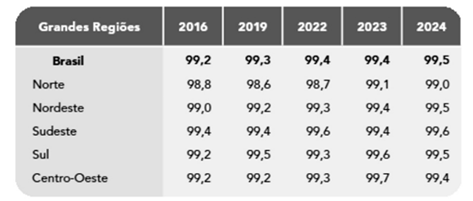
Fonte: IBGE, Diretoria de Pesquisas, Coordenação de Pesquisas por Amostra de Domicílios, Pesquisa Nacional por Amostra de Domicílios Contínua 2016/2024.
I- Em 2024, a taxa de escolarização das pessoas de 6 a 14 anos no Brasil atingiu 99,5%. Esse nível elevado de escolarização se mantém estável desde 2016 e reflete o avanço do país em direção à universalização do Ensino Fundamental.
II- A Região Norte, apesar de apresentar a menor taxa de escolarização entre crianças de 6 a 14 anos no Brasil, registrou 99,0%, mantendo-se, ainda assim, próxima à universalização do Ensino Fundamental.
III- Em 2024, em comparação a 2023, verificou-se um leve aumento nas taxas de escolarização de crianças de 6 a 14 anos nas Regiões Sudeste e Nordeste. Essas regiões mantiveram, dentro desta faixa etária, os maiores índices de escolarização do país desde 2016.
É CORRETO o que se afirma em:
Taxa de escolarização das pessoas de 6 a 14 anos de idade, segundo as Grandes Regiões (%)
Fonte: IBGE, Diretoria de Pesquisas, Coordenação de Pesquisas por Amostra de Domicílios, Pesquisa Nacional por Amostra de Domicílios Contínua 2016/2024.
I- Em 2024, a taxa de escolarização das pessoas de 6 a 14 anos no Brasil atingiu 99,5%. Esse nível elevado de escolarização se mantém estável desde 2016 e reflete o avanço do país em direção à universalização do Ensino Fundamental.
II- A Região Norte, apesar de apresentar a menor taxa de escolarização entre crianças de 6 a 14 anos no Brasil, registrou 99,0%, mantendo-se, ainda assim, próxima à universalização do Ensino Fundamental.
III- Em 2024, em comparação a 2023, verificou-se um leve aumento nas taxas de escolarização de crianças de 6 a 14 anos nas Regiões Sudeste e Nordeste. Essas regiões mantiveram, dentro desta faixa etária, os maiores índices de escolarização do país desde 2016.
É CORRETO o que se afirma em:
Provas
Questão presente nas seguintes provas
Em um congresso de Educação foi apresentado um trabalho que analisou as tendências pedagógicas presentes nas declarações de
professores brasileiros com diferentes tempos de experiência docente. Os resultados evidenciaram duas tendências principais: (I) a
liberal tradicional, historicamente predominante na educação brasileira e mais frequente nos discursos e práticas de docentes com mais
de 20 anos de atuação; e (II) a liberal renovada progressivista, que orienta mais diretamente a prática dos professores iniciantes, por ser
atualmente enfatizada nos cursos de licenciatura no país.
A partir deste contexto, à luz do conhecimento sobre as tendências pedagógicas conforme apresentado por Libâneo (2014), marque a alternativa CORRETA
A partir deste contexto, à luz do conhecimento sobre as tendências pedagógicas conforme apresentado por Libâneo (2014), marque a alternativa CORRETA
Provas
Questão presente nas seguintes provas
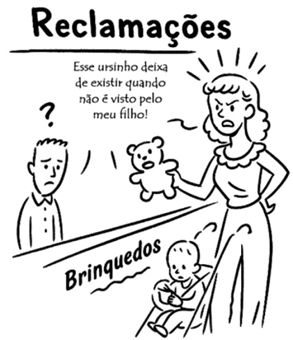
Fonte: LEFRANÇOIS, G.R. Teorias da aprendizagem: o que o professor disse. São Paulo: Cengage Learning, 2016. Adaptado.
A partir do contexto ilustrado na imagem, à luz da teoria do desenvolvimento cognitivo de Piaget, assinale a alternativa que explicita CORRETAMENTE uma característica adquirida ao final do estágio de desenvolvimento cognitivo correspondente.
Provas
Questão presente nas seguintes provas
Em uma escola municipal de Ensino Fundamental, a equipe pedagógica percebeu que alguns alunos acumulavam muitas faltas e,
quando compareciam, costumavam chegar bastante atrasados. Ao analisar os registros, constataram que o índice de ausência já
ultrapassava 30% do limite permitido por lei, o que gerou grande preocupação. Buscando compreender as razões desse
comportamento, a direção investigou a situação e encontrou indícios de uso de drogas entre parte desses estudantes. Diante da
gravidade do problema, a diretora decidiu chamar os pais e responsáveis para conversar, informar sobre as faltas e apresentar um plano
de ação preventiva e de enfrentamento ao uso e dependência de drogas que seria implementado na escola. Apesar da iniciativa da
escola, alguns pais se mostraram resistentes, afirmando que esse tipo de questão deveria ser resolvido apenas pela família, sem a
interferência da escola.
A partir deste contexto, à luz das disposições recentes da Lei de Diretrizes e Bases da Educação Nacional (Lei nº 9.394/1996), analise as assertivas a seguir.
I- Cabe à escola notificar ao Conselho Tutelar do município a relação dos alunos que apresentam uma quantidade de faltas acima de 30% do percentual permitido por lei.
II- Os pais e responsáveis têm razão ao afirmar que problemas relacionados ao uso de drogas devem ser resolvidos por eles próprios, sem a intervenção da escola.
III- A direção da escola decidiu informar aos pais e responsáveis sobre a frequência dos estudantes envolvidos na situação, porém esse não constitui um dever dos estabelecimentos de ensino.
IV- É incumbência da escola garantir um ambiente escolar seguro, razão pela qual se torna fundamental a implementação do plano de ação preventiva e de enfrentamento ao uso e dependência de drogas elaborado pela direção.
É CORRETO o que se afirma apenas em:
A partir deste contexto, à luz das disposições recentes da Lei de Diretrizes e Bases da Educação Nacional (Lei nº 9.394/1996), analise as assertivas a seguir.
I- Cabe à escola notificar ao Conselho Tutelar do município a relação dos alunos que apresentam uma quantidade de faltas acima de 30% do percentual permitido por lei.
II- Os pais e responsáveis têm razão ao afirmar que problemas relacionados ao uso de drogas devem ser resolvidos por eles próprios, sem a intervenção da escola.
III- A direção da escola decidiu informar aos pais e responsáveis sobre a frequência dos estudantes envolvidos na situação, porém esse não constitui um dever dos estabelecimentos de ensino.
IV- É incumbência da escola garantir um ambiente escolar seguro, razão pela qual se torna fundamental a implementação do plano de ação preventiva e de enfrentamento ao uso e dependência de drogas elaborado pela direção.
É CORRETO o que se afirma apenas em:
Provas
Questão presente nas seguintes provas
Nas escolas, ainda prevalece uma concepção bancária de educação, caracterizada pela valorização da consciência ingênua em
detrimento da consciência crítica (Moreira, 2023).
Fonte: MOREIRA, M. A. Teorias da aprendizagem. 3. ed. ampl [Reimpr]. Rio de Janeiro: LTC, 2023.
A partir deste contexto, à luz dos pressupostos e críticas de Paulo Freire, assinale a alternativa que apresenta CORRETAMENTE apenas as características da concepção de educação mencionada.
Fonte: MOREIRA, M. A. Teorias da aprendizagem. 3. ed. ampl [Reimpr]. Rio de Janeiro: LTC, 2023.
A partir deste contexto, à luz dos pressupostos e críticas de Paulo Freire, assinale a alternativa que apresenta CORRETAMENTE apenas as características da concepção de educação mencionada.
Provas
Questão presente nas seguintes provas
Cadernos
Caderno Container