Foram encontradas 1.260 questões.
Text 02
British Accents and Dialects: A Rough Guide
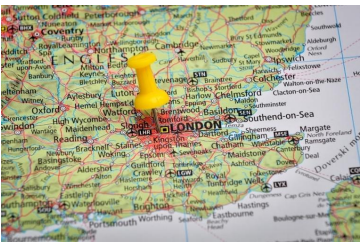
Have you ever tried to put on a British accent? The chances are the accent you’re trying to copy is ‘Received Pronunciation’, or standard English – also known as the Queen’s English. Received Pronunciation, or RP, is what most non-Brits are used to hearing as a British accent, often when you switch on the BBC or World Service.
But it’s called the Queen’s English for a reason – hardly anyone in the UK apart from the Queen speaks this way.
The truth is, although it may be called Standard English, it is anything but standard. The British Isles is made up many, many different accents and dialects – more than 37 dialects at the last count. A dialect is a Variety of a language that differs from the standard language, in this case RP. Dialects can vary regionally – depending on where in the country a person is from, as well as socially.
[…]
Types of British Accents – Cockney
This is one of the UK’s most famous dialects, and it goes hand in hand with London. It came about as the dialect of the London working classes, especially in the poorer East End of the city. The Cockney dialect also gave us Rhyming Slang, and you can still hear plenty of market traders round the East End shouting out in Cockney from their stalls. With the Cockney accent, there are lots of ‘glottal stops’, and the ‘th’ sound frequently changes to an ‘f’ sound. There have also been some famously terrible attempts at the Cockney dialect – here’s Dick Van Dyke to show you how not to do it!
Text adapted from: <https:englishlive.ef.com/en/blog/English-in-the-real-world/rough-guide-british-dialects/>
Provas

Text 02
British Accents and Dialects: A Rough Guide
Have you ever tried to put on a British accent? The chances are the accent you’re trying to copy is ‘Received Pronunciation’, or standard English – also known as the Queen’s English. Received Pronunciation, or RP, is what most non-Brits are used to hearing as a British accent, often when you switch on the BBC or World Service.
But it’s called the Queen’s English for a reason – hardly anyone in the UK apart from the Queen speaks this way.
The truth is, although it may be called Standard English, it is anything but standard. The British Isles is made up many, many different accents and dialects – more than 37 dialects at the last count. A dialect is a Variety of a language that differs from the standard language, in this case RP. Dialects can vary regionally – depending on where in the country a person is from, as well as socially.
[…]
Types of British Accents – Cockney
This is one of the UK’s most famous dialects, and it goes hand in hand with London. It came about as the dialect of the London working classes, especially in the poorer East End of the city. The Cockney dialect also gave us Rhyming Slang, and you can still hear plenty of market traders round the East End shouting out in Cockney from their stalls. With the Cockney accent, there are lots of ‘glottal stops’, and the ‘th’ sound frequently changes to an ‘f’ sound. There have also been some famously terrible attempts at the Cockney dialect – here’s Dick Van Dyke to show you how not to do it!
Text adapted from: <https:englishlive.ef.com/en/blog/English-in-the-real-world/rough-guide-british-dialects/>
Provas
Text 02
British Accents and Dialects: A Rough Guide
Have you ever tried to put on a British accent? The chances are the accent you’re trying to copy is ‘Received Pronunciation’, or standard English – also known as the Queen’s English. Received Pronunciation, or RP, is what most non-Brits are used to hearing as a British accent, often when you switch on the BBC or World Service.
But it’s called the Queen’s English for a reason – hardly anyone in the UK apart from the Queen speaks this way.
The truth is, although it may be called Standard English, it is anything but standard. The British Isles is made up many, many different accents and dialects – more than 37 dialects at the last count. A dialect is a Variety of a language that differs from the standard language, in this case RP. Dialects can vary regionally – depending on where in the country a person is from, as well as socially.
[…]
Types of British Accents – Cockney
This is one of the UK’s most famous dialects, and it goes hand in hand with London. It came about as the dialect of the London working classes, especially in the poorer East End of the city. The Cockney dialect also gave us Rhyming Slang, and you can still hear plenty of market traders round the East End shouting out in Cockney from their stalls. With the Cockney accent, there are lots of ‘glottal stops’, and the ‘th’ sound frequently changes to an ‘f’ sound. There have also been some famously terrible attempts at the Cockney dialect – here’s Dick Van Dyke to show you how not to do it!
Text adapted from: <https:englishlive.ef.com/en/blog/English-in-the-real-world/rough-guide-british-dialects/>
Provas
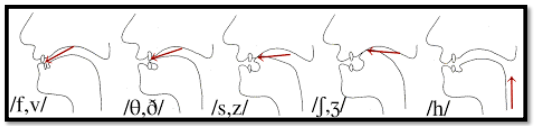
Phonetics and Phonology –the image below brings examples of:
Source: <pt.quora.com>
Provas
Provas
Provas

Provas
For question, consider the following collocation: “Congratulations on” and choose the best-suited alternatives.
Provas
For question, consider the following collocation: “Congratulations on” and choose the best-suited alternatives.
Provas
Read text 1 and answer question.
The Times They Are A-Changin' - By Bob Dylan
Come gather 'round, people
Wherever you roam
And admit that the waters around you have
grown
And accept it that soon you'll be drenched to the
bone
If your time to you is worth saving
Then you better start swimmin' or you'll sink like
a stone
For the times, they are a-changin'
Come writers and critics who prophesize with
your pen
And keep your eyes wide, the chance won't
come again
And don't speak too soon, for the wheel's still in
spin
And there's no tellin' who that it's namin'
For the loser now will be later to win
For the times, they are a-changin'
Come senators, congressmen, please heed the
call
Don't stand in the doorway
Don't block up the hall
For he that gets hurt will be he who has stalled
The battle outside ragin'
Will soon shake your windows and rattle your
walls
For the times, they are a-changin'
Come mothers and fathers
Throughout the land
And don't criticize what you can't understand
Your sons and your daughters
Are beyond your command
Your old road is rapidly aging
Please get out of the new one if you can't lend
your hand
The line, it is drawn
The curse, it is cast
The slow one now will later be fast
As the present now will later be past
The order is rapidly fading
And the first one now will later be last
For the times, they are a-changin'
For the times, they are a-changin'
Provas
Caderno Container