Foram encontradas 60 questões.
Disciplina: Atualidades e Conhecimentos Gerais
Banca: UFSCAR
Orgão: UFSCAR
A copa do mundo de 2014 ocorrerá nos meses de junho e julho no Brasil e, para tal, foram construídos, reconstruídos ou reformados quantos estádios de futebol no país? Assinale a alternativa que apresenta a resposta correta:
Provas

Disciplina: Atualidades e Conhecimentos Gerais
Banca: UFSCAR
Orgão: UFSCAR
O Estatuto da igualdade racial foi aprovado em 2010 com a finalidade de “garantir à população negra a efetivação da igualdade de oportunidades, a defesa dos direitos étnicos individuais, coletivos e difusos e o combate à discriminação e às demais formas de intolerância étnica”. No período em que tramitou no Senado, alguns itens da proposta inicial foram alterados, o que gerou muita discussão entre entidades do movimento negro e a população em geral no Brasil. Assinale a alternativa que apresenta um item alterado da proposta inicial do Estatuto:
Provas
Disciplina: Atualidades e Conhecimentos Gerais
Banca: UFSCAR
Orgão: UFSCAR
Observe a figura e responda:
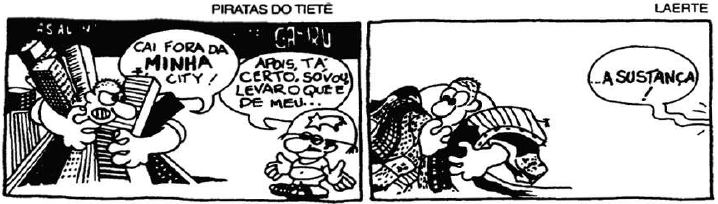
Fonte: www.geocities.ws
A “sustança” a que se refere o personagem consiste em:
Provas
Disciplina: Atualidades e Conhecimentos Gerais
Banca: UFSCAR
Orgão: UFSCAR
AS TICs (tecnologias da informação e comunicação) estão presentes em várias áreas das atividades humanas contemporâneas, na medida em que interferem e mediam os processos informacionais e comunicativos. Constituemse, também, como um conjunto de recursos tecnológicos de hardware, software e telecomunicações. Pensando no processo educativo, assinale a alternativa que explicita o uso das TICs na educação:
Provas
Disciplina: Atualidades e Conhecimentos Gerais
Banca: UFSCAR
Orgão: UFSCAR
Recentemente, o governo brasileiro criou um programa de bolsas de estudos para que estudantes brasileiros da graduação à pós-graduação possam aprimorar seus conhecimentos fora do pais. O nome deste programa é:
Provas
Executive Secretary Duties
If you are looking for a career as an executive secretary, then you must be well aware of executive secretary duties.
Executive Secretary Job Description
Executive secretary duties cover many important and instant activities. Apart from the clerical administration which is a part of this job, duties of an executive secretary also include multitasking, like taking important business calls simultaneously. An executive secretary job is centric around scheduling important meetings and conferences whenever required.
Communicating important telephone and fax messages;
Maintaining a general filing system and documenting all the correspondence;
Planning and preparing meetings and organizing overseas conference calls;
Providing word processing and secretarial support; Responding on a timely basis to public inquiries;
Apart from the executive secretary job description stated, the secretary must be well versed with domains like politics, legislation, legal procedures and office administration system. The needed skill set includes:
Excellent verbal and written communication (sound in workplace communication);
A sound knowledge of computer skills (includes working with computerized accounting, spreadsheets, word processing programs, etc.); Time management and stress management;
Flexibility in working environment;
Complete awareness of sound workplace ethics;
Honest and trustworthy;
Duties of an Executive Secretary
Here are some of the important executive secretary duties, that are listed below:
Gathering information, sorting and categorizing it;
Delegating the processed information to the appropriate departments in the organization in a timely fashion;
Scheduling appointments, meetings and conferences for business procurement or for presentation to be delivered;
Booking calendars for the reporting manager and scheduling his appointments and meetings;
Maintaining the data shared between the departments, by filing and recording the information accordingly (as hard copies and electronic filing system);
Answering phones, and providing necessary information to the individual departmental managers and processing information;
Greeting clients and visitors and giving them an outline of the nature of business of the organization;
Attending meetings and official events on behalf of the manager as and when required and preparing minutes of meeting for future reference;
Ensuring the authenticity of office policies and procedures and supervising support staff;
The work environment however, varies from organization to organization, as this job is diversified across administration, health domain and private firms.
Nowadays, the secretary job duties have eased with the heightened efficiency of computers, emails, scanners and voice messaging systems. Much of the equipment that is used in secretarial jobs is automated. Yet, there are certain skill 42 sets which cannot be replaced by technology. Such skills include the business communication skills and class which is needed for coaching the staff, working with the clients and scheduling and preparing for conferences and meetings. Executive secretary job has a major role to play in every organization and no matter how much ever the technical inventions like computers make the job easier, the skill set required for this job is irreplaceable. Executive secretary duties therefore, are an integral part of every organization.
Fonte - adaptado: http://www.buzzle.com/articles/executive-secretary-duties.html Acessado em: 12 de fevereiro de 2014
Embora a maioria dos equipamentos eletrônicos utilizados seja automatizada, o que é possível inferir da relação entre a tecnologia e o conjunto de habilidades de uma secretária executiva?
Provas
Executive Secretary Duties
If you are looking for a career as an executive secretary, then you must be well aware of executive secretary duties.
Executive Secretary Job Description
Executive secretary duties cover many important and instant activities. Apart from the clerical administration which is a part of this job, duties of an executive secretary also include multitasking, like taking important business calls simultaneously. An executive secretary job is centric around scheduling important meetings and conferences whenever required.
Communicating important telephone and fax messages;
Maintaining a general filing system and documenting all the correspondence;
Planning and preparing meetings and organizing overseas conference calls;
Providing word processing and secretarial support; Responding on a timely basis to public inquiries;
Apart from the executive secretary job description stated, the secretary must be well versed with domains like politics, legislation, legal procedures and office administration system. The needed skill set includes:
Excellent verbal and written communication (sound in workplace communication);
A sound knowledge of computer skills (includes working with computerized accounting, spreadsheets, word processing programs, etc.); Time management and stress management;
Flexibility in working environment;
Complete awareness of sound workplace ethics;
Honest and trustworthy;
Duties of an Executive Secretary
Here are some of the important executive secretary duties, that are listed below:
Gathering information, sorting and categorizing it;
Delegating the processed information to the appropriate departments in the organization in a timely fashion;
Scheduling appointments, meetings and conferences for business procurement or for presentation to be delivered;
Booking calendars for the reporting manager and scheduling his appointments and meetings;
Maintaining the data shared between the departments, by filing and recording the information accordingly (as hard copies and electronic filing system);
Answering phones, and providing necessary information to the individual departmental managers and processing information;
Greeting clients and visitors and giving them an outline of the nature of business of the organization;
Attending meetings and official events on behalf of the manager as and when required and preparing minutes of meeting for future reference;
Ensuring the authenticity of office policies and procedures and supervising support staff;
The work environment however, varies from organization to organization, as this job is diversified across administration, health domain and private firms.
Nowadays, the secretary job duties have eased with the heightened efficiency of computers, emails, scanners and voice messaging systems. Much of the equipment that is used in secretarial jobs is automated. Yet, there are certain skill 42 sets which cannot be replaced by technology. Such skills include the business communication skills and class which is needed for coaching the staff, working with the clients and scheduling and preparing for conferences and meetings. Executive secretary job has a major role to play in every organization and no matter how much ever the technical inventions like computers make the job easier, the skill set required for this job is irreplaceable. Executive secretary duties therefore, are an integral part of every organization.
Fonte - adaptado: http://www.buzzle.com/articles/executive-secretary-duties.html Acessado em: 12 de fevereiro de 2014
Dentre os deveres de uma secretária executiva apresentados no texto, qual das alternativas não foi citada pela autora?
Provas
Executive Secretary Duties
If you are looking for a career as an executive secretary, then you must be well aware of executive secretary duties.
Executive Secretary Job Description
Executive secretary duties cover many important and instant activities. Apart from the clerical administration which is a part of this job, duties of an executive secretary also include multitasking, like taking important business calls simultaneously. An executive secretary job is centric around scheduling important meetings and conferences whenever required.
Communicating important telephone and fax messages;
Maintaining a general filing system and documenting all the correspondence;
Planning and preparing meetings and organizing overseas conference calls;
Providing word processing and secretarial support; Responding on a timely basis to public inquiries;
Apart from the executive secretary job description stated, the secretary must be well versed with domains like politics, legislation, legal procedures and office administration system. The needed skill set includes:
Excellent verbal and written communication (sound in workplace communication);
A sound knowledge of computer skills (includes working with computerized accounting, spreadsheets, word processing programs, etc.); Time management and stress management;
Flexibility in working environment;
Complete awareness of sound workplace ethics;
Honest and trustworthy;
Duties of an Executive Secretary
Here are some of the important executive secretary duties, that are listed below:
Gathering information, sorting and categorizing it;
Delegating the processed information to the appropriate departments in the organization in a timely fashion;
Scheduling appointments, meetings and conferences for business procurement or for presentation to be delivered;
Booking calendars for the reporting manager and scheduling his appointments and meetings;
Maintaining the data shared between the departments, by filing and recording the information accordingly (as hard copies and electronic filing system);
Answering phones, and providing necessary information to the individual departmental managers and processing information;
Greeting clients and visitors and giving them an outline of the nature of business of the organization;
Attending meetings and official events on behalf of the manager as and when required and preparing minutes of meeting for future reference;
Ensuring the authenticity of office policies and procedures and supervising support staff;
The work environment however, varies from organization to organization, as this job is diversified across administration, health domain and private firms.
Nowadays, the secretary job duties have eased with the heightened efficiency of computers, emails, scanners and voice messaging systems. Much of the equipment that is used in secretarial jobs is automated. Yet, there are certain skill 42 sets which cannot be replaced by technology. Such skills include the business communication skills and class which is needed for coaching the staff, working with the clients and scheduling and preparing for conferences and meetings. Executive secretary job has a major role to play in every organization and no matter how much ever the technical inventions like computers make the job easier, the skill set required for this job is irreplaceable. Executive secretary duties therefore, are an integral part of every organization.
Fonte - adaptado: http://www.buzzle.com/articles/executive-secretary-duties.html Acessado em: 12 de fevereiro de 2014
De acordo com o texto, Executive Secretary Duties, quais são alguns dos domínios e algumas das habilidades que a secretária executiva deve demonstrar em seu trabalho?
Provas
International Partnerships for Academic Cooperation
Section 1 - Purpose and Context
(1) The University of Western Sydney is committed to the Internationalisation of its activities. Consistent with its international objectives and strategic directions, the University will maintain and foster existing and valued international partnerships, as well as develop new partnerships.
Section 2 - Definitions
(2) For the purpose of this policy:
1. International Partnerships - refer to partnerships between UWS and overseas universities, colleges and other educational institutions. In particular, this policy is confined to formal Academic Co-operation Agreements, and Supplemental Letters of Agreement, such as Student Exchange agreements. It does not include commercial contracts and commercial offshore programs. However, this does not preclude commercial contracts being developed later with institutions that are defined as International Partners within this policy.
2. Academic Co-operation Agreement - refers to a written agreement which formalises the intention of UWS to liaise with an international higher education institution for the general purpose of academic co-operation in such areas as research collaboration, joint academic and scientific activity, staff and student exchange, and the exchange of publications and materials of common interest.
3. Supplemental Agreement - refers to a written agreement which is supplemental to the Academic Co-operation Agreement with an international higher education partner institution, and which details the various aspects of a particular form of academic co-operation.
1. Examples:
• Supplemental Letter of Agreement (Exchange) - a Supplemental Letter of Agreement (Exchange), for the purpose of student and staff exchanges, would itemise all the details of the exchange including the obligations and responsibilities of Home and Host institutions.
• Supplemental Letter of Agreement (Articulation) - a Supplemental Letter of Agreement would itemise all the details for an articulation from an award of an international education institution (e.g. Advanced Diploma would be given academic credit towards a UWS Degree). Section 3 - Policy Statement
(3) International Partnerships will be developed in accordance with the University’s Mission and Strategic Plan.
(4) The number of International Partnerships will be linked to strategic objectives, and controlled to ensure agreements are active.
(5) The nature of International Partnerships will vary in response to UWS objectives and those of particular partner institutions.
(6) A diversity of International Partnerships will be encouraged.
(7) International Partnerships will be pursued for the purposes of the:
1. development of collaborative research projects;
2. organisation of joint academic and scientific activities, such as courses, conferences, seminars, symposia or lectures;
3. exchange of research, teaching and other employed personnel;
4. exchange of students;
5. exchange of publications and other materials of common interest;
6. development of other joint projects of collaboration to mutual benefit, to be defined;
7. co-supervision of thesis and dissertations.
Part A - Agreements
Types of Agreements
(8) Each International Partnership as defined by this policy, will be formalised initially by an Academic Co-operation Agreement.
(9) A separate student exchange agreement (Supplemental Letter of Agreement, Exchange) will be supplemental to the Academic Co-operation Agreement, where student exchange activity emerges as a consequence of that Agreement.
(10) Other specific collaborative projects will also be detailed in separate Supplemental Letter of Agreements to the Academic Co-operation Agreement, as projects arise.
Formal Requirements
(11) Agreements will not by signed by UWS until all resource implications are identified, and appropriate resource allocation agreed.
(12) The Academic Co-operation Agreement and/or Supplemental Letter of Agreement pro-formas adopted for the purpose of formalising the partnership can be supplied by either partner, but must be acceptable to both partners.
(13) All agreements will be institution-to-institution. Any collaborative/ cooperative agreement between sub-academic units within either or both institutions (eg. School-to-School), will be supplemental to the general Academic Co-operation Agreement.
(14) The Vice-Chancellor (or nominee) of UWS will be the official signatory to all Academic Co-operation and Supplemental Agreements. Contents of Agreements
(15) All Agreements should have a review/revision clause, and procedures for termination.
(16) All Agreements must be signed in hard copy. The original will be filed in the official Records and Archives Management Services Unit with copies placed in UWS International. Section 4 -Procedures
(17) Determine whether the proposal is specifically for non-commercial or commercial outcomes (you may wish to refer to the terminology/definitions listed in Section 2).
(18) Some proposals may have the potential to develop commercial outcomes, but this may not be the initial objective.
Fonte: http://policies.uws.edu.au/view.current.php?id=00106 Acessado em 11 de fevereiro de 2014
Baseando-se no item Contents of Agreements presente na seção 3 do texto apresentado, qual das alternativas traz uma informação incorreta?
Provas
International Partnerships for Academic Cooperation
Section 1 - Purpose and Context
(1) The University of Western Sydney is committed to the Internationalisation of its activities. Consistent with its international objectives and strategic directions, the University will maintain and foster existing and valued international partnerships, as well as develop new partnerships.
Section 2 - Definitions
(2) For the purpose of this policy:
1. International Partnerships - refer to partnerships between UWS and overseas universities, colleges and other educational institutions. In particular, this policy is confined to formal Academic Co-operation Agreements, and Supplemental Letters of Agreement, such as Student Exchange agreements. It does not include commercial contracts and commercial offshore programs. However, this does not preclude commercial contracts being developed later with institutions that are defined as International Partners within this policy.
2. Academic Co-operation Agreement - refers to a written agreement which formalises the intention of UWS to liaise with an international higher education institution for the general purpose of academic co-operation in such areas as research collaboration, joint academic and scientific activity, staff and student exchange, and the exchange of publications and materials of common interest.
3. Supplemental Agreement - refers to a written agreement which is supplemental to the Academic Co-operation Agreement with an international higher education partner institution, and which details the various aspects of a particular form of academic co-operation.
1. Examples:
• Supplemental Letter of Agreement (Exchange) - a Supplemental Letter of Agreement (Exchange), for the purpose of student and staff exchanges, would itemise all the details of the exchange including the obligations and responsibilities of Home and Host institutions.
• Supplemental Letter of Agreement (Articulation) - a Supplemental Letter of Agreement would itemise all the details for an articulation from an award of an international education institution (e.g. Advanced Diploma would be given academic credit towards a UWS Degree). Section 3 - Policy Statement
(3) International Partnerships will be developed in accordance with the University’s Mission and Strategic Plan.
(4) The number of International Partnerships will be linked to strategic objectives, and controlled to ensure agreements are active.
(5) The nature of International Partnerships will vary in response to UWS objectives and those of particular partner institutions.
(6) A diversity of International Partnerships will be encouraged.
(7) International Partnerships will be pursued for the purposes of the:
1. development of collaborative research projects;
2. organisation of joint academic and scientific activities, such as courses, conferences, seminars, symposia or lectures;
3. exchange of research, teaching and other employed personnel;
4. exchange of students;
5. exchange of publications and other materials of common interest;
6. development of other joint projects of collaboration to mutual benefit, to be defined;
7. co-supervision of thesis and dissertations.
Part A - Agreements
Types of Agreements
(8) Each International Partnership as defined by this policy, will be formalised initially by an Academic Co-operation Agreement.
(9) A separate student exchange agreement (Supplemental Letter of Agreement, Exchange) will be supplemental to the Academic Co-operation Agreement, where student exchange activity emerges as a consequence of that Agreement.
(10) Other specific collaborative projects will also be detailed in separate Supplemental Letter of Agreements to the Academic Co-operation Agreement, as projects arise.
Formal Requirements
(11) Agreements will not by signed by UWS until all resource implications are identified, and appropriate resource allocation agreed.
(12) The Academic Co-operation Agreement and/or Supplemental Letter of Agreement pro-formas adopted for the purpose of formalising the partnership can be supplied by either partner, but must be acceptable to both partners.
(13) All agreements will be institution-to-institution. Any collaborative/ cooperative agreement between sub-academic units within either or both institutions (eg. School-to-School), will be supplemental to the general Academic Co-operation Agreement.
(14) The Vice-Chancellor (or nominee) of UWS will be the official signatory to all Academic Co-operation and Supplemental Agreements. Contents of Agreements
(15) All Agreements should have a review/revision clause, and procedures for termination.
(16) All Agreements must be signed in hard copy. The original will be filed in the official Records and Archives Management Services Unit with copies placed in UWS International. Section 4 -Procedures
(17) Determine whether the proposal is specifically for non-commercial or commercial outcomes (you may wish to refer to the terminology/definitions listed in Section 2).
(18) Some proposals may have the potential to develop commercial outcomes, but this may not be the initial objective.
Fonte: http://policies.uws.edu.au/view.current.php?id=00106 Acessado em 11 de fevereiro de 2014
Das alternativas apresentadas a seguir, qual delas representa uma cláusula apresentada na seção 3 do item Formal Requirements?
Provas
Caderno Container