Foram encontradas 56 questões.
Leia o texto para responder às questões de números 40 a 47.
Language is, of course, the central subject matter for language teachers. A syllabus defines the content of a teaching programme, that is, it is concerned with what is to be learned. It was in the early 70’s that language teaching underwent something of a revolution.
Structures
This word, once central to all language teaching, is now somewhat out of fashion. It is most often employed to talk about structural syllabuses. Language teaching was based on the assumption that students first needed to master particular sentence frames – structures. The structures which were, and to a certain extent still are, perceived as central to language teaching were precisely, and exclusively, those of well-formed English sentences. To many teachers, a structural syllabus is synonymous with mastering the tense system of the English verb. Structure is still frequently equated with grammar, and grammar is still frequently equated with sentence grammar.
Functions
This term was introduced into language teaching relatively few decades ago. It was coined by Wilkins and can be very simply defined: a function is the social purpose of an utterance. If we ask the question “Why did the speaker say that?”, the answer will come in the form of a function – the speaker was making a request, offering to help, refusing an invitation etc. Most language teachers are very familiar with such labels, which frequently represent units in the textbook.
Functions represented a major change in syllabus design. They are, in the technical sense, pragmatic in character, being concerned with the social purpose of the utterance. Previously, strict structural sequencing tended to prevail. Nowadays, it is a commonplace that sentences such as “Would you like a cup of tea?” can be introduced early in a learning programme, without structural analysis. This was not so before the influence of pragmatics was felt. The change has considerable relevance in present-day discussions, and it has been argued that institutionalised sentences and lexical phrases can be introduced in the early stages of learning without analysis, to a much greater extent than has hitherto been the practice.
(Michael Lewis. The lexical approach. HeinleCengage. 2002. Adaptado)
A “revolução” mencionada no primeiro parágrafo e explicitada ao longo do texto diz respeito ao fato de que
Provas

Leia a charge.
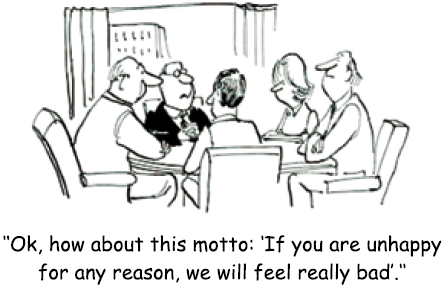
(shutterstock.com)
The line from the cartoon “If you are unhappy for any reason, we will feel really bad” exemplifies a sentence with a conditional clause. Another correct sentence with a conditional structure is found in alternative:
Provas
Leia o texto para responder às questões de números 33 a 38.
The Indonesian tribe that rejects technology
The Baduy tribe from Banten in Indonesia practise seclusion and reject all modern technology to protect their ancient traditions. For centuries, their way of life hasn’t changed. Electricity is prohibited, along with modern modes of communication and formal education. Power lines stop at the border of their lands, but in recent years, the outside world has begun to creep in.
The tribe has split in two – the more strict inner circle remain “pure”, while the outer circle have relaxed some rules. Some have started using mobile phones and solar-powered lanterns. Will adopting some aspects of modern technology help the Baduy survive the modern world, or will it make their ancient traditions disappear?
(Hassan Ghani. www.aljazeera.com. 20.02.2018)
O tempo verbal present perfect simple está corretamente utilizado na alternativa:
Provas
Leia o texto para responder às questões de números 33 a 38.
The Indonesian tribe that rejects technology
The Baduy tribe from Banten in Indonesia practise seclusion and reject all modern technology to protect their ancient traditions. For centuries, their way of life hasn’t changed. Electricity is prohibited, along with modern modes of communication and formal education. Power lines stop at the border of their lands, but in recent years, the outside world has begun to creep in.
The tribe has split in two – the more strict inner circle remain “pure”, while the outer circle have relaxed some rules. Some have started using mobile phones and solar-powered lanterns. Will adopting some aspects of modern technology help the Baduy survive the modern world, or will it make their ancient traditions disappear?
(Hassan Ghani. www.aljazeera.com. 20.02.2018)
Você avalia ser pertinente trabalhar esse texto jornalístico com seus alunos. Ao preparar sua aula, reconhece o uso recorrente do present perfect simple e o papel desse tempo verbal na construção do texto. Embora essa seja uma aula de leitura na língua inglesa, de modo a articular o conhecimento sistêmico à compreensão do texto “The Indonesian tribe that rejects technology”, você
Provas
Leia o texto para responder às questões de números 33 a 38.
The Indonesian tribe that rejects technology
The Baduy tribe from Banten in Indonesia practise seclusion and reject all modern technology to protect their ancient traditions. For centuries, their way of life hasn’t changed. Electricity is prohibited, along with modern modes of communication and formal education. Power lines stop at the border of their lands, but in recent years, the outside world has begun to creep in.
The tribe has split in two – the more strict inner circle remain “pure”, while the outer circle have relaxed some rules. Some have started using mobile phones and solar-powered lanterns. Will adopting some aspects of modern technology help the Baduy survive the modern world, or will it make their ancient traditions disappear?
(Hassan Ghani. www.aljazeera.com. 20.02.2018)
In the fragment “the more strict inner circle remain “pure”, while the outer circle have relaxed some rules”, the word in bold indicates
Provas
Leia o texto para responder às questões de números 33 a 38.
The Indonesian tribe that rejects technology
The Baduy tribe from Banten in Indonesia practise seclusion and reject all modern technology to protect their ancient traditions. For centuries, their way of life hasn’t changed. Electricity is prohibited, along with modern modes of communication and formal education. Power lines stop at the border of their lands, but in recent years, the outside world has begun to creep in.
The tribe has split in two – the more strict inner circle remain “pure”, while the outer circle have relaxed some rules. Some have started using mobile phones and solar-powered lanterns. Will adopting some aspects of modern technology help the Baduy survive the modern world, or will it make their ancient traditions disappear?
(Hassan Ghani. www.aljazeera.com. 20.02.2018)
In the fragment from the second paragraph “Some have started using mobile phones”, the word in bold refers to
Provas
Leia o texto para responder às questões de números 33 a 38.
The Indonesian tribe that rejects technology
The Baduy tribe from Banten in Indonesia practise seclusion and reject all modern technology to protect their ancient traditions. For centuries, their way of life hasn’t changed. Electricity is prohibited, along with modern modes of communication and formal education. Power lines stop at the border of their lands, but in recent years, the outside world has begun to creep in.
The tribe has split in two – the more strict inner circle remain “pure”, while the outer circle have relaxed some rules. Some have started using mobile phones and solar-powered lanterns. Will adopting some aspects of modern technology help the Baduy survive the modern world, or will it make their ancient traditions disappear?
(Hassan Ghani. www.aljazeera.com. 20.02.2018)
The prefix dis- indicates “opposition” or “negation”, and can be found in a large number of English words, for example, “disappear”. Negative prefixes are also found in alternative
Provas
Leia o texto para responder às questões de números 33 a 38.
The Indonesian tribe that rejects technology
The Baduy tribe from Banten in Indonesia practise seclusion and reject all modern technology to protect their ancient traditions. For centuries, their way of life hasn’t changed. Electricity is prohibited, along with modern modes of communication and formal education. Power lines stop at the border of their lands, but in recent years, the outside world has begun to creep in.
The tribe has split in two – the more strict inner circle remain “pure”, while the outer circle have relaxed some rules. Some have started using mobile phones and solar-powered lanterns. Will adopting some aspects of modern technology help the Baduy survive the modern world, or will it make their ancient traditions disappear?
(Hassan Ghani. www.aljazeera.com. 20.02.2018)
In their attempts to keep their traditions safe from devastation, the Indonesian Buday tribe from Banten have
Provas
Leia a charge para responder às questões de números 31 e 32.

(www. glasbergen.com)
O trecho “it takes six seconds to send a message”
Provas
Leia a charge para responder às questões de números 31 e 32.
(www. glasbergen.com)
The character in the cartoon
Provas
Caderno Container